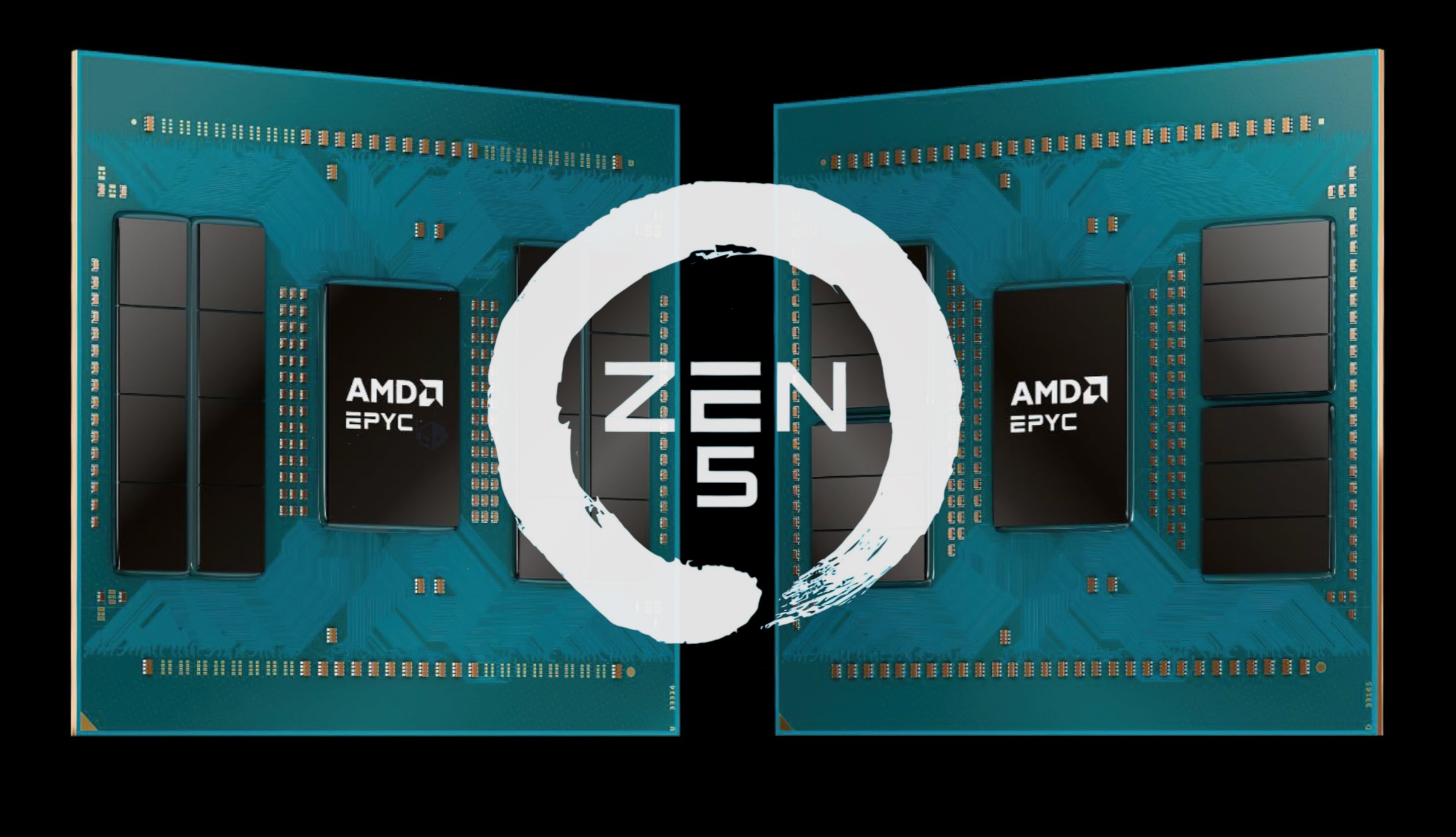
AMD is making waves in the tech world with its latest performance showcase, spotlighting the power of its 5th Gen EPYC CPUs. These processors have proven themselves to be formidable competitors, outpacing both Intel’s Xeon and NVIDIA’s Grace CPUs in the race to dominate the data center landscape.
As the demands on data centers continue to evolve, driven in part by advancements in AI, it’s crucial that enterprise infrastructure can handle everything from traditional applications to large-scale AI workloads. In this arena, AMD’s EPYC processors stand out as leaders. Built on the widely adopted x86 architecture, these CPUs promise top-tier performance and effortless compatibility with a range of workloads.
AMD’s strategic focus on optimizing both traditional computing and AI workloads is evident. The 5th Gen EPYC processors boast an incredible x86 core density, with up to 192 cores per socket, ensuring high performance for AI inference and computing tasks of all sizes. Additionally, these chips support a vast amount of cutting-edge DDR5 memory, essential for both conventional workloads and AI tasks that rely on large datasets.
AMD’s commitment to seamless scalability is another key advantage. Their x86 architecture allows for easy integration of AI capabilities without the lengthy and costly process of reworking enterprise codes. This makes adopting AI a smoother process for businesses looking to stay competitive.
Furthermore, AMD EPYC CPUs offer remarkable energy efficiency, outperforming NVIDIA’s Grace CPU by up to 2.75 times according to SPECpower tests. Other benefits include a 2.17 times boost in database performance and nearly threefold higher throughput in video encoding tasks. With simultaneous multithreading technology, AMD ensures superior resource utilization, and for GPU-accelerated workloads, these processors deliver up to 20% better throughput compared to other x86 solutions.
For those seeking the ultimate in CPU power, the 5th Gen EPYC CPUs reach striking clock speeds of up to 5 GHz. This is a notable increase over Intel and NVIDIA’s offerings, leading to faster data handling and improved communication with GPUs—crucial for high-volume, low latency AI applications.
In conclusion, the 5th Gen AMD EPYC processors are setting new standards in data center performance, driving efficiency and speed in both traditional and AI-centric workloads. As businesses navigate the future of AI and data processing, choosing the right CPU becomes a focal point, and AMD’s latest offerings certainly make a compelling case as the smart choice for maximizing GPU cluster performance.