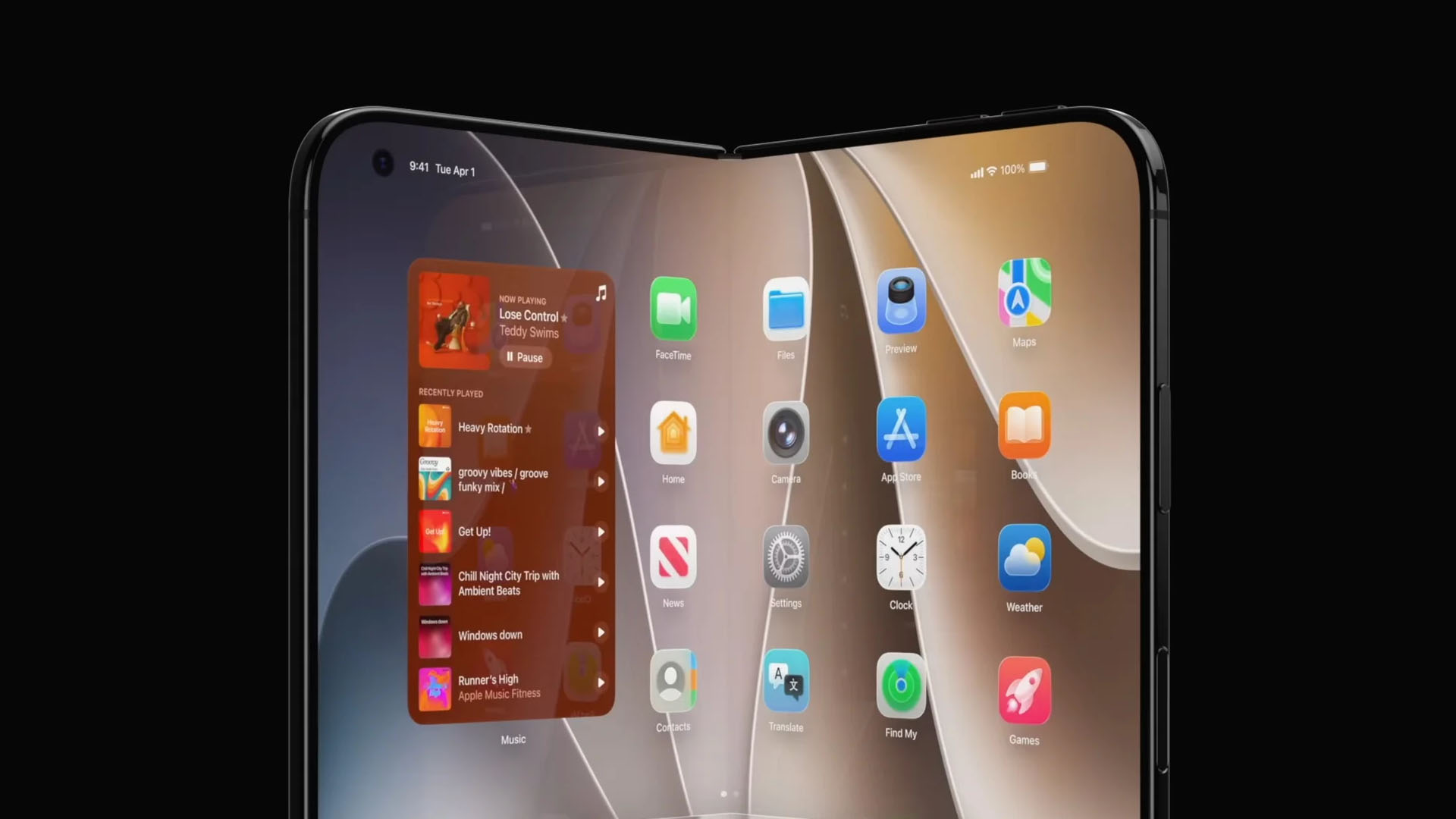
Apple’s Foldable iPhone Could Be Stunning, But Resale Value May Be a Major Concern
Apple’s long-rumored foldable iPhone, often referred to as the iPhone Fold or iPhone Ultra, is shaping up to be one of the most talked-about smartphones in years. The device is expected to bring a premium design, advanced display technology, and a price tag that could place it among the most expensive iPhones ever released.
Rumors suggest Apple’s first foldable iPhone may include a next-generation OLED display with native 10-bit color support, a complex hinge system, a titanium frame, and a special adhesive designed to reduce or prevent the visible crease commonly found on foldable screens. These upgrades could help Apple deliver a more polished foldable phone experience than many current devices on the market.
However, a new study raises an important question for buyers: how much value will Apple’s foldable iPhone lose after just one year?
According to research commissioned by used phone marketplace SellCell, foldable smartphones tend to depreciate much faster than traditional flagship phones. The study found that foldable phone owners lose almost $1,000 on average within 12 months, which is nearly $400 more than the loss seen by owners of standard premium smartphones.
The findings show that foldable smartphones lose an average of 64.6% of their value in the first year. In dollar terms, that equals an average loss of about $997.69. By comparison, traditional flagship smartphones lose around 55.3% of their value over the same period, or roughly $605.32.
That means foldable devices retain only 35.4% of their launch price after one year, while regular premium smartphones retain about 44.7%.
The depreciation can be even more severe for high-end foldable models. One foldable phone with 1TB of storage reportedly lost nearly $1,480 in value within 12 months. The study also noted that five of the six biggest monetary losses came from foldable smartphones.
This matters because Apple’s foldable iPhone is expected to start at around $2,000. If it follows the same depreciation trend as current foldable phones, it could lose as much as $1,292 in value during its first year. That would leave the device with an estimated resale value of about $708 after 12 months.
For buyers who upgrade every year or rely on trade-in value, that could be a serious drawback.
Still, Apple may have an advantage over other foldable phone makers. The same study found that iPhones are among the best devices for long-term value retention, with nine of the ten top-performing phones in resale value being Apple models. The iPhone 16 lineup, for example, reportedly retained 51.5% of its value after 12 months.
That suggests Apple’s foldable iPhone may not depreciate as sharply as competing foldables. Strong brand loyalty, limited early supply, and high demand could help the device hold its value better than the broader foldable phone market.
There is also the possibility that a foldable iPhone could create a new premium category for Apple. If the company delivers a durable, polished, and crease-resistant design, buyers may be willing to pay a high price, and second-hand demand could remain strong.
But durability will likely be the biggest factor. Foldable phones are more mechanically complex than standard smartphones. They have hinges, flexible display layers, and more points of potential wear. Any visible damage, display issue, or hinge problem could cause resale value to drop quickly.
Apple is rumored to be addressing those concerns with a liquid metal hinge and a titanium frame, both of which could improve strength and long-term reliability. At the same time, foldable displays remain more delicate than traditional glass-covered screens, and that could make buyers more cautious in the resale market.
In the end, Apple’s first foldable iPhone could be one of the most exciting smartphone launches in years, but it may also be one of the riskiest purchases from a resale value perspective. If Apple can solve the durability problem and deliver a premium foldable experience, the iPhone Fold or iPhone Ultra could outperform rival foldables in value retention.
But if it follows current foldable phone depreciation trends, buyers may need to prepare for a steep loss in value within the first year. For a device expected to cost around $2,000, that could make Apple’s foldable iPhone a luxury purchase rather than a smart upgrade for everyone.