Hallucinate Turns a Browser Tab Into a Viral No-Login Online Rave
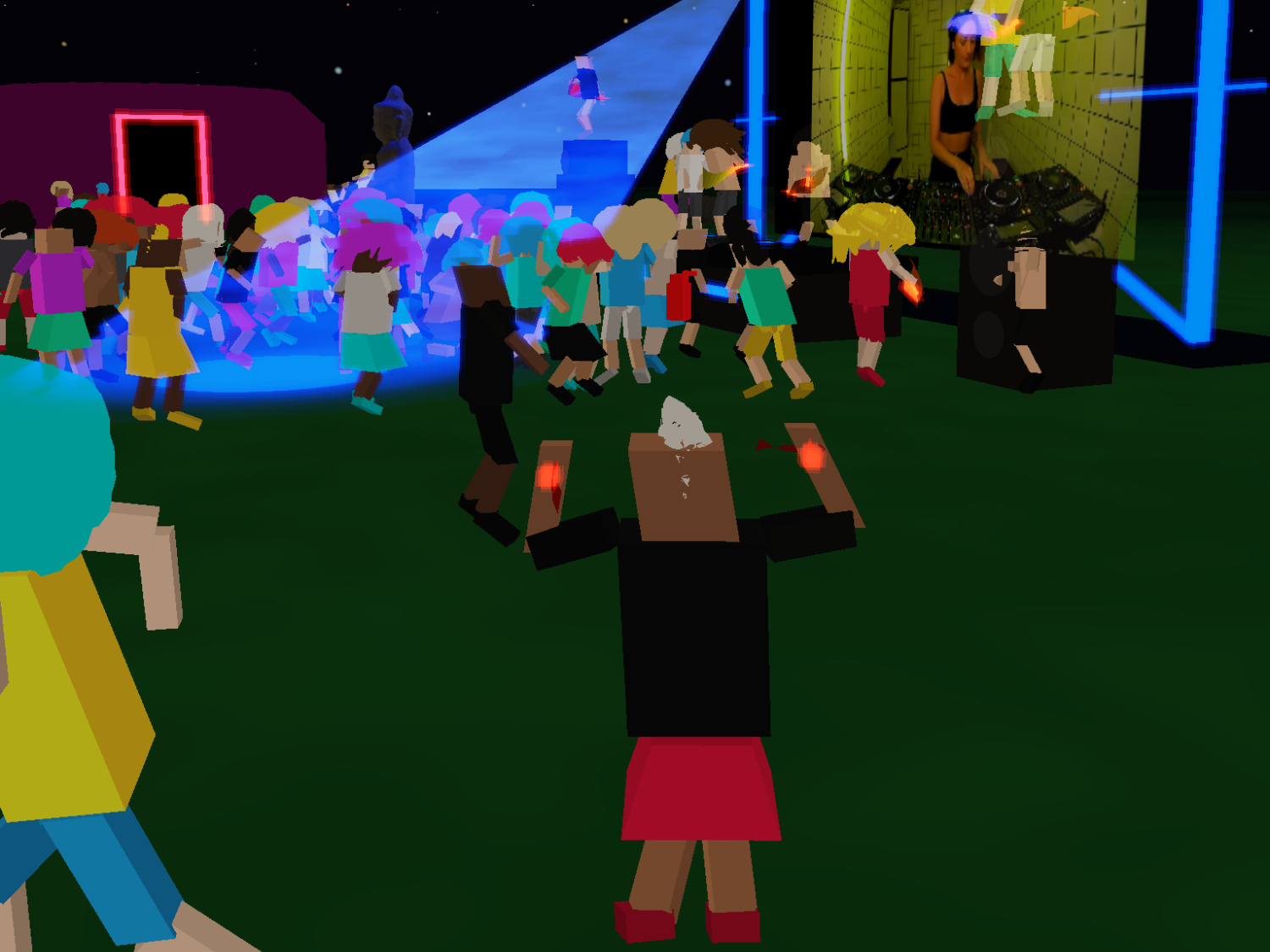
A new experimental web project called Hallucinate briefly turned the internet into a shared dance floor, pulling users into a free multiplayer rave that requires no account, no download, and no commitment. Open the site, and you are instantly placed inside a low-poly 3D nightclub with other real players, pulsing music, and a chaotic sense of online togetherness.
The idea is simple but surprisingly charming: launch a browser tab, appear in a virtual club, and start dancing alongside strangers from around the world. There are no ads, no sign-up forms, no passwords, and no complicated onboarding. It is the kind of lightweight internet experience that feels rare now, where the fun begins immediately and the barrier to entry is almost nonexistent.
Hallucinate was created by a solo developer known as stagas, and it quickly gained attention after being shared across major online communities. Within hours, the project attracted enough visitors to overwhelm its server, briefly taking the site offline before it was patched and brought back.
Part of the appeal comes from how spontaneous it feels. Instead of a polished corporate metaverse pitch, Hallucinate feels more like a strange, joyful internet experiment built for the sake of fun. Users are dropped into a shared 3D space, surrounded by dancing avatars, while a looping DJ-style video set provides the soundtrack. The result is part virtual club, part social sandbox, and part nostalgic reminder of the weirder, more playful web.
Behind the scenes, the project is more technically clever than its simple visuals might suggest. Hallucinate uses a dead-reckoning, client-authoritative setup that focuses on syncing only important state changes. This helps keep the experience smooth even when many players are present at once, without putting excessive pressure on the server.
The sudden popularity also exposed the usual challenges of an open online space. As more people joined, the creator had to handle bug reports, server issues, feature requests, and moderation problems in real time. Open chat attracted some bad actors, forcing manual IP bans as the developer worked to keep the space usable for everyone else.
Still, the community response has been enthusiastic. Players quickly began suggesting additions such as jumping, more avatar customization, skin tone options, mobile-friendly controls, and a live player count. The developer’s response to many requests was refreshingly open: community contributions are welcome.
That open-source spirit is a big part of what makes Hallucinate interesting. It is not just a viral website; it is also a collaborative project that other developers can inspect, modify, and improve. The code is available under an MIT license, making it easy for contributors to build on the concept or help shape its future.
Hallucinate may be small, rough around the edges, and occasionally chaotic, but that is also why it works. In an internet increasingly dominated by polished platforms, locked-down ecosystems, and endless account requirements, a no-login multiplayer rave feels oddly refreshing.
It is fast, weird, social, and completely low-pressure. For anyone looking for a quick dose of browser-based escapism, Hallucinate offers exactly that: a virtual dance floor where the only thing you need to bring is a tab and a few spare minutes.