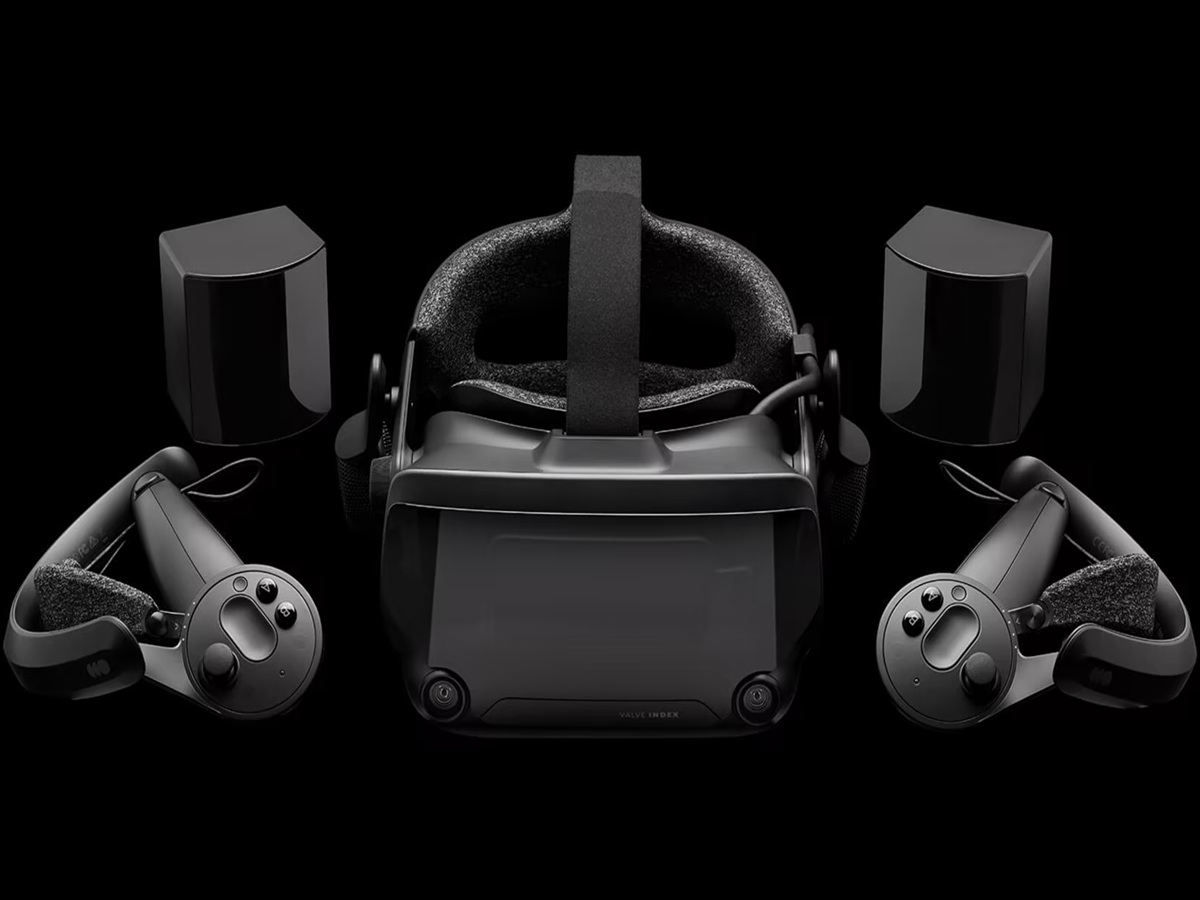
Valve Ends Valve Index Production as Final Stock Gets a 20% Discount
Valve has officially brought the Valve Index era to a close. The company has confirmed that its high-end PC VR headset is no longer in production, marking the end of one of the most influential virtual reality devices in the SteamVR ecosystem.
The announcement, described by Valve as the “Valve Index Sunset,” confirms that remaining Valve Index hardware is now being sold at reduced prices while supplies last. Once the remaining inventory is gone, the products are expected to disappear from Steam’s store listings.
The clearance pricing currently includes a 20% discount on select Valve Index items. In the United States, the Valve Index headset is listed at $399.20, down from its previous $499 price. Replacement hardware has also been discounted, with the left controller reduced to $119.20 from $149 and the replacement tether priced at $103.20 instead of $129.
However, this is not a full Valve Index kit clearance. Valve has indicated that only certain remaining products are part of the final sale. That means anyone hoping to buy into the Valve Index ecosystem for the first time should be careful: the headset alone is not enough for a complete setup. The Valve Index requires compatible controllers and SteamVR base stations to function properly, and those are not included in the current discounted listings.
Valve has not provided a fixed end date for the sale. Availability may vary depending on region, and stock is expected to last only until remaining units sell out.
Current Valve Index owners will still receive support
Although production has ended, Valve says existing Valve Index owners will continue to be supported through Steam and SteamVR. That should be reassuring for players who still use the headset as part of their PC VR setup.
That said, Valve has not given detailed information about how long replacement parts will remain available or whether future firmware and driver updates will continue indefinitely. For now, the key message is that the headset is not being abandoned overnight, but its hardware lifecycle is clearly winding down.
A major PC VR headset reaches the end of the road
The Valve Index first launched in June 2019 and quickly became one of the most respected PC virtual reality headsets on the market. It stood out for its sharp display, smooth refresh rates, precise external tracking, and advanced finger-tracking controllers.
The headset featured dual 1440 x 1600 RGB LCD panels and supported refresh rates of 80Hz, 90Hz, 120Hz, and an experimental 144Hz mode. It used SteamVR Base Station 2.0 external tracking and connected to a gaming PC through a wired setup.
For years, the Index was considered a premium choice for VR enthusiasts who wanted strong tracking accuracy and a high-end SteamVR experience. Even as newer standalone headsets became more popular, the Index maintained a loyal audience among PC VR players.
Steam Frame becomes Valve’s new VR focus
Valve’s attention has now shifted toward Steam Frame, its newer standalone headset. Unlike the Valve Index, Steam Frame is designed to work without an external PC while also supporting PC game streaming.
According to Valve’s developer information, Steam Frame uses a Snapdragon 8 Gen 3 processor, 16GB of LPDDR5X memory, inside-out camera tracking, and 2160 x 2160 LCD panels for each eye. The move away from external base stations signals a major shift in Valve’s VR strategy, focusing more on convenience, portability, and standalone use.
Steam Frame went on sale on September 18, 2026, positioning itself as the next major step in Valve’s virtual reality hardware lineup.
Should you buy a Valve Index before it disappears?
For existing Valve Index owners, the discounted replacement parts may be worth considering, especially if they plan to keep using the headset for years to come. A spare tether or controller could be valuable once stock becomes harder to find.
For new buyers, the decision is more complicated. The headset is cheaper than before, but a full working setup still requires controllers and base stations. Since Valve is not offering a complete discounted bundle, building a new Valve Index system from scratch may be difficult or expensive depending on what hardware is still available.
The end of Valve Index production is a significant moment for VR gaming. It closes the chapter on one of the most important PC VR headsets ever released, while making room for Valve’s next generation of virtual reality hardware. For fans of the Index, this final sale may be the last chance to buy official hardware directly before it disappears for good.


