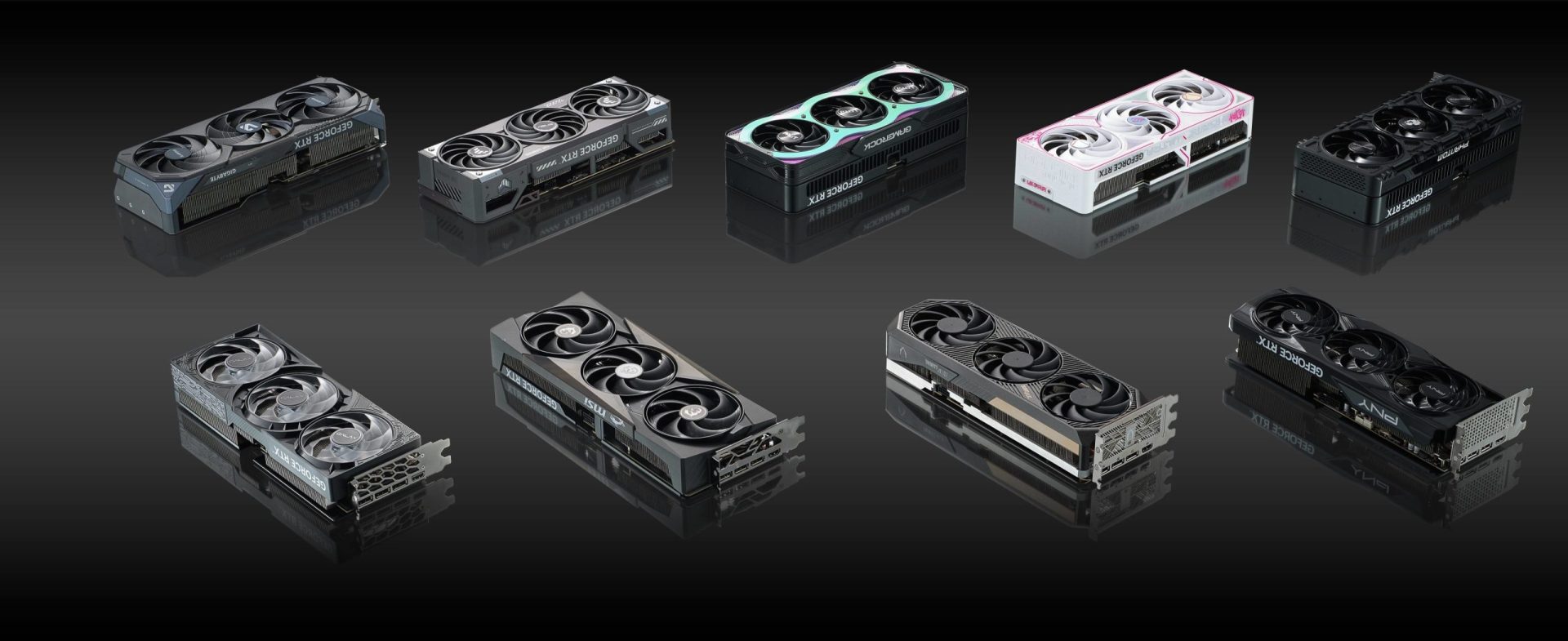
GPU prices in China surge as GDDR6 and GDDR7 memory costs climb sharply
Graphics card prices in China have jumped dramatically, with the latest increases hitting NVIDIA GeForce, AMD Radeon, and Intel Arc GPUs across multiple price segments. The main driver appears to be the fast-rising cost of graphics memory, especially GDDR6 and GDDR7, combined with tighter component supply and rapid pricing adjustments from distributors and retailers.
For months, GPU manufacturers have reportedly tried to absorb higher memory costs. However, the situation has now escalated to the point where board partners and sellers are updating prices almost immediately. In some cases, graphics card prices have changed overnight, leaving buyers facing much higher costs than expected.
The sharpest impact is being seen on high-end NVIDIA graphics cards. The GeForce RTX 5090D 32GB has reportedly risen by around 22.5% from its previous market price, placing it at more than double its official launch price in China. The RTX 5090D V2 24GB has also increased by about 12.8%, with minimum retail pricing now sitting above $3,500 in many listings.
The RTX 5080 has moved above the $1,500 range, while the RTX 5070 series has also become significantly more expensive. The RTX 5070 Ti is said to be up by roughly 21.8%, while the standard RTX 5070 has climbed by around 16.2%. These increases make the mid-to-high-end GPU market far more expensive for gamers, PC builders, and workstation users.
Mainstream cards are not escaping the price hike either. The RTX 5060 family has seen increases of around 15% across several models, while even the entry-level RTX 5050 has reportedly risen by about 13.2%. This is especially notable because these cards are usually the first choice for budget gaming PCs and affordable upgrades.
AMD Radeon graphics cards are seeing similar pressure. Current market data suggests that Radeon models have risen anywhere from roughly 14.3% to 28.8%, depending on the card. Some Radeon RX 9000-series models have seen particularly steep increases, with the RX 9060 XT 16GB reportedly showing one of the largest jumps.
Intel Arc GPUs have also been affected, though the increases appear smaller compared with NVIDIA and AMD. Cards that were previously in the low-$200 range are now moving closer to $300 in some Chinese retail channels.
One of the biggest reasons for the sudden price movement is the rising cost of GDDR6 and GDDR7 memory. Current reports suggest that DRAM pricing for these GPU memory modules has increased by around $19 to $20 per chip on average. For an 8GB graphics card, that can translate into a raw cost increase of about $75. After China’s 13% VAT and supply-chain markups are included, the final retail difference can move closer to $100 or more.
This explains why lower-cost cards are being hit so noticeably. A budget GPU with 8GB of VRAM has less room to absorb extra memory costs, so even a modest component increase can quickly become a major retail price jump.
Distributor pricing from major board partners shows how aggressive the increases have become. Some premium RTX 5080 models are now listed far above their original prices, with certain custom cards reaching close to $1,950. That represents an increase of nearly 60% over the original reference-level price in some cases.
The RTX 5070 Ti has also seen large increases across premium and compact models. Some versions are now listed around $1,300 to $1,475, putting them 38% to nearly 59% above their original pricing. Standard RTX 5070 models are also affected, with some custom cards moving into the $945 to $1,063 range, depending on the cooler design and factory overclock.
The RTX 5060 Ti 16GB is another model facing heavy pricing pressure. Several custom 16GB variants are now listed between roughly $750 and $780, much higher than the original price level of around $531. That puts many models more than 40% above their initial pricing. Even 8GB RTX 5060 Ti models have increased, with some sitting between about $524 and $583.
Updated pricing from another major GPU supplier shows week-over-week increases of roughly 10% to 20% on many models. The RTX 5090D V2 24GB has reportedly moved from around $3,395 to roughly $3,837 in just one week. RTX 5080 models have climbed from about $1,476 to $1,771 on some versions, while higher-end variants are approaching $1,919.
RTX 5070 Ti models have also increased by more than $200 in some cases, while RTX 5060 and RTX 5060 Ti cards have risen by around $44 to $59 depending on the model. Even older and lower-end cards, including RTX 3050 variants, are showing price movement.
What makes this situation especially frustrating for buyers is how quickly prices are being applied. During previous GPU shortages, including the cryptocurrency mining boom, retail prices often climbed over several weeks. This time, sellers in China are reportedly adjusting prices almost immediately after receiving updated distributor notices.
Only a short time ago, some RTX 5060 Ti models had dropped to around 2,499 RMB, or roughly $370. Now, similar cards are being listed above 3,500 RMB, or more than $515. That is a dramatic shift for a mainstream graphics card in such a short period.
There are also claims circulating in Chinese retail channels that some suppliers and sellers are holding back inventory while prices rise. Smaller shops are reportedly reacting by removing listings, pausing sales, or increasing prices in line with upstream distributors. While the full extent of inventory control is unclear, the result for consumers is the same: fewer cards available at affordable prices.
Retail messages circulating in China are reportedly warning sellers to suspend or limit graphics card sales and notify customers of immediate price changes. Some notices claim that VRAM price increases affect all models and advise retailers to act quickly before bulk buyers clear out remaining stock.
Reported memory-related price adjustments are said to include increases of around 600 RMB for 8GB cards, roughly 900 RMB for 12GB cards, and about 1,200 RMB for 16GB cards. In U.S. dollar terms, that works out to approximately $90, $130, and $165 before additional retail margins and taxes.
For PC gamers and builders, the timing is difficult. Many users who delayed upgrades in hopes of better GPU pricing may now face the opposite situation. Instead of falling prices, the market is moving upward again, especially in China, where distributor price changes are being reflected almost instantly.
The biggest concern is whether this trend will spread more broadly to other regions. Since GDDR6 and GDDR7 memory are global components, continued supply shortages could eventually affect graphics card prices outside China as well. If memory costs remain high, board partners may have little choice but to raise prices in additional markets.
For now, buyers in China are facing a fast-changing GPU market where prices can shift within days. High-end cards are becoming more expensive, mainstream GPUs are losing their value advantage, and even entry-level models are no longer immune to supply-chain pressure.
Unless GDDR6 and GDDR7 memory supply improves soon, graphics card prices may remain elevated, and further increases cannot be ruled out. For anyone planning a PC upgrade, the current market shows how quickly GPU pricing can change when memory shortages, retailer behavior, and distributor adjustments all hit at the same time.Graphics Card Prices Surge in China as DRAM Costs Push GPUs to New Highs
Graphics card prices in China are rising sharply, and the latest increases are hitting both high-end gaming GPUs and older entry-level models. The main driver appears to be the ongoing surge in DRAM pricing, which is now affecting not only new-generation graphics cards but also older products that were once considered budget-friendly.
Reports from buyers and retailers suggest that some manufacturers and sellers are raising prices aggressively as supply concerns grow. ASUS, in particular, has drawn attention from users who claim its price increases are steeper than those of other brands. One example being discussed is an RTX 5090 desktop PC listed on the company’s official store. The system was reportedly priced at 55,500 RMB before being raised to 59,000 RMB just one day later.
According to a salesperson cited in user reports, NVIDIA allegedly increased pricing by around 5,000 to 6,000 RMB. However, some buyers believe ASUS added another increase on top of that while placing the blame on NVIDIA. Whether this is due to supply pressure, component costs, or retailer strategy, the result is clear: consumers are facing much higher prices than they were just weeks ago.
The RTX 5060 Ti 16GB is one of the clearest examples of how quickly GPU prices are changing. A month ago, the card was selling for around 3,229 RMB, or roughly $487. It is now being listed at 4,999 RMB, which is about $738. That is a major jump for a mid-range graphics card and could make it far less attractive to gamers looking for a more affordable upgrade.
The RTX 5070 Ti is also seeing major price pressure, with many models now selling above 9,000 RMB, or more than $1,300. Premium models are climbing even higher. The ROG Astral variant is reportedly listed at 19,999 RMB, which is over $3,000. Meanwhile, the RTX 5090 D V2 24GB variant is selling for around 27,999 RMB, putting it above $4,000.
The RTX 5090 D V2 24GB has already been following an upward price trend, but the latest increase appears to be the steepest yet. This suggests that the market is reacting not only to current component costs but also to expectations of even higher memory prices in the near future.
AMD graphics cards are not escaping the trend either. Radeon RX 9070 GRE models are now selling for more than 4,500 RMB, or around $700. While NVIDIA’s RTX 50-series cards are drawing much of the attention, the broader GPU market appears to be under similar pressure across multiple brands and product tiers.
A few weeks ago, NVIDIA’s RTX 5080 Founders Edition reference cards were being sold at the official China MSRP of 8,299 RMB during a public event. Those same cards are now reportedly priced at 9,999 RMB or higher, which is more than $1,500. This rapid movement highlights how quickly retail pricing can shift when supply tightens and distributors anticipate future increases.
Even older and lower-end GPUs are becoming more expensive. The RTX 3050, once positioned as a more accessible entry-level gaming card, has reportedly climbed to a minimum price of 2,199 RMB, with average listings sitting around 2,500 to 2,600 RMB. That places the card above $350 in many cases.
The situation is even more surprising for very old budget cards. The NVIDIA GT 1030, which previously sold for under $50 in some markets, is now listed at 629 RMB, close to $100. For a card that is several generations old and limited in gaming performance, this price jump shows how deeply memory cost increases are affecting the entire graphics card market.
Retailers and distributors are also reportedly stockpiling graphics cards instead of selling through inventory quickly. With DRAM prices expected to continue rising, some sellers may be holding back stock in hopes of selling at higher prices later. This behavior can make shortages feel worse and push prices up even faster for buyers who need a GPU now.
Market analysts have already warned that DRAM prices could rise by around 50% in the third quarter of 2026, followed by another possible 40% increase in the fourth quarter. If those forecasts prove accurate, GPU prices may remain elevated for a long period, especially for cards with larger memory capacities.
The price pressure is not limited to the latest memory technologies. Older memory standards are also being affected, which explains why older graphics cards and low-end models are seeing price increases too. This broader memory shortage is now creating problems across the PC industry.
The impact is already being felt in declining PC shipments, and the graphics card market could face even more disruption if component costs continue to rise. For gamers, creators, and PC builders, the current situation means upgrades may become significantly more expensive in the months ahead.
Unless DRAM supply improves or demand cools, GPU prices in China could continue climbing across nearly every segment, from entry-level cards to flagship RTX 5090 systems. For now, buyers may need to act carefully, compare prices often, and avoid assuming that older graphics cards will remain affordable.