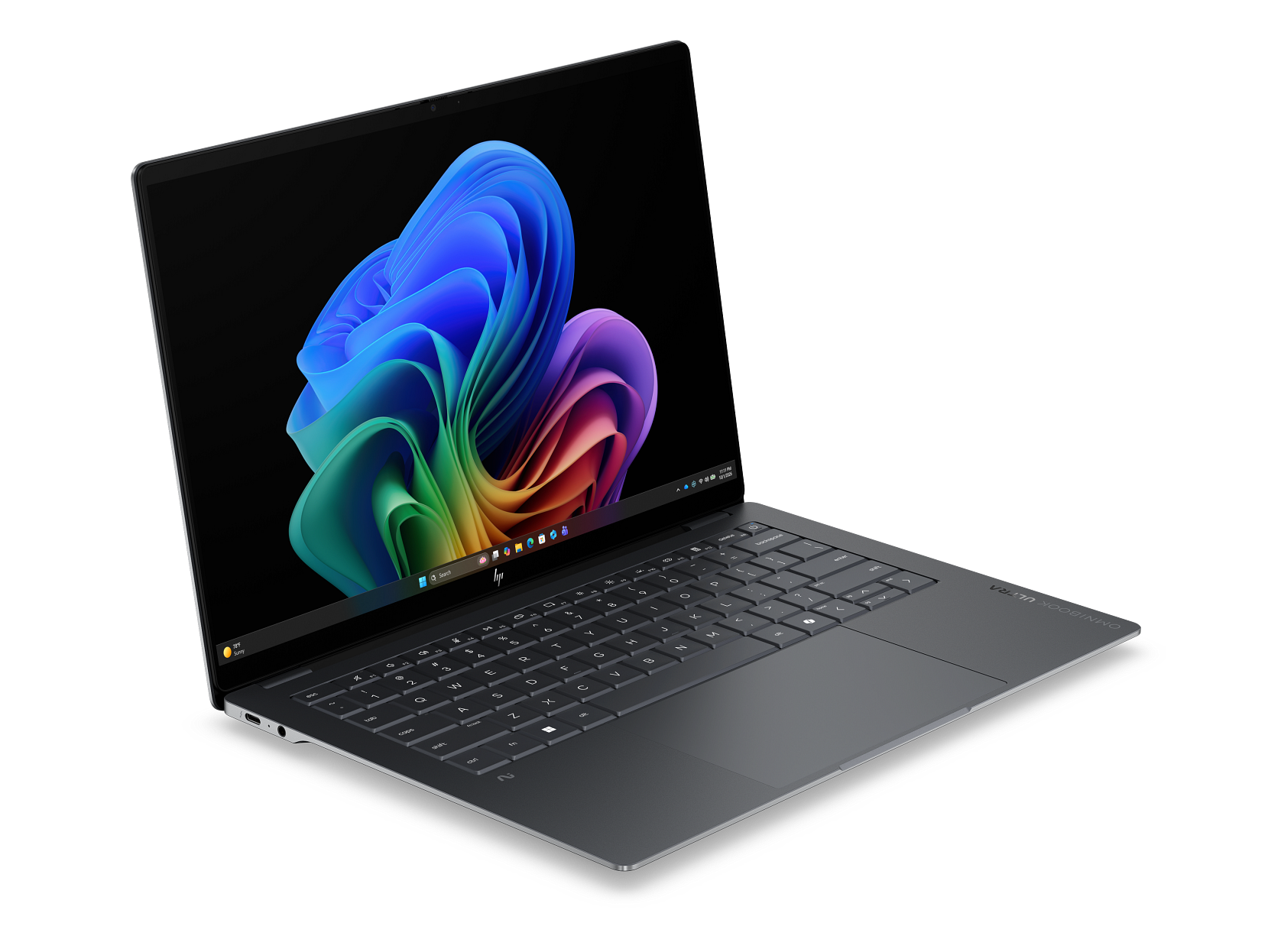
HP OmniBook Ultra 14 with Core Ultra X9 shows strong early gaming performance from Intel’s Arc B390 iGPU
The HP OmniBook Ultra 14 equipped with Intel’s Core Ultra X9 388H is shaping up to be one of the more interesting thin-and-light laptops for users who want better graphics performance without a dedicated GPU. Based on the benchmark figures provided, the laptop’s Intel Arc B390 integrated graphics, built on the Xe3 Panther Lake architecture, delivers a major jump over many older integrated GPU solutions.
In several gaming-style performance tests, the HP OmniBook Ultra 14 Core Ultra X9 consistently stays near the top of the comparison list. Its results place it close to, and sometimes slightly ahead of, other upcoming laptops using Intel’s Arc B390 iGPU, including systems powered by the Core Ultra X7 358H.
The HP OmniBook Ultra 14 Core Ultra X9 recorded 72.2 fps in one test, with minimum performance figures remaining fairly stable at 56.9 fps minimum, 59.7 fps at P0.1, and 61.6 fps at P1. That puts it just ahead of the Asus ExpertBook Ultra B9406CAA with the Core Ultra X7 358H, which reached 71.4 fps, and clearly ahead of the Dell XPS 14 with the same Core Ultra X7 358H, which scored 64.3 fps.
That difference may not sound huge when comparing the HP to the Asus, but it does show that the Core Ultra X9 388H can hold a slight lead when cooling, power limits, and system tuning are working in its favor. Against the Dell XPS 14, the HP’s advantage is more noticeable, with the Dell trailing by around 11 percent in that specific run.
The same pattern continues in another benchmark, where the HP OmniBook Ultra 14 Core Ultra X9 reached 61.3 fps. The Asus ExpertBook Ultra came in extremely close at 60.8 fps, while the Dell XPS 14 landed at 55.4 fps. Once again, the HP and Asus results suggest that Intel’s Arc B390 iGPU is capable of smooth 1080p-class performance in lighter or optimized games, while the Dell result shows how much laptop design and power tuning can affect final frame rates.
In additional runs, the HP OmniBook Ultra 14 Core Ultra X9 posted 54 fps and 53.5 fps, remaining nearly tied with the Asus ExpertBook Ultra B9406CAA. The Dell XPS 14 stayed behind at around 49 fps and 48.7 fps in those same comparisons. These figures reinforce the idea that the Arc B390 graphics solution is not just a small refresh, but a serious step forward for integrated graphics performance.
The biggest story is how much faster the new Intel Arc B390 appears compared with older or lower-tier integrated graphics. For example, a Lenovo ThinkPad T14 Gen 5 with AMD Ryzen 7 8840U and Radeon 780M managed 38.6 fps in one comparison where the HP OmniBook Ultra 14 Core Ultra X9 reached 72.2 fps. That is a massive gap of around 47 percent.
In another test, the same Radeon 780M-based system produced 29.8 fps while the HP reached 61.3 fps, a difference of roughly 51 percent. In further comparisons, the Radeon 780M result dropped into the mid-20 fps range, while the HP stayed in the mid-50 fps range. For users upgrading from older ultraportable laptops, that kind of improvement could make a real difference in everyday gaming, creative workloads, and GPU-accelerated applications.
Intel’s lower-end integrated graphics also fall far behind. A Lenovo Yoga Slim 7 Ultra 14 with Intel Core Ultra 7 355 and a 4-core Xe3 Panther Lake iGPU scored 33 fps in one test, compared with 72.2 fps for the HP OmniBook Ultra 14 Core Ultra X9. In other results, the same 4-core iGPU sits around 27 fps, 23.5 fps, and 23 fps, while the Arc B390-equipped HP remains far ahead.
The Lenovo ThinkPad X1 Carbon Gen 13 with Intel Core Ultra 5 225U and a 4-core Intel integrated GPU shows an even wider gap. In one comparison, it reached 17.8 fps while the HP OmniBook Ultra 14 Core Ultra X9 delivered 72.2 fps. In another run, the ThinkPad X1 Carbon result dropped to 10.7 fps while the HP remained at 53.5 fps. That is a dramatic difference and highlights why GPU configuration matters so much, even within thin-and-light laptops.
Interestingly, the HP OmniBook Ultra 14 Core Ultra X9 does not win every comparison. In some tests, the Asus ExpertBook Ultra B9406CAA with the Core Ultra X7 358H takes a small lead. One result shows the Asus at 110.6 fps, while the HP reaches 102.2 fps. Another comparison has the Asus at 77.7 fps against the HP’s 74.2 fps. A third shows the Asus at 63.1 fps, while the HP records 60.1 fps.
These results suggest that the Core Ultra X9 388H is not automatically faster in every scenario. Laptop cooling, chassis design, firmware tuning, memory configuration, and power limits can all influence performance. Even with the same Intel Arc B390 graphics architecture, two laptops can deliver slightly different frame rates depending on how the manufacturer configures the system.
Still, the HP OmniBook Ultra 14 Core Ultra X9 remains one of the strongest performers in the provided data. It is consistently close to the top, frequently ahead of the Dell XPS 14 Core Ultra X7, and significantly faster than many laptops using older Intel or AMD integrated graphics.
For anyone following Intel Panther Lake laptop performance, the Arc B390 iGPU is the key highlight. Integrated graphics have often been viewed as a compromise for gaming, but these numbers suggest that the next wave of premium ultrabooks could handle casual gaming, esports titles, older AAA games, and creative GPU tasks much better than previous generations.
The HP OmniBook Ultra 14 with Core Ultra X9 388H looks especially promising for users who want a portable laptop that does not rely on a dedicated graphics card. While it will not replace a high-end gaming laptop with discrete Nvidia or AMD graphics, its performance appears strong enough to make integrated GPU gaming far more practical.
The early benchmark data points to three major takeaways: the Intel Arc B390 iGPU is a major upgrade, the HP OmniBook Ultra 14 Core Ultra X9 is a strong performer, and real-world results will still depend heavily on laptop design and tuning. If HP can pair this performance with good battery life, quiet cooling, and a premium display, the OmniBook Ultra 14 could become one of the most compelling compact laptops in its class.Intel Arc B390 Xe3 iGPU benchmarks show a big leap for thin-and-light laptops
Early benchmark results for laptops using Intel’s next-generation Xe3-based integrated graphics are starting to paint an interesting picture. The Intel Arc B390 iGPU, paired with upcoming Core Ultra X-series processors, appears to deliver a noticeable jump in gaming and graphics performance compared with many current integrated GPU solutions.
The standout result comes from the Asus ExpertBook Ultra B9406CAA, equipped with an Intel Core Ultra X7 358H and Intel Arc B390 12 Xe3 Panther Lake iGPU. In the tested gaming runs, this system reached up to 53.8 fps, with lows around 46.6 fps and 44.7 fps in the 1% low range. That puts it slightly ahead of the HP OmniBook Ultra 14 with the more powerful-sounding Core Ultra X9 388H, which posted around 51.9 fps in the same comparison.
The Dell XPS 14 with the Core Ultra X7 358H and the same Intel Arc B390 graphics landed behind both, scoring around 46.9 fps. That is still a strong result for integrated graphics, but it shows how much laptop design, power limits, cooling, and firmware tuning can affect real-world performance, even when the GPU configuration looks similar on paper.
Across another benchmark pass, the Asus ExpertBook Ultra again held a small lead with 47.2 fps, compared with 44.9 fps for the HP OmniBook Ultra 14 Core Ultra X9 and 40.9 fps for the Dell XPS 14 Core Ultra X7. The pattern repeats in a more demanding run as well, where the Asus managed 20.2 fps, the HP reached 18.6 fps, and the Dell followed at 16.1 fps.
These results suggest that Intel’s Arc B390 12 Xe3 integrated GPU could become one of the most competitive options for premium compact laptops. While it is not meant to replace a dedicated gaming GPU, it appears capable of handling lighter games, esports titles, and graphics-heavy everyday workloads much better than previous low-power integrated solutions.
The comparison becomes even more interesting when looking at other thin laptops in the same performance mix. The Lenovo Yoga Slim 7 Ultra 14IPH11 with an Intel Core Ultra 7 355 and Intel Graphics 4 Xe3 iGPU posted lower results, including around 29.5 fps, 25.5 fps, and 21.5 fps across different runs. That is still usable in some scenarios, but it sits far behind the Arc B390-equipped machines.
Older or lower-tier Intel integrated graphics solutions fall even further back. The Lenovo ThinkPad X1 Carbon Gen 13 with an Intel Core Ultra 5 225U and Intel 4-core integrated graphics delivered roughly 17.5 fps, 15.2 fps, and 13.4 fps in the listed benchmark runs. Compared with the Arc B390 systems, that represents a major performance gap.
AMD-based laptops are also part of the broader comparison, including models with Ryzen AI 9 HX 375 and Radeon 890M, Ryzen AI 7 450 with Radeon 860M, Ryzen AI 7 350 with Radeon 860M, and Ryzen 7 8840U with Radeon 780M. These chips have helped raise expectations for integrated graphics performance, especially in slim laptops. Intel’s newer Xe3-based Arc B390 appears designed to compete directly in that space.
What makes these numbers notable is the laptop category involved. Devices such as the Asus ExpertBook Ultra, HP OmniBook Ultra 14, Dell XPS 14, Lenovo Yoga Slim series, and ThinkPad models are not bulky gaming notebooks. They are portable productivity machines aimed at professionals, students, creators, and everyday users who want strong battery life, premium displays, and compact designs. If integrated graphics can now deliver playable frame rates in more titles, buyers may not need to choose a heavier laptop with discrete graphics for casual gaming or light creative work.
The early performance ranking from the available results looks favorable for the Asus ExpertBook Ultra B9406CAA with Intel Core Ultra X7 358H and Arc B390 graphics. It leads the HP OmniBook Ultra 14 Core Ultra X9 in several runs, despite the HP using a higher-tier processor name. The Dell XPS 14 with the same Core Ultra X7 358H remains competitive but trails by around 9% to 13% in the listed tests.
For users shopping for a future ultrabook, the key takeaway is simple: Intel’s Panther Lake-era Xe3 graphics could be a meaningful upgrade. The Arc B390 iGPU looks much faster than older Intel 4-core graphics, ahead of lower Xe3 configurations, and competitive enough to make integrated graphics a serious part of the buying decision.
Of course, final retail performance will depend on each laptop’s cooling system, power profile, memory configuration, and driver maturity. Still, these early results show that the next generation of Intel Core Ultra laptops may offer a much stronger balance of portability, AI performance, battery efficiency, and graphics power.
If these benchmark trends continue, 2025 thin-and-light laptops with Intel Arc B390 Xe3 graphics could become some of the best options for users who want a premium everyday notebook that can also handle casual gaming and GPU-accelerated tasks without needing a dedicated graphics card.Intel’s next wave of integrated graphics is shaping up to be a major leap for thin-and-light laptops, and early benchmark figures suggest that the Intel Arc B390 with 12 Xe3 cores could become one of the fastest iGPUs in its class.
Several upcoming and current premium laptops appear in the comparison, including the Asus ExpertBook Ultra B9406CAA, Dell XPS 14 with Core Ultra X7 358H, HP OmniBook Ultra 14 with Core Ultra X9 388H, Lenovo Yoga Pro 7 14IAH10, HP OmniBook Ultra Flip 14, Lenovo Yoga Slim 7 Ultra 14IPH11, Lenovo Yoga Slim 7 14AKP G10, Lenovo ThinkPad T14 Gen 5, and HP Envy x360 14. The results show a clear trend: Intel’s newer Xe3-based graphics solution is pulling ahead of many competing integrated GPUs, including AMD’s Radeon 890M, Radeon 860M, and Radeon 780M.
The standout performer in the data is the Intel Arc B390 12-core Xe3 integrated GPU, paired with chips such as the Intel Core Ultra X7 358H and Core Ultra X9 388H. In one benchmark run, the Asus ExpertBook Ultra B9406CAA reached around 388 fps, while the Dell XPS 14 with the same Core Ultra X7 358H platform followed closely at about 384 fps. That puts both machines well ahead of several other premium ultrabooks using previous-generation or competing integrated graphics.
The HP OmniBook Ultra Flip 14 with Intel Core Ultra 7 258V and Arc Graphics 140V delivered around 228 fps in the same comparison, while the Lenovo Yoga Pro 7 with Intel Core Ultra 9 285H and Arc Graphics 140T scored about 198.9 fps. The HP OmniBook Ultra 14 with AMD Ryzen AI 9 HX 375 and Radeon 890M landed near 186.1 fps, while the Lenovo Yoga Slim 7 14AKP G10 with Ryzen AI 7 350 and Radeon 860M reached around 165.4 fps.
That gap is significant. If these figures are representative of final retail performance, Intel’s Arc B390 Xe3 graphics could offer a noticeable advantage in light gaming, creative workloads, and GPU-accelerated daily tasks without requiring a dedicated graphics card.
The performance lead continues across other test runs. In another set of results, the Dell XPS 14 with Intel Core Ultra X7 358H and Arc B390 reached about 138.6 fps, closely followed by the HP OmniBook Ultra 14 Core Ultra X9 at 137.5 fps and the Asus ExpertBook Ultra B9406CAA at 132.7 fps. By comparison, the Lenovo Yoga Pro 7 with Core Ultra 9 285H managed 87.6 fps, the HP OmniBook Ultra Flip 14 reached 77.8 fps, and the Ryzen AI 9 HX 375 with Radeon 890M came in at 75.7 fps.
AMD’s Radeon 890M remains a capable integrated GPU, especially for a compact laptop platform, but the data suggests that Intel’s upcoming Xe3-based Arc B390 may be operating in a higher performance tier. The Radeon 860M in the Ryzen AI 7 350 also performs respectably, with results such as 65 fps and 53.9 fps in separate runs, but it falls well behind the top Intel Arc B390 systems.
Another test shows the HP OmniBook Ultra 14 with Core Ultra X9 388H and Intel Arc B390 at 114.9 fps, with the Asus ExpertBook Ultra B9406CAA at 107.6 fps and the Dell XPS 14 at 103.3 fps. In that same group, the Lenovo Yoga Pro 7 scored 71 fps, the HP OmniBook Ultra Flip 14 reached 70.1 fps, and the HP OmniBook Ultra 14 with Ryzen AI 9 HX 375 posted 64.3 fps.
The pattern repeats again in a further comparison where the Core Ultra X9 388H system produced about 101.3 fps, while the Asus ExpertBook Ultra with Core Ultra X7 358H reached 99.5 fps and the Dell XPS 14 scored 95.1 fps. Behind them, the HP OmniBook Ultra Flip 14 with Core Ultra 7 258V reached 62.5 fps, the Lenovo Yoga Pro 7 delivered 60.9 fps, and the Radeon 890M-equipped HP OmniBook Ultra 14 came in at 54.6 fps.
These results are especially interesting because all of these devices belong to the thin-and-light laptop category. Traditionally, buyers had to choose between portability and graphics power. Integrated graphics have improved dramatically in recent years, but gaming or graphics-heavy work still often required a laptop with dedicated GPU hardware. Intel’s Arc B390 12 Xe3 iGPU could change that expectation if it delivers this level of performance consistently in shipping devices.
The Asus ExpertBook Ultra B9406CAA and Dell XPS 14 are particularly strong examples in the data. Both use the Intel Core Ultra X7 358H with Intel Arc B390 12 Xe3 graphics, and both repeatedly appear near the top of the rankings. The HP OmniBook Ultra 14 with Intel Core Ultra X9 388H also performs strongly, suggesting that Intel’s higher-end Core Ultra X-series processors may offer a serious graphics boost for premium ultrabooks.
The results also show how wide the performance spread can be between laptop designs. Even when two machines use similar graphics technology, cooling, power limits, memory configuration, and chassis design can all affect real-world frame rates. For example, the Core Ultra X7 358H systems from Asus and Dell frequently trade positions near the top, while the Core Ultra X9 388H-powered HP system also remains highly competitive.
For shoppers comparing laptops such as the Dell XPS 14, Asus ExpertBook Ultra B9406CAA, HP OmniBook Ultra 14, Lenovo Yoga Slim 7, and Lenovo Yoga Pro 7, the GPU results may become just as important as CPU performance, battery life, display quality, and weight. Integrated graphics now play a bigger role in video editing, AI-enhanced apps, casual gaming, image processing, and multi-monitor productivity setups.
The AMD Ryzen AI 9 HX 375 with Radeon 890M still deserves attention, especially for users invested in AMD’s laptop ecosystem. It offers strong integrated graphics performance and should handle everyday creative and entertainment tasks well. However, based on the benchmark figures provided, Intel’s Arc B390 appears to have a substantial lead in several scenarios.
The Ryzen AI 7 350 with Radeon 860M and Ryzen 7 8840U with Radeon 780M sit further down the chart. They remain solid options for mainstream productivity laptops, but users looking for the highest integrated graphics performance may want to keep an eye on Intel Core Ultra X7 358H and Core Ultra X9 388H models.
The biggest takeaway is simple: Intel’s Xe3 integrated graphics could be a major step forward for premium ultrabooks. The Intel Arc B390 12-core iGPU shows strong early performance against AMD Radeon 890M, Radeon 860M, Intel Arc Graphics 140V, and Arc Graphics 140T. If final laptops maintain similar results, buyers may soon get much better gaming and creative performance in slim devices without needing a dedicated GPU.
For anyone planning to buy a new thin-and-light laptop, models powered by Intel Core Ultra X7 358H, Core Ultra X9 388H, and Arc B390 graphics could be worth waiting for. The early numbers point to faster frame rates, stronger graphics capability, and a more competitive future for integrated GPU performance.Intel Panther Lake Xe3 benchmarks suggest a big leap for integrated laptop graphics
Early laptop benchmark results are giving us a clearer look at what Intel’s next-generation Panther Lake graphics may bring to thin-and-light notebooks. Based on the data, systems equipped with Intel Core Ultra X7 358H and Core Ultra X9 388H processors paired with the Intel Arc B390 12-core Xe3 integrated GPU are showing strong frame-rate performance across multiple tests, often landing near or ahead of current AMD Radeon 860M, Radeon 890M, and older Intel Arc graphics solutions.
The standout result comes from the HP OmniBook Ultra 14 running the Intel Core Ultra X9 388H with Intel Arc B390 graphics. It reached 176.9 fps in one benchmark run, placing it at the top of the tested group. Close behind were the Lenovo Yoga Pro 7 with Core Ultra 9 285H and Intel Arc Graphics 140T at 174.4 fps, the Asus ExpertBook Ultra with Core Ultra X7 358H and Arc B390 at 173 fps, and the Lenovo IdeaPad Pro 5 with AMD Ryzen AI 7 450 and Radeon 860M at 171.8 fps.
The Dell XPS 14 with Core Ultra X7 358H also performed strongly, posting 171 fps in the same comparison. That puts Intel’s new Xe3-based integrated graphics in the same performance class as some of the best current integrated GPU options available in premium laptops.
What makes these numbers interesting is not just the peak performance, but the consistency across different devices. In another benchmark set, the Asus ExpertBook Ultra with Core Ultra X7 358H reached 171.3 fps, while the HP OmniBook Ultra 14 with Core Ultra X9 388H followed closely at 170.7 fps. The Dell XPS 14 with the same Core Ultra X7 358H processor recorded 168.2 fps.
Those results suggest that the Intel Arc B390 iGPU may deliver reliable high-end integrated graphics performance when paired with the right cooling and power configuration. However, laptop design still matters. Thinner systems, lower power limits, or early drivers can affect frame rates significantly.
That becomes clear when looking at other entries in the same data. The Lenovo Yoga Slim 7 Ultra 14 with Intel Core Ultra 7 355 and Intel Graphics 4 Xe3 Panther Lake iGPU scored 164.3 fps in one run and 153.6 fps in another. These are still strong results, but they trail the Arc B390-equipped models.
AMD’s integrated graphics remain competitive, especially in laptops with Ryzen AI chips. The Lenovo IdeaPad Pro 5 with Ryzen AI 7 450 and Radeon 860M reached 171.8 fps in one test, nearly matching the fastest Intel Panther Lake entries. Meanwhile, the Lenovo Yoga Slim 7 with Ryzen AI 7 350 and Radeon 860M posted 157.4 fps, while the HP OmniBook Ultra 14 with Ryzen AI 9 HX 375 and Radeon 890M reached 143.2 fps in another run.
Older or lower-power graphics options fell further behind. The Lenovo ThinkPad T14 Gen 5 with Ryzen 7 8840U and Radeon 780M scored 144.2 fps in one test and 114.1 fps in another. The HP OmniBook Ultra Flip 14 with Core Ultra 7 258V and Intel Arc Graphics 140V reached 136 fps and 129.8 fps across two runs. The Lenovo ThinkPad X1 Carbon Gen 13 with Core Ultra 5 225U and a 4-core Intel integrated GPU landed much lower, with scores of 118.1 fps and 81.2 fps.
In heavier benchmark scenarios, the Intel Arc B390 still appears capable of delivering playable frame rates. The Asus ExpertBook Ultra reached 111.9 fps, while the HP OmniBook Ultra 14 with Core Ultra X9 388H recorded 99.6 fps. The Dell XPS 14 with Core Ultra X7 358H followed closely at 98.2 fps.
Other performance comparisons show the Dell XPS 14 and HP OmniBook Ultra 14 reaching around 135 fps and 132.2 fps, respectively, while some Radeon 860M and Radeon 780M systems landed between roughly 49 fps and 65 fps in the same group of results. This wide gap likely reflects different test settings, power profiles, thermal behavior, and driver maturity, so the figures should be viewed as early indicators rather than final retail performance.
Still, the overall trend is promising. Intel’s Panther Lake Xe3 graphics architecture appears to be a meaningful step forward for integrated GPU performance. If these results carry over to shipping laptops, users could see smoother gaming, faster creative workloads, and better performance in GPU-accelerated apps without needing a dedicated graphics card.
For buyers interested in premium ultrabooks, the Core Ultra X7 358H and Core Ultra X9 388H could become important chips to watch. The Intel Arc B390 12-core Xe3 iGPU seems positioned to compete directly with AMD’s Radeon 860M and Radeon 890M, while also improving on Intel’s previous integrated graphics solutions.
The biggest takeaway is simple: next-generation integrated graphics are getting fast enough to change expectations for thin laptops. Panther Lake may not replace dedicated gaming GPUs, but it could make lightweight notebooks far more capable for everyday gaming, media creation, and AI-assisted workloads.Intel’s next-generation integrated graphics are starting to look far more competitive, with early benchmark figures showing the Intel Arc B390 12 Xe3 Panther Lake iGPU holding its own against several modern AMD Radeon and Intel Arc solutions. The results suggest that upcoming thin-and-light laptops powered by Intel Core Ultra X7 and Core Ultra X9 processors could offer a noticeable jump in everyday graphics performance, especially for users who want a capable laptop without a dedicated GPU.
In the latest FPS comparisons, the Asus ExpertBook Ultra B9406CAA with an Intel Core Ultra X7 358H and Intel Arc B390 12 Xe3 Panther Lake iGPU delivered 45.3 fps, placing it slightly ahead of the HP OmniBook Ultra 14 with an Intel Core Ultra X9 388H and the same Arc B390 graphics, which reached 43.7 fps. The Dell XPS 14 with the Intel Core Ultra X7 358H and Arc B390 followed closely at 43.3 fps.
Those figures put Intel’s new integrated graphics in an interesting position. While the Arc B390 does not always catch the fastest AMD Radeon 860M and Radeon 890M results in lighter test scenarios, it appears to offer consistent performance in compact premium laptops. That consistency could matter more than peak numbers for buyers looking at ultrabooks, business notebooks, and portable productivity machines.
AMD still performs strongly in the same comparison set. The Lenovo IdeaPad Pro 5 14AGP11 with the AMD Ryzen AI 7 450 and Radeon 860M posted 80.3 fps in one run, while the HP OmniBook Ultra 14 with the Ryzen AI 9 HX 375 and Radeon 890M reached 78.2 fps. The Lenovo Yoga Slim 7 14AKP G10 with the Ryzen AI 7 350 and Radeon 860M scored 70 fps, showing that AMD’s latest integrated Radeon graphics remain very competitive in thin laptops.
Intel’s existing mobile graphics also show a wide spread in performance. The HP OmniBook Ultra Flip 14 with the Intel Core Ultra 7 258V and Intel Arc Graphics 140V reached 66.1 fps, while the Lenovo Yoga Slim 7 Ultra 14IPH11 with the Intel Core Ultra 7 355 and Xe3-based integrated graphics landed at 53.7 fps. Meanwhile, the Lenovo Yoga Pro 7 14IAH10 with the Intel Core Ultra 9 285H and Intel Arc Graphics 140T recorded 46.9 fps.
In a more demanding comparison, the Arc B390-equipped laptops again clustered together. The Asus ExpertBook Ultra B9406CAA reached 45.3 fps, the HP OmniBook Ultra 14 Core Ultra X9 configuration managed 43.7 fps, and the Dell XPS 14 Core Ultra X7 model came in at 43.3 fps. These results suggest that the Panther Lake Xe3 iGPU may deliver stable mid-range integrated graphics performance across different laptop designs.
AMD’s Radeon 860M and Radeon 890M dropped lower in that heavier workload but remained competitive. The Lenovo IdeaPad Pro 5 with Ryzen AI 7 450 and Radeon 860M scored 32.8 fps, the HP OmniBook Ultra 14 with Ryzen AI 9 HX 375 and Radeon 890M reached 31.9 fps, and the Lenovo Yoga Slim 7 with Ryzen AI 7 350 and Radeon 860M posted 27.8 fps. The HP OmniBook Ultra Flip 14 with Intel Arc Graphics 140V followed at 26.7 fps.
Lower down the chart, the Lenovo ThinkPad T14 Gen 5 with Ryzen 7 8840U and Radeon 780M achieved 22.4 fps, while the Lenovo Yoga Slim 7 Ultra with Core Ultra 7 355 reached 21.6 fps. The Lenovo Yoga Pro 7 with Core Ultra 9 285H and Arc Graphics 140T posted 18.1 fps, and the Lenovo ThinkPad X1 Carbon Gen 13 with Core Ultra 5 225U recorded 10.7 fps.
The early takeaway is clear: Intel’s Arc B390 12 Xe3 Panther Lake iGPU looks like a promising step forward for integrated laptop graphics. It may not dominate every test, especially against top AMD Radeon 860M and 890M results, but it appears capable of delivering playable frame rates and stronger graphics performance in premium thin-and-light laptops.
For users shopping for a future laptop, this could make Intel Core Ultra X7 358H and Core Ultra X9 388H systems more appealing, particularly if they want better graphics for casual gaming, creative apps, media workloads, and GPU-accelerated productivity without moving to a heavier laptop with dedicated graphics. As more Panther Lake laptops arrive, the battle between Intel Arc B390, AMD Radeon 860M, and AMD Radeon 890M is shaping up to be one of the most important integrated GPU comparisons in the next wave of portable PCs.


