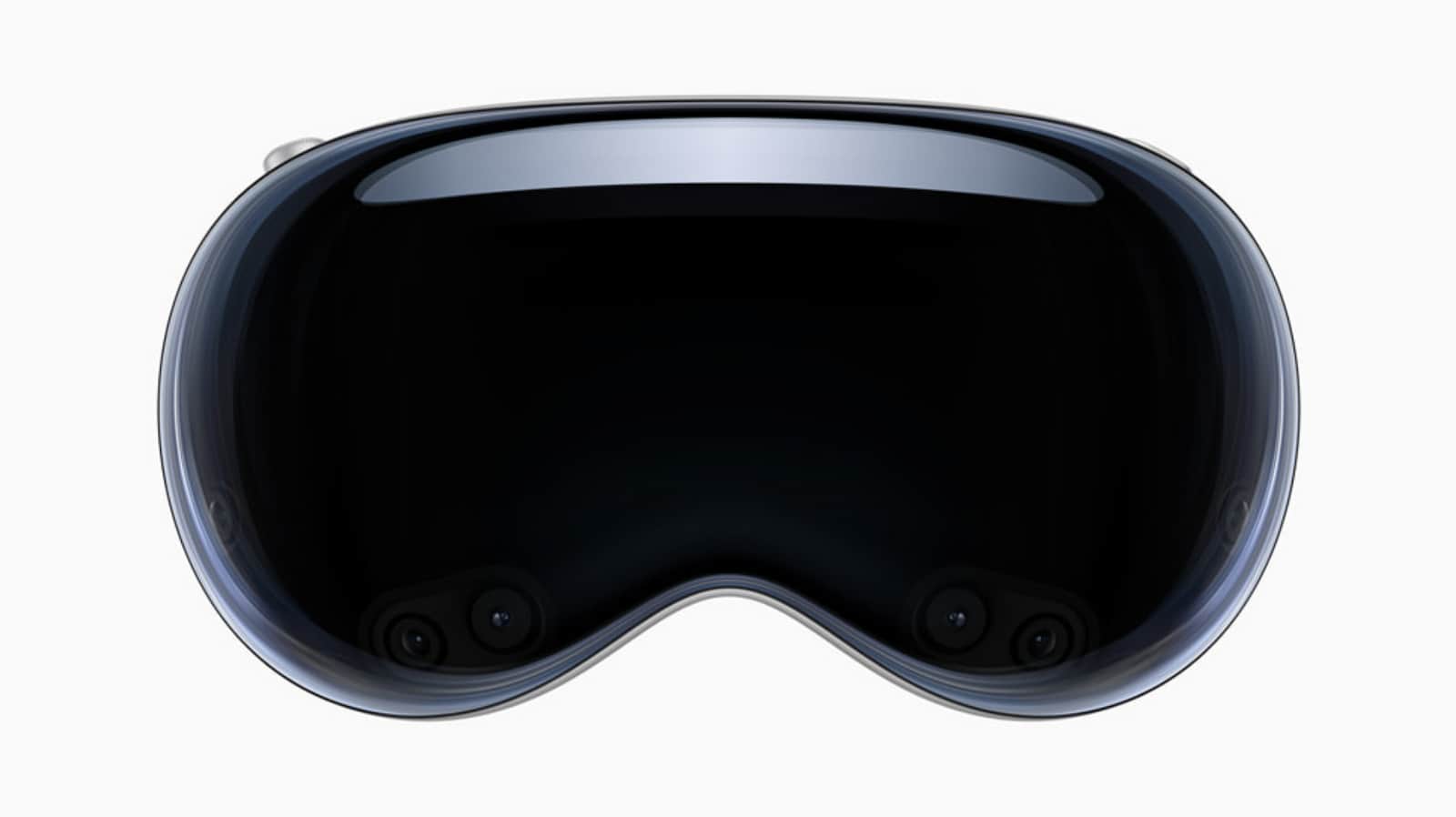
Apple has officially unveiled its much-anticipated mixed reality headset: the Apple Vision Pro. This cutting-edge device is poised to redefine the AR/VR experience by combining augmented reality (AR) and virtual reality (VR) capabilities, making it a versatile choice for various applications.
What Exactly is the Apple Vision Pro?
The Apple Vision Pro is marketed as an AR headset, but its true strength lies in its capacity to switch seamlessly between AR and VR, hence categorizing it as a mixed reality device. Apple made this groundbreaking announcement at its WWDC23 event on June 5, signaling its entrance into the mixed reality market.
Price Tag of the Apple Vision Pro
The cost of innovation doesn’t come cheap, and the Apple Vision Pro is no exception, with its price set at a substantial $3,499. This premium pricing reflects Apple’s strategy to initially target a niche market that will fully utilize the device’s capabilities, despite any early-stage hiccups that may arise. Given its first-gen status and the relatively slow adoption rates of AR and VR tech compared to other consumer electronics, Apple aims to cultivate a user base that recognizes the value and potential of this cutting-edge device.
For those looking for more cost-effective AR or VR alternatives, there are many options available, including products from Sony, Quest, Valve, and Vive, all of which come in at lower price points.
Gaming with the Apple Vision Pro
The Apple Vision Pro isn’t just a gaming device, although it does support this function. Over 100 Apple Arcade games, such as NBA 2K23, will be playable at launch, and the headset is compatible with controllers like the DualSense. The Vision Pro, however, is intended to be an all-encompassing portal to the Apple ecosystem, offering immersive experiences that extend beyond just gaming.
Interacting with the Apple Vision Pro
Apple has taken an innovative approach to interacting with the Vision Pro, eschewing traditional controllers in favor of eye-tracking cameras, hand gestures, and voice commands. Eye movements allow users to navigate and select content, while a simple pinch gesture can activate choices within the interface. Siri also responds to voice commands for a hands-free experience, allowing users to operate the headset with greater convenience and naturalness.
Standalone Functionality of the Apple Vision Pro
The Apple Vision Pro is a standalone device, meaning it requires no external hardware to function. It boasts an M2 chip for powerful graphics and computing, coupled with the R1 chip for handling real-time processing of data from the 12 camera sensors. Integrated speakers eliminate the need for additional headphones, creating an all-in-one immersive experience.
App Ecosystem for the Apple Vision Pro
While the initial app offering will focus on Apple’s suite of applications, there’s anticipation for a broader range of third-party apps by the headset’s release in the following year. The launch will include notable apps like Disney Plus, and developers are being encouraged to create content for VisionOS, the operating system designed specifically for the Vision Pro.
Battery Life and Practical Use
Battery life may be a consideration for potential users, as Apple notes a two-hour usage capacity with the included external battery bank. The bank connects to the headset, offering the flexibility to place it in a pocket or nearby surface while in use. For extended sessions, users have the option to connect the headset to a power source via a USB-C port.
Technical Specifications
The Apple Vision Pro features impressive hardware, including 4K micro-OLED displays for each eye, a robust sensor array for tracking, and an M2 chip for handling the heavy lifting. The audio is also a standout feature, with spatial audio provided by audio pods featuring multiple drivers for an immersive sound experience. Users can expect automatic lens adjustment, a massive pixel count, and advanced technologies such as OpticID for secure authentication.
The device offers the convenience of switching between AR and VR modes using a digital crown button. Audio Ray Tracing technology adds to the realistic soundscapes, rounding out an impressive list of specs that justify the headset’s premium price.
The Apple Vision Pro is shaping up to be a significant leap forward in mixed reality technology, merging Apple’s flair for innovation with the growing interest in immersive digital experiences.
Apple Vision Pro Features Explained
The highly anticipated Apple Vision Pro headset is packed with an array of cutting-edge features designed to enhance user experience. Notably, the EyeSight function utilizes interior tracking sensors to provide visual cues to others about the user’s activities, a beneficial feature for shared environments.
The device is compatible with Apple services such as FaceTime, Safari, and iCloud, and promises future support from a dedicated app store. Additionally, the headset is endowed with meticulous hand and eye tracking capabilities for intuitive control and interaction with various interface elements, while also offering robust voice dictation for hands-free commands.
Security is also a top priority, with the integration of OpticID—a biometric authentication system akin to a retina-based fingerprint scanner. This feature not only secures the headset but also authorizes Apple Pay transactions with a glance.
Materials and Design of the Apple Vision Pro Headset
The sophistication of the Apple Vision Pro extends to its materials and design. The device boasts a seamless piece of three-dimensional laminated glass, meticulously polished to serve as a camera lens, melding into a custom aluminum alloy frame. A modular light seal that connects magnetically to the frame, coupled with a breathable and cushioned headband crafted from 3D-knitted fabric, ensures both comfort and a tailored fit.
For users needing corrective vision solutions, Apple provides Zeiss-made ocular inserts that attach magnetically for convenience. These inserts are particularly useful for multiple users sharing the device in one household.
Availability of the Apple Vision Pro
Though a precise release date was initially unspecified, Apple later confirmed that the Apple Vision Pro would officially launch on February 2, with pre-sales starting on January 19. Prospective buyers should be vigilant as the product may sell out swiftly post-launch due to high demand, and there have been reports of stock being acquired by resellers.
To secure a device, it is recommended to either pre-order online or visit an Apple Store on launch day as there is a possibility that some stock might be reserved for in-store purchases.
Purchasing the Apple Vision Pro
Interested customers can pre-order or buy the Apple Vision Pro through the official Apple website or at Apple Store locations. The online purchase process includes a face scan using an iPhone or iPad with FaceID technology to measure for the light seal and headbands. Apple also inquires about the customer’s vision to determine if Zeiss Optical Inserts are needed, priced at $99 for readers and $149 for prescription inserts.
After these steps, buyers can choose their preferred storage capacity, payment method, and decide whether to include Apple Care+. Options for free shipping or in-store pickup will also be available.
What’s Included with the Apple Vision Pro
With the purchase of the headset, regardless of chosen storage size, Apple provides an assortment of accessories. These include a polishing cloth, a Solo Knit Band, a Dual Loop Band, a Light Seal with two cushions, along with a USB-C charging cable, power adapter, a battery, and a protective cover for the headset. The Light Seal acts as a mask to enhance the immersive experience of the Vision Pro.
Compatibility with Glasses
Designed for use without traditional glasses, the Apple Vision Pro cannot be worn over them. This is why Apple offers the aforementioned Zeiss Optical Inserts as alternatives. Customers who normally wear glasses should consider these inserts when ordering the headset.