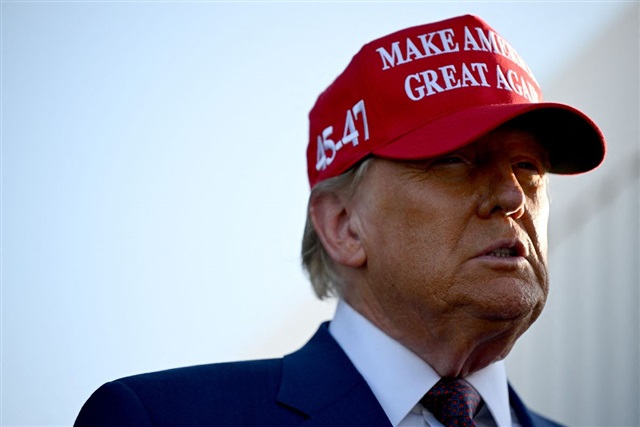
Speaking at the North American International Auto Show in Detroit this week, President Trump delivered remarks that immediately caught the attention of automakers, suppliers, and trade watchers. In a speech that blended economic nationalism with warnings about global competition, he openly questioned the long-term value of the United States–Mexico–Canada Agreement (USMCA), the trade framework that replaced NAFTA and currently underpins much of North America’s cross-border auto manufacturing.
Trump’s comments were striking because the USMCA is deeply embedded in the way the modern auto industry operates. Vehicles and key components routinely cross the U.S., Mexico, and Canada borders multiple times before final assembly. By casting doubt on the agreement’s future, Trump signaled that the rules shaping where cars are built, how supply chains are organized, and what qualifies for tariff-free trade could be back in play.
Industry leaders listening in Detroit are likely weighing what this could mean for investment decisions already in motion. Automakers plan factories, battery production, and parts sourcing years in advance. Even the possibility of tougher terms, renegotiation, or increased tariffs can force companies to rethink where they expand and how they protect margins—especially as the industry transitions to electric vehicles and more complex battery supply chains.
At the same time, the president’s remarks hinted at a broader concern that goes beyond North American trade: the expanding influence of Chinese automakers. While USMCA’s existing framework is designed to encourage regional production, uncertainty around the deal could unintentionally create openings for outside competitors to gain ground—particularly if shifting rules or higher costs weaken the appeal of building in North America.
The context matters. Chinese carmakers have been scaling rapidly, improving quality, and pushing aggressive pricing strategies in global markets. Some have explored ways to enter the North American market indirectly, including manufacturing or assembling vehicles in third countries. Any wavering around USMCA, or changes that disrupt current supply chains, could reshape competitive dynamics in ways that U.S. and regional automakers may find difficult to control.
For consumers, the biggest question is what happens next. If trade policy uncertainty leads to higher production costs or supply chain bottlenecks, that pressure can filter down into vehicle prices. If, on the other hand, the outcome is a more protectionist framework aimed at keeping production local, it could spur more domestic investment—but potentially at the cost of higher near-term expenses as companies adapt.
Trump’s Detroit appearance underscores how closely the auto industry depends on trade stability—and how quickly politics can alter the business landscape. With the USMCA now being publicly questioned at the highest level, automakers, suppliers, and workers across the region are likely bracing for a period of renewed debate over tariffs, manufacturing rules, and the future shape of North America’s auto economy.