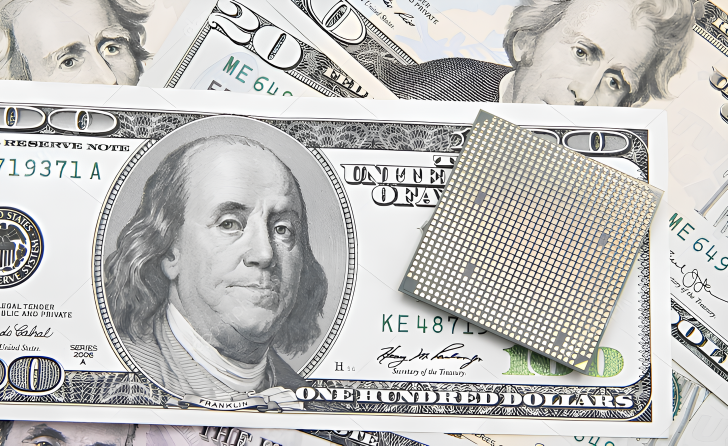
It appears that the CHIPS Act, a crucial initiative aimed at revitalizing semiconductor production in the United States, might be facing an uncertain future under the current administration. This initiative was designed to bolster the US’s position as a leader in chip manufacturing, encouraging companies like TSMC and Intel to set up new facilities within the country. However, former President Donald Trump has been openly critical of the act, labeling it as “Biden money” that has yet to yield significant benefits and suggesting it should be revoked.
Recent reports indicate that the act might indeed be heading towards its end. According to Korean media, there has been a significant exodus from the Department of Commerce’s Chip Program Office (CPO), with over 120 staff members either resigning or being laid off. Among them was Dan Kim, formerly a Vice President at SK hynix, who joined the CPO as the chief economist three years ago. His departure signals a potential shift away from supporting South Korean companies like SK hynix and Samsung, posing a threat to the act’s objectives.
To put the CHIPS Act into perspective, it involves $280 billion in grants, with $52 billion allocated for federal investments and tax incentives aimed at enhancing semiconductor research, development, and manufacturing in the United States. Major players such as Intel and TSMC have shown substantial commitment to US production while companies like Samsung also planned to join the initiative, with a facility announcement in Texas.
The recent reduction at the CPO is reportedly linked to efforts by Elon Musk’s DOGE division to overhaul federal spending. While the future of the CHIPS Act remains uncertain, whether it will face cuts or a complete termination is still in contention. Given Trump’s critical stance, there’s speculation that the subsidies could be significantly reduced or the act could be scrapped altogether. This potential shift in policy leaves the fate of the CHIPS Act hanging in the balance.