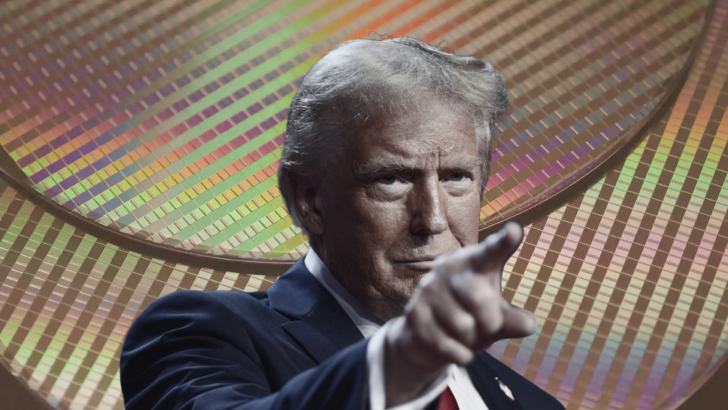
In a striking turn of events, there’s a renewed push to revitalize Intel’s semiconductor prowess, courtesy of ongoing dialogue involving the Trump administration, TSMC, and Broadcom. The aim is to resurrect Intel’s fortunes and reestablish it as a leading player in the semiconductor arena.
Intel’s journey has been anything but smooth in recent quarters, falling short of revenue forecasts and encountering setbacks in its foundry division. The turbulence worsened after the departure of former CEO Pat Gelsinger, amid whispers of potential business sell-offs causing market speculation. Despite these challenges, a potential turnaround seems on the horizon as recent reports suggest TSMC and Broadcom might be interested in acquiring certain facets of Intel’s operations, albeit with an eye towards restructuring.
The Trump administration is fiercely committed to rejuvenating semiconductor manufacturing within the United States instead of relying heavily on foreign entities. Encouraging collaborations or even the transfer of technology between TSMC and Intel is part of this initiative, with the hope of bolstering Intel’s capabilities.
An image that lingers in memory is of an Intel employee holding a wafer with cutting-edge 3D stacked Foveros technology at a facility in Hillsboro, Oregon. February 2024 marked a significant milestone with Intel Corporation unveiling Intel Foundry, lauded as the world’s first systems foundry for the AI age, emphasizing technological leadership and sustainability.
Despite the buzz around a possible TSMC and Broadcom involvement, the narrative is complex. Broadcom has shown interest in Intel’s chip design and marketing domains, while TSMC is eyeing Intel’s manufacturing facilities, aiming to participate in an “investor consortium.” Spearheading these negotiations is Frank Yeary, Intel’s interim executive chairman, focused on maximizing shareholder profits while honoring Intel’s storied past.
It’s important to note that while a TSMC-Broadcom agreement would ostensibly align with “Made in USA” sentiments, it conflicts with Trump’s stance against ceding domestic companies to international control. Intel’s future is not merely a business matter but a national security concern, making unilateral business sell-offs unlikely under Trump’s policies.
The path forward for Intel Foundry appears promising, particularly in light of formidable advancements with the 18A process. A potential collaboration with TSMC could facilitate a robust comeback for Intel, provided it aligns with the Trump administration’s strategic expectations. The unfolding developments hold significant implications for the semiconductor industry, and a favorable resolution could greatly enhance the sector’s landscape in the United States.


