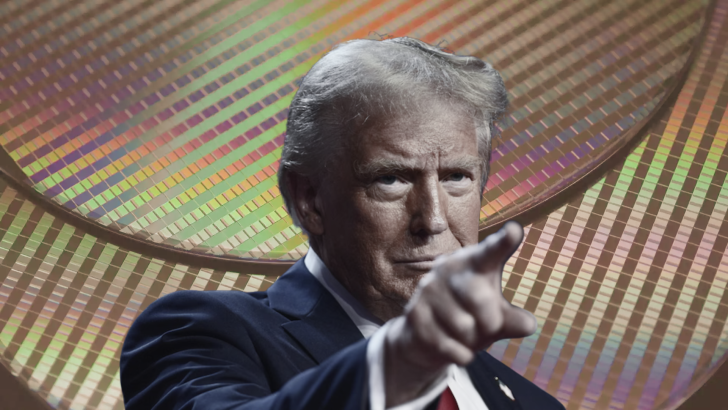
Donald Trump has voiced his frustration over the United States losing its lead in the chip industry. Rather than pointing fingers at Taiwan, he puts the blame squarely on past administrations for this setback but remains confident that the US will reclaim a “big portion” of the chip business — suggesting that recent deals, like that with TSMC, are just the beginning.
Under Trump’s leadership, there’s been a notable shift in the US tech landscape. The US domestic chip industry is witnessing significant growth, partly due to companies like TSMC announcing plans to expand their presence in the region to sidestep tariffs. This development is bolstered by substantial attention being directed at US-based firms such as Intel, emphasizing their critical role in the national market. From the Oval Office, Trump shared reflections on former Intel CEO Andy Grove’s impactful tenure, describing it as a time when the US reigned supreme in the chip sector. He expressed confidence that these golden days are on the horizon once more.
Trump’s recognition of Taiwan’s rise as a semiconductor powerhouse is not framed as an outright theft of the chip business; rather, he attributes it to successive US administrations that, in his view, allowed this shift to happen unchecked. Yet, he optimistically contends that the US is poised to reclaim substantial ground in the semiconductor industry.
Adding momentum to this aspiration is TSMC’s ambitious investment of $165 billion in the United States, which encompasses building five new facilities in Arizona and a state-of-the-art R&D center. This move signifies the US government’s strong commitment to revitalizing domestic chip production.
While Trump’s administration envisions a future where US chip production thrives, the path to shifting the intricate global supply chain from Taiwan to the United States is fraught with challenges. It requires meticulous coordination and significant technological collaboration — something that requires time and diplomatic finesse with the Taiwanese government.
In the coming years, as efforts intensify to restore the US’s chip manufacturing prowess, companies like Intel are likely to play a pivotal role. All eyes are on how the US will navigate this transition and reclaim its stature in the semiconductor arena.