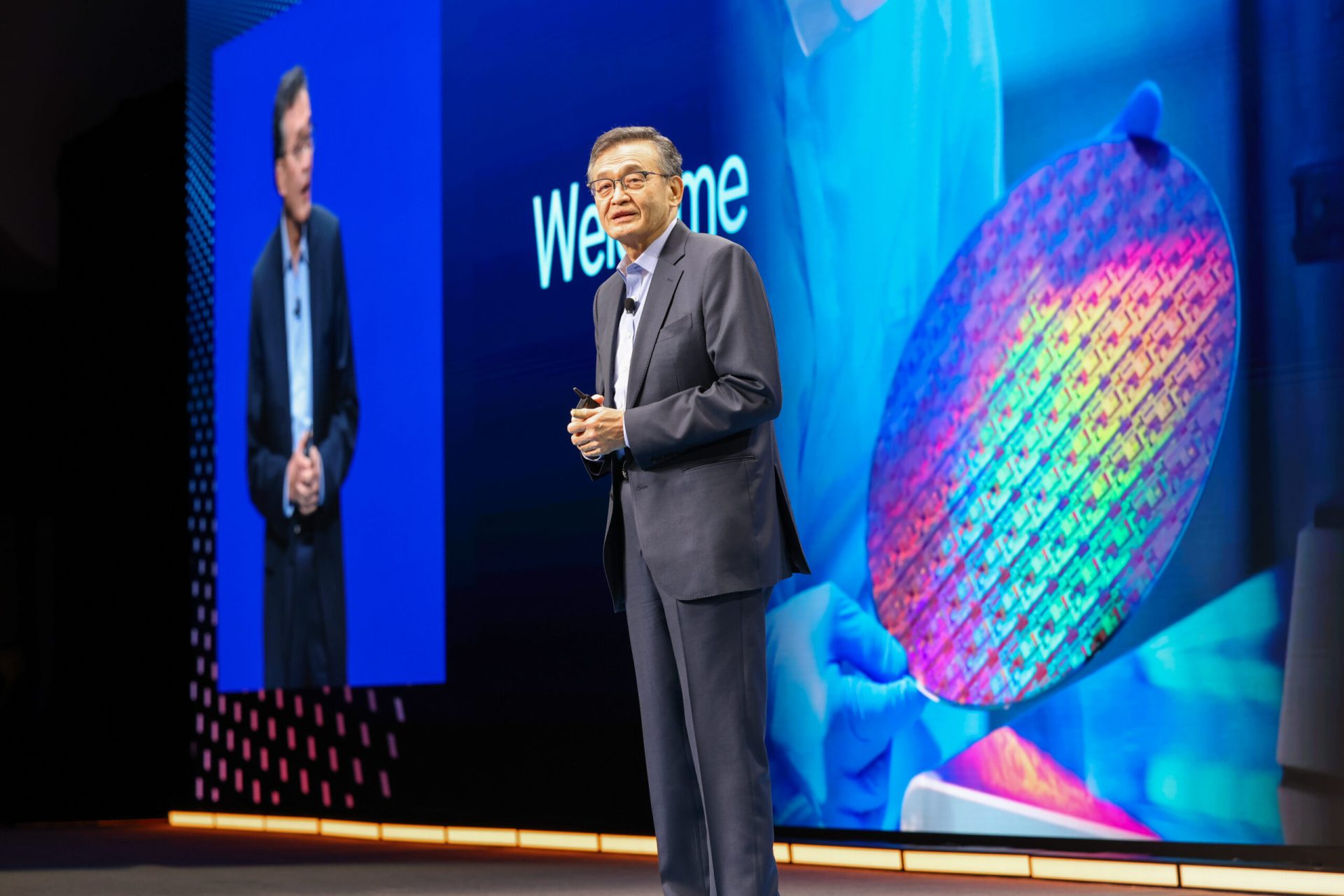
Intel CEO Lip-Bu Tan Was Ready to Retire, Then Came the Challenge to “Save Intel”
Intel’s comeback story has taken a dramatic turn under CEO Lip-Bu Tan, a semiconductor veteran who nearly walked away from the industry before accepting one of the most difficult jobs in technology: leading Intel through a critical transformation.
Tan, who became Intel CEO in 2025, recently opened up about why he took the role, how close he came to saying no, and why he believes Intel can rebuild itself into a stronger force in chips, AI infrastructure, advanced packaging, and foundry manufacturing.
His decision was not simple. In fact, most people around him warned him not to take the job.
For decades, Intel was viewed as the gold standard of the semiconductor industry. It was the company others studied, respected, and tried to match. Tan himself saw Intel as a model of execution, strong margins, engineering discipline, and long-term survival. That made the company’s recent struggles even more painful for him to watch.
Intel had lost ground in key areas, including CPUs, GPUs, manufacturing leadership, and data center momentum. Rivals such as AMD and NVIDIA moved aggressively into spaces where Intel once had clear advantages. At the same time, Intel’s foundry ambitions required massive investment, sharper execution, and renewed customer trust.
Tan said the company was too important to the United States and the global semiconductor ecosystem to continue drifting. Still, when Intel asked him to step in as CEO, he hesitated.
Many of his friends and industry peers told him to avoid the role. Their reasoning was straightforward: there was no guarantee of success, and Tan had already built an impressive legacy. He had helped turn Cadence Design Systems into a major success, and another turnaround attempt, especially one as large and complex as Intel, carried serious risk.
Some warned him that people often remember leaders by their final act. If Intel failed under his watch, it could overshadow everything he had achieved before.
But one conversation changed his perspective.
Tan recalled that a close friend and customer sent him a thoughtful message from Seattle. The message struck him deeply: Intel was an iconic company, vital not only to the chip industry but also to the country. Before retiring, his friend urged him to save Intel.
That line stayed with him.
It was not the first time Tan had been considered for Intel’s top job. He revealed that he was one of the two final candidates for Intel CEO back in 2021. However, he declined at the time because he had made a promise to Anirudh Devgan, his successor at Cadence, that he would remain until Devgan became CEO. For Tan, timing and commitment mattered.
This time, the situation was different.
Tan said his wife, who had previously opposed the move for family reasons, gave him her support. She noticed that his heart was already in the decision and that he was emotionally affected by what was happening at Intel. Her encouragement helped him make the final call.
That personal support, combined with the belief that Intel still mattered deeply, pushed Tan to begin what he now calls his Intel journey.
Since taking the role, Tan has started reshaping Intel with a sharper focus on execution, customers, AI, foundry growth, and engineering strength. While former CEO Pat Gelsinger laid important groundwork, especially around Intel Foundry and the company’s manufacturing roadmap, Tan appears focused on making Intel faster, leaner, and more competitive.
One of the biggest areas of focus is Intel Foundry. The business is designed to turn Intel into a major manufacturing partner for external customers while also supporting Intel’s own product divisions. This is a difficult balance, but it could become one of Intel’s most important growth engines if executed well.
Intel’s advantage is not only in process technology. The company is also pushing advanced packaging technologies such as EMIB and Foveros, along with future manufacturing nodes including Intel 18A and Intel 14A. In the AI era, packaging is becoming just as important as raw transistor scaling because customers need powerful, efficient, multi-chip designs for data centers, accelerators, and custom silicon.
Tan also suggested that Arm could become more than just an IP company in the future. Arm has traditionally licensed chip designs to other companies, but it has shown growing interest in building more complete CPU products. Tan indicated that Intel could play a role in supporting that kind of work through its foundry and manufacturing capabilities.
If Intel can attract major customers looking for advanced manufacturing, custom AI chips, and high-performance packaging, its foundry business could become a major pillar of the company’s recovery.
Tan also acknowledged the success of Intel’s biggest competitors. He spoke with respect about AMD and its CEO, Dr. Lisa Su, calling her a good friend and praising the work she has done. He recalled that Su once asked him whether she should take the AMD CEO role. Since then, AMD has grown into a much stronger company, taking major steps in CPUs, data centers, and AI-focused products.
That success has not gone unnoticed inside Intel. Tan understands that Intel must earn back its position, not assume it. The company is now competing in a market where AMD, NVIDIA, Arm-based designs, and custom silicon providers are all moving quickly.
Artificial intelligence is another major part of Intel’s next chapter. Tan said he is quietly building Intel’s GPU capabilities and has already hired a top GPU architect. He also plans to bring in one or two high-level CPU architects to strengthen Intel’s roadmap for different AI workloads, including agentic AI.
This is significant because the next phase of AI computing will not rely on one type of chip alone. Different workloads will require different combinations of CPUs, GPUs, accelerators, networking, memory, and packaging. Tan’s strategy appears to center on purpose-built silicon, meaning chips designed specifically for certain applications, industries, and performance needs.
Intel is expected to introduce future AI-focused GPU products such as Crescent Island, based on the Xe3P architecture, while Jaguar Shores continues development. These products are part of Intel’s broader attempt to regain relevance in high-performance computing and AI infrastructure.
Tan believes Intel has the pieces needed to compete: CPUs, GPUs, advanced packaging, foundry technology, and supply chain strength. The challenge is putting them together in a way that customers trust and markets reward.
His vision for Intel is not just about reclaiming past glory. It is about building a company that can serve many different customers, create specialized silicon for specific markets, and become a reliable partner in a world where AI, national chip security, and supply chain resilience are becoming increasingly important.
The Intel turnaround will not happen overnight. The company still faces intense competition, high manufacturing costs, demanding customers, and pressure to execute flawlessly on future process nodes. But under Lip-Bu Tan, Intel appears to be moving with renewed urgency and a clearer sense of purpose.
What makes Tan’s story compelling is that he did not take the role for an easy win. He accepted it because Intel still matters, because the industry needs strong semiconductor manufacturing choices, and because he believes the company can be rebuilt.
Intel’s next era is now taking shape through foundry expansion, AI chip development, advanced packaging, and strategic talent hiring. Whether the company can fully regain its leadership remains to be seen, but the mission is clear: Intel is trying to become a major force again, and Lip-Bu Tan has chosen to lead that fight.