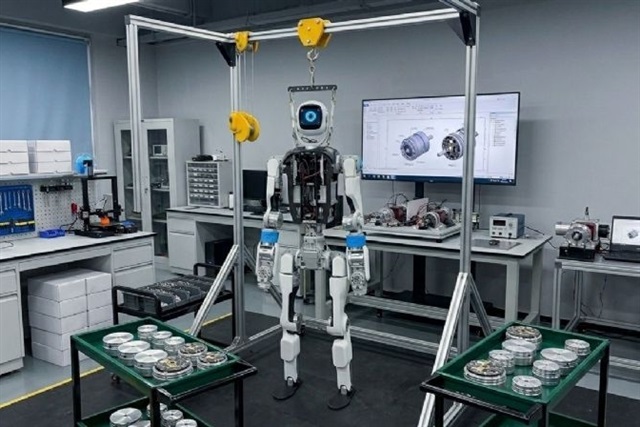
TM Technology Enters the Humanoid Robot Race With Its First AI-Powered Machine
Artificial intelligence is no longer limited to screens, apps, and cloud-based software. The next major shift is happening in the physical world, where AI is beginning to power machines that can move, interact, assist, and work alongside people. TM Technology has now taken a major step into this fast-growing field by introducing its first humanoid robot.
The launch marks an important move for the company as humanoid robotics becomes one of the most closely watched areas in smart manufacturing and industrial automation. These robots are designed to bring artificial intelligence into real-world environments such as factories, warehouses, offices, and eventually homes.
Unlike traditional industrial robots that are often fixed in place and built for repetitive tasks, humanoid robots are designed to operate in spaces made for humans. Their human-like form allows them to navigate standard work environments, handle tools, move between tasks, and potentially support workers in more flexible ways.
TM Technology’s entry into humanoid robotics reflects a broader industry trend: companies are increasingly looking for machines that combine AI decision-making with physical movement. This concept, often referred to as physical intelligence, could become a key part of the next generation of automation.
In factories and warehouses, humanoid robots could help with inspection, material handling, assembly support, inventory management, and repetitive labor-intensive work. In office environments, they may eventually assist with deliveries, maintenance tasks, reception duties, or facility operations. Looking further ahead, similar systems could also play a role in healthcare support, elder care, and home assistance.
The timing of TM Technology’s announcement is significant. Businesses around the world are facing labor shortages, rising operational costs, and growing demand for faster, more adaptable production systems. Humanoid robots could offer a new solution by helping companies improve efficiency while reducing the burden of repetitive or physically demanding tasks.
However, the success of humanoid robots will depend on more than just appearance. These machines need advanced AI models, reliable sensors, precise motor control, strong balance systems, and the ability to understand complex surroundings. Safety will also be a major priority, especially as robots begin working closer to humans in shared environments.
TM Technology’s first humanoid robot suggests the company is positioning itself for a future where AI and robotics are deeply connected. While full details about the robot’s capabilities, commercial availability, and target industries have not been fully outlined, the announcement shows a clear ambition to compete in one of technology’s most promising sectors.
As AI continues moving from digital intelligence to physical intelligence, humanoid robots may become a defining part of smart manufacturing and automation. TM Technology’s debut in this space adds another important player to the race to build machines that can think, move, and assist in the real world.