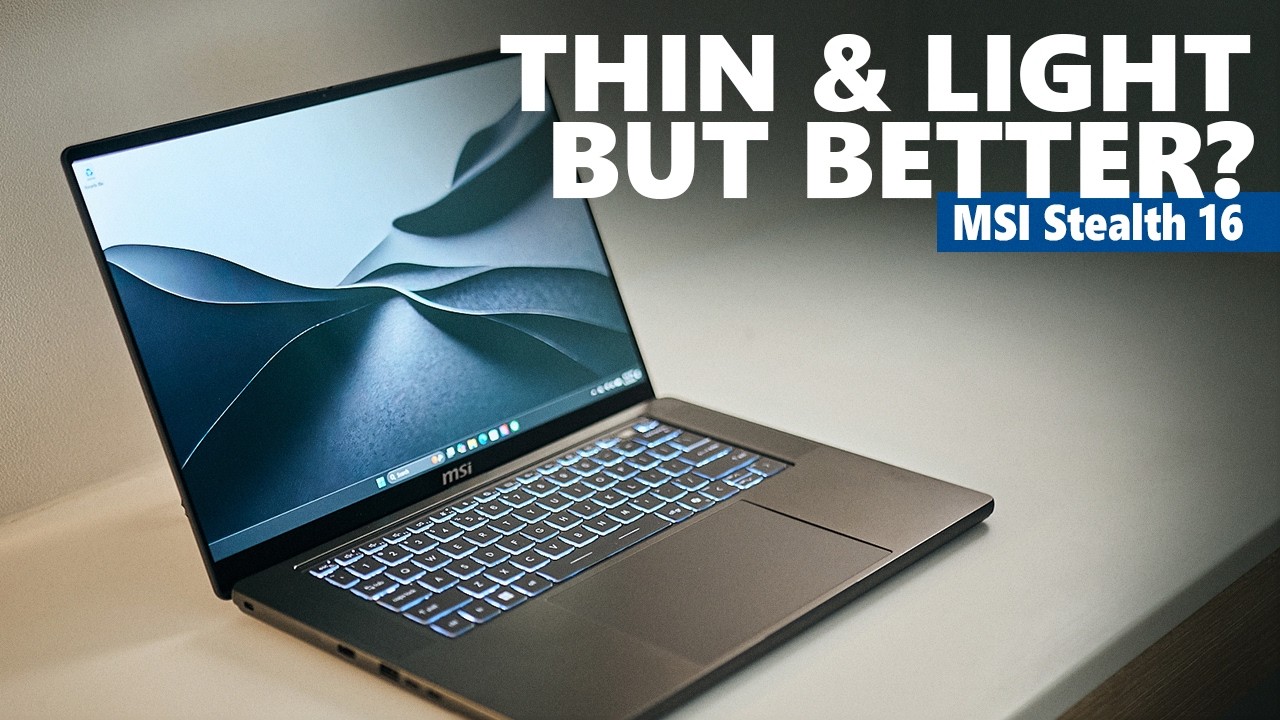
MSI Stealth 16 Hands-On: A Slim Gaming Laptop Ready to Challenge the Best 16-Inch Rivals
MSI’s next-generation Stealth 16 is shaping up to be one of the more interesting thin and light gaming laptops of the year. First shown during CES, the sleek 16-inch machine is now moving from showroom promise to real-world testing, with early benchmark runs giving a clearer look at what this portable gaming laptop may bring to the table.
The Stealth series has always focused on balancing performance with a refined, travel-friendly design, and the latest MSI Stealth 16 continues that direction. Instead of chasing a bulky desktop-replacement format, MSI is aiming for users who want strong gaming power, creator-friendly performance, and everyday portability in one premium chassis.
That puts the Stealth 16 in a very competitive category. It is not just going up against traditional gaming laptops, but also powerful slim notebooks built for creators and hybrid users. Its closest rivals include the ASUS ROG Zephyrus G16, Lenovo Legion 7 and Legion 7a, and the Lenovo Yoga Pro 9. Each of these models targets buyers who want high-end performance without carrying a massive laptop, so MSI has plenty to prove.
One of the most appealing details about the Stealth 16 is its focus on being thin and light while still offering upgradeable RAM. That matters because many slim performance laptops now sacrifice upgradeability in favor of compact design. For gamers, creators, students, and professionals who want a device that can last longer, memory upgrade options can be a major advantage.
The big question is whether the MSI Stealth 16 can deliver enough performance to justify its premium positioning. Slim gaming laptops often face the same challenge: they need to stay cool and quiet enough for daily use while still pushing strong frame rates in modern games and fast results in demanding workloads. Benchmark testing is where the Stealth 16 will need to show that it can keep up with its rivals, especially in sustained performance, thermal behavior, and overall efficiency.
Design will also play a key role in its appeal. The Stealth 16 is expected to attract users who want a laptop that does not look overly aggressive but still has the power for gaming, editing, rendering, multitasking, and productivity. That makes it a strong fit for anyone who wants one laptop for both work and play.
Against the ROG Zephyrus G16, the MSI Stealth 16 will need to compete on portability, display quality, cooling, and gaming performance. Against the Lenovo Legion 7 series, it will need to show that its slimmer design does not come with major performance compromises. Compared with the Yoga Pro 9, MSI’s laptop will likely appeal more directly to users who prioritize gaming features alongside creator performance.
While full benchmark results will determine how strong the Stealth 16 really is, the early hands-on impression suggests that MSI is taking the thin and light gaming category seriously. A 16-inch laptop with a stylish design, performance hardware, and upgradeable RAM could be a compelling choice for buyers who want power without unnecessary bulk.
If MSI manages to deliver strong thermals, consistent benchmark performance, a high-quality display, and good everyday usability, the Stealth 16 could become one of the standout slim gaming laptops to watch. For now, it enters the race as a promising challenger in a category packed with excellent competition.