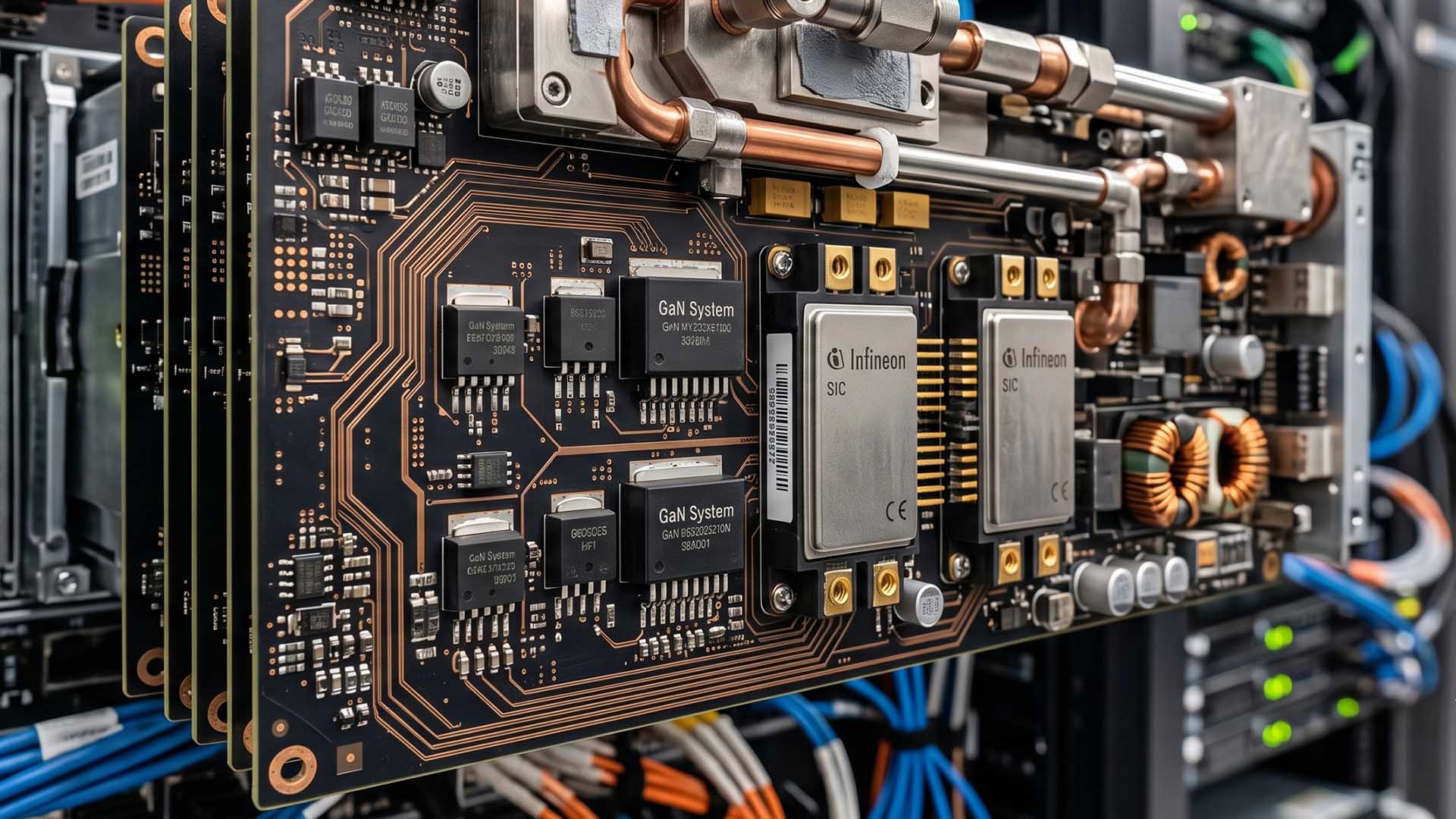
South Korea Plans Major Push Into Next-Generation Power Semiconductors for AI Data Centers
South Korea is preparing a major investment drive to strengthen its position in next-generation power semiconductors, a fast-growing chip category expected to play a critical role in artificial intelligence, energy infrastructure, mobility, defense, and advanced industrial systems.
The South Korean government is reportedly planning to invest around 500 billion won, or approximately $329 million, in research and development under its “Ultra-Innovation Economy Project.” Total funding could eventually rise to about 750 billion won, or roughly $494 million, as the country works to accelerate the commercialization and mass production of advanced power semiconductor technologies.
The initiative reflects South Korea’s ambition to build another high-value semiconductor growth engine beyond its existing strength in memory chips. Companies such as Samsung and SK hynix have already benefited significantly from global demand for DRAM and other memory products, especially as AI workloads continue to expand. Now, power semiconductors are being viewed as a potential next major opportunity.
Power semiconductors are essential for AI data centers because they help manage energy conversion, power delivery, and electrical stability. Modern AI infrastructure requires enormous amounts of electricity to run high-performance processors, memory systems, networking equipment, and cooling solutions. Without efficient power management, these facilities can face higher energy costs, reduced reliability, and lower overall performance.
As AI data centers continue to scale, demand for power-efficient components is expected to rise sharply. Advanced power semiconductors can help data centers operate more efficiently by reducing energy loss and improving the stability of power supply across large server clusters. This makes them increasingly important for companies building and operating AI infrastructure.
The importance of these chips extends far beyond data centers. Power semiconductors are also vital for renewable energy systems, electric vehicles, industrial robotics, aviation, and defense technologies. As solar, wind, and other renewable sources become more common, power semiconductors are needed to stabilize grids and support efficient energy conversion and distribution.
South Korea’s strategy is also focused on advanced materials such as silicon carbide, known as SiC, and gallium nitride, known as GaN. These materials can outperform traditional silicon-based semiconductors in demanding environments. They are especially useful in applications requiring high voltage, high temperature resistance, and high-frequency operation.
SiC and GaN power chips are increasingly used in electric vehicles, charging infrastructure, aerospace equipment, robotics, and military systems. Their ability to operate under extreme conditions makes them valuable for next-generation technologies where efficiency, durability, and reliability are critical.
Government officials are reportedly concerned that failing to compete in the power semiconductor market could leave South Korea too dependent on foreign suppliers. That dependence could become a strategic weakness as global competition intensifies and semiconductors become even more important to national security, industrial competitiveness, and energy independence.
To address this risk, South Korea is moving to shorten the gap between research and commercial production. The plan is expected to bring together companies that need power semiconductors with researchers and manufacturers during the development stage. This approach could help ensure that new technologies are designed with real-world applications in mind from the beginning.
The government’s roadmap reportedly aims to create a complete development cycle covering materials, devices, modules, and system-level demonstrations. By integrating these stages, South Korea hopes to speed up commercialization and reduce delays that often occur between laboratory breakthroughs and mass production.
The timing could be significant. Global demand for AI data centers is rising rapidly, and the energy needs of these facilities are becoming a major issue for technology companies, governments, and power providers. As electricity consumption grows, efficient power delivery will become a key competitive advantage.
If successful, South Korea’s investment could help the country expand its semiconductor leadership into a new and strategically important market. While memory chips remain a major strength, next-generation power semiconductors could open fresh growth opportunities across AI, clean energy, electric mobility, robotics, aviation, and defense.
With hundreds of millions of dollars potentially committed to research, development, and commercialization, South Korea is signaling that power semiconductors are not just a supporting technology. They may become one of the core foundations of the next wave of global innovation.