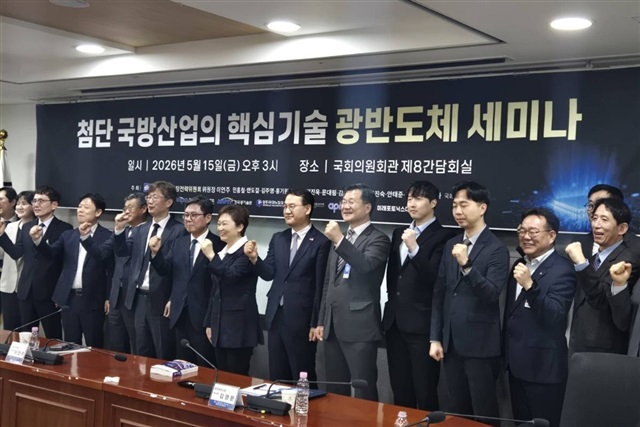
South Korea’s Defense Chip Supply Faces Major Risk as Photonic Semiconductors Remain 99% Import-Dependent
Photonic semiconductors are rapidly becoming one of the most critical technologies in modern defense systems. Unlike conventional electronic chips that rely mainly on electrical signals, photonic chips use light to transmit and process data at extremely high speeds. This makes them especially valuable for advanced military applications where speed, accuracy, efficiency, and reliability can determine operational success.
These chips are increasingly important in radar systems, high-speed communications, electronic warfare, satellite networks, missile defense, autonomous weapons, surveillance platforms, and next-generation command-and-control systems. Their ability to handle massive volumes of data while using less power gives them a major advantage in defense environments where performance and durability are essential.
However, South Korea is facing a serious strategic challenge. Despite being one of the world’s leading semiconductor powers, the country remains heavily dependent on foreign suppliers for photonic semiconductors used in defense. Reports indicate that around 99% of these critical chips are still imported, exposing a major weakness in the nation’s defense supply chain.
This dependence raises concerns about national security, especially as global tensions continue to increase and countries race to secure advanced chip technologies. If overseas supply chains are disrupted by geopolitical conflict, export restrictions, manufacturing delays, or trade disputes, South Korea’s ability to produce and maintain advanced defense systems could be affected.
The issue is particularly important because photonic semiconductors are not just another component in the electronics supply chain. They are expected to play a central role in the future of warfare. As militaries move toward faster data networks, artificial intelligence-driven platforms, unmanned systems, and space-based defense infrastructure, demand for high-performance photonic technology is set to grow sharply.
South Korea has already built a strong global reputation in memory chips, foundry services, and advanced electronics manufacturing. But photonic semiconductors require a specialized ecosystem that includes precision materials, optical design, advanced packaging, testing equipment, and highly skilled engineering talent. Building a domestic supply chain in this field will take coordinated investment from government, defense agencies, research institutions, and private companies.
Reducing import dependence will likely become a national priority. A stronger local photonic semiconductor industry could help South Korea improve defense readiness, protect sensitive military technologies, and reduce vulnerability to international supply shocks. It could also open new opportunities in civilian sectors such as telecommunications, data centers, quantum computing, autonomous vehicles, and advanced medical imaging.
The challenge is clear: South Korea has the industrial foundation to compete in advanced chipmaking, but it must move faster to secure key technologies for its defense future. Photonic semiconductors are becoming essential to the next generation of military power, and relying almost entirely on imports creates a risk that cannot be ignored.
As the global race for semiconductor independence intensifies, South Korea’s ability to develop its own photonic chip supply chain may become a defining factor in both its defense security and its long-term technological leadership.