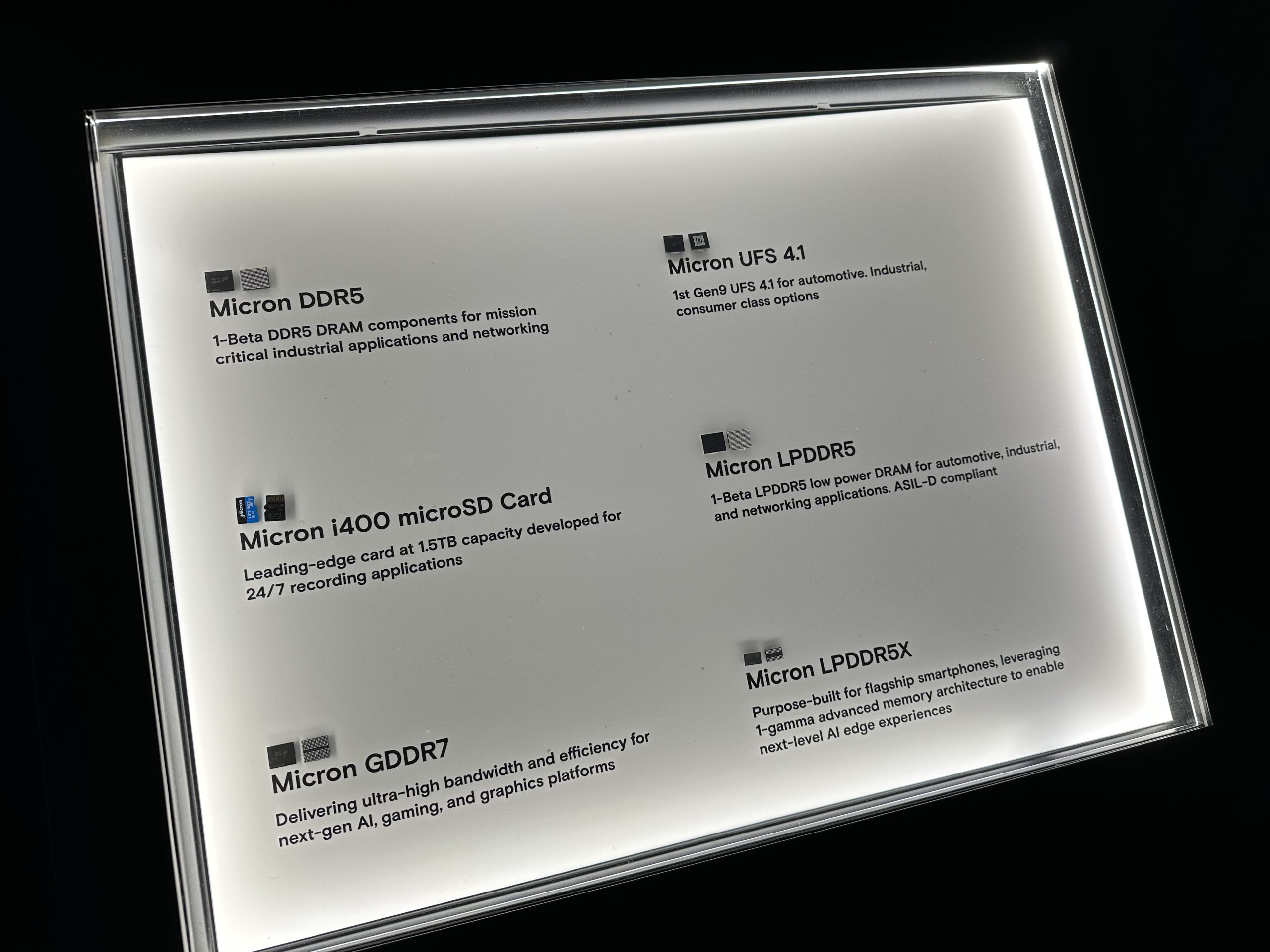
Micron sits at the center of today’s global memory market, supplying DRAM for everything from smartphones and laptops to the data centers powering modern AI. As AI-driven infrastructure ramps up, DRAM demand is rising faster than the industry can respond, and that has fueled a growing perception that memory makers are prioritizing AI while everyday consumers are left dealing with higher prices and tighter availability.
To unpack what’s really happening behind the scenes, Micron’s VP of Marketing for the Mobile and Client Business Unit, Christopher Moore, shared how the company views the current DRAM shortage, why the situation is bigger than any one manufacturer, and why meaningful relief may still be years away.
Micron says it hasn’t abandoned consumers, even without a major retail spotlight
One of the biggest frustrations among PC and smartphone buyers is the feeling that consumer products have become an afterthought as suppliers chase larger AI contracts. Micron argues that this impression doesn’t match how its business actually works today.
Moore emphasized that Micron still has a significant presence in client PCs and mobile devices, along with its data center business. The key difference is how that consumer memory reaches people. Rather than relying primarily on a consumer-facing retail channel, Micron says a large portion of its volume goes through OEM partnerships, supplying memory directly to major PC brands and device makers. Those companies then integrate the modules into laptops, desktops, and phones as part of their own designs.
In other words, Micron’s consumer impact is often “invisible” compared to a retail model, but it still runs through the supply chain in a big way. Moore added that Micron works across essentially the entire PC ecosystem, staying in contact with the major brands to plan and deliver memory for their products.
Why the AI boom is pulling DRAM supply tight across the entire industry
Micron’s core message is that the DRAM crunch isn’t a single-company problem. According to Moore, the total addressable market for enterprise and data center memory has expanded dramatically due to massive buildouts designed to support AI workloads. As more of the world’s compute shifts into AI-focused data centers, those deployments consume enormous quantities of memory “bits,” shrinking what’s left for other segments.
This shift matters because data center growth isn’t incremental anymore. Moore described a market transformation where enterprise memory demand has become a much larger share of overall DRAM consumption than it used to be. The result is that the whole memory industry is effectively short on supply, with every major supplier trying to cover more demand than current production can comfortably satisfy.
Micron’s stance is that it’s still serving consumers, but it cannot ignore data center demand at today’s scale, especially when the industry as a whole is capacity-constrained.
Why adding new factories won’t fix DRAM shortages quickly
A common assumption is that memory manufacturers can simply build more fabs and the shortage will ease. Micron says it’s not that simple, and Moore offered a practical explanation: output isn’t only limited by the number of machines or clean room space, but also by how often production must switch between different memory configurations and designs.
When customers request many different density options—such as 8GB, 12GB, 16GB, and beyond—manufacturing needs to shift and reconfigure to produce those variations. Those changeovers reduce efficiency and lead to less total output. Moore explained that one of the most effective short-term ways to maximize supply is to run fewer variations and keep production steadier, which helps raise consistent yields.
That reality helps explain a trend consumers may notice: device makers increasingly limiting the number of memory configurations available in certain laptops and smartphones. From a production standpoint, fewer configuration changes can translate into more stable output.
Micron’s timeline: meaningful new supply may not arrive until 2028
Even with major investment, Moore said the timeline for significant additional capacity is long. Expanding clean room space, installing tools, and then qualifying production to meet customer requirements takes years—not months. He pointed to Micron’s Idaho expansion as an example: groundbreaking happened years ago, it’s expected to come online in mid-2027, and the company does not anticipate truly meaningful output until after qualification, acceptance, tooling, and ramp are complete—pushing real impact into 2028.
This is a critical takeaway for anyone hoping for quick relief. Even aggressive fab buildouts don’t translate into immediate consumer availability, especially when customers demand high yield, consistency, and stringent validation before deployments scale.
What about rising competition from Chinese memory makers?
Another question looming over the industry is whether Chinese DRAM suppliers can fill part of the gap, particularly in cost-sensitive consumer devices. Reports have suggested Chinese manufacturers are increasing DRAM capabilities and pushing newer memory products into the market.
Moore’s response was straightforward: Micron welcomes competition. He acknowledged that local supply in China has been developing for years and said competitive pressure ultimately pushes Micron to improve and better serve customers. While he didn’t frame it as an immediate threat that changes the shortage narrative overnight, the broader message was that additional capable suppliers can influence how the market evolves over time.
The bottom line: the DRAM shortage could be a long haul
Micron’s view paints a clear picture: DRAM supply is under intense pressure because AI data centers are consuming unprecedented volumes of memory, and the industry can’t ramp capacity fast enough to instantly catch up. On top of that, manufacturing realities—like the efficiency hit from constantly switching between multiple memory densities—make short-term fixes even harder.
The company says it’s still supporting consumer PCs and mobile devices through large OEM partnerships, but it also acknowledges the uncomfortable truth: major capacity expansions take years to become real product on the market. Based on Micron’s timelines, consumers may continue to feel tight supply conditions until at least 2028, unless demand dynamics shift sooner.