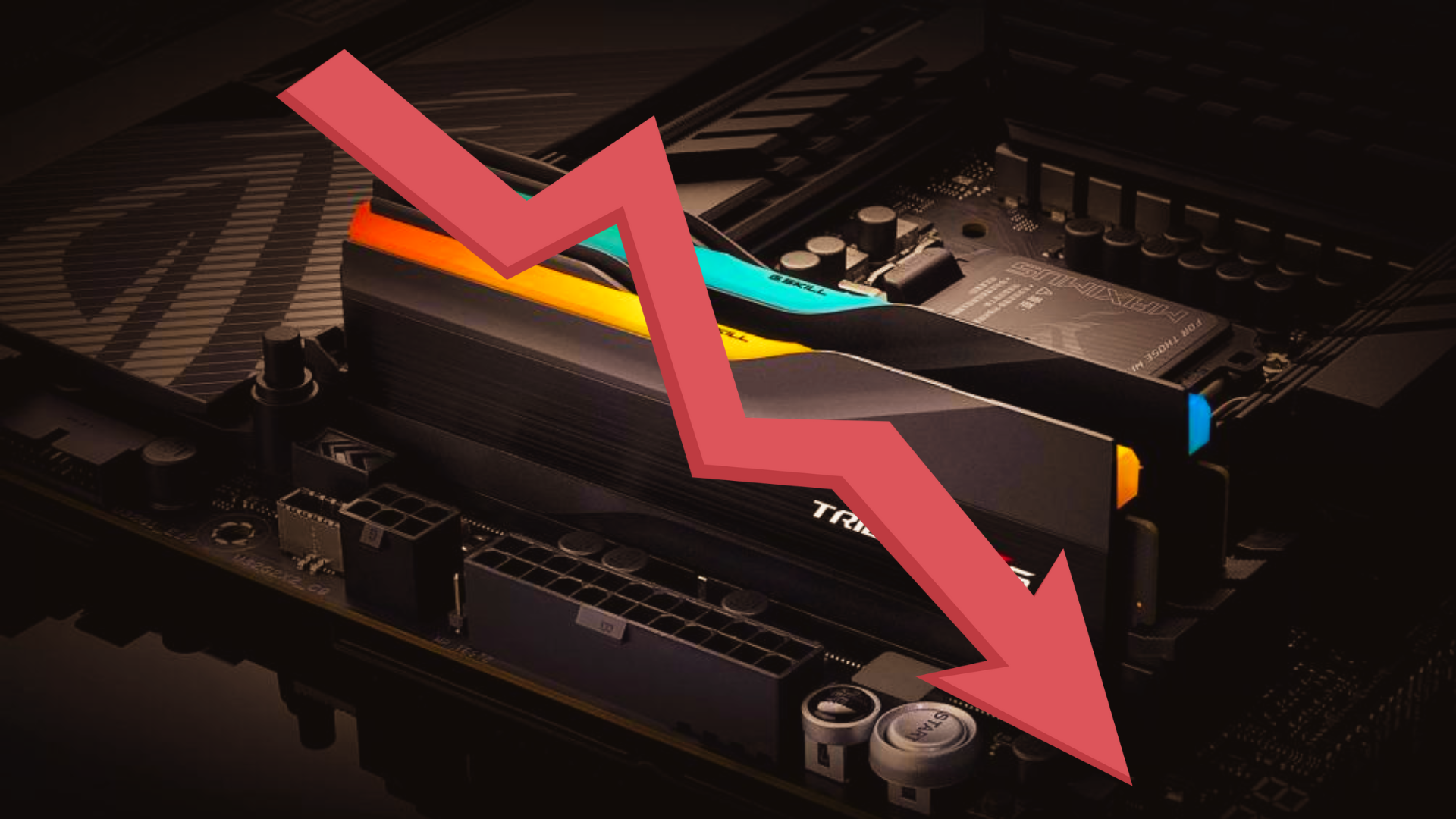
The PC industry looked set to wrap up 2025 on a high. CPUs and GPUs kept improving, new platforms arrived on schedule, and the upgrade cycle finally felt healthy again. Then Q4 brought an uncomfortable twist for gamers and everyday buyers: memory is becoming the choke point. A DRAM “supercycle” is taking shape, and the biggest driver isn’t gaming PCs at all—it’s AI.
AI is accelerating a global DRAM shortage in 2025, and it matters because DRAM isn’t only “RAM for your PC.” It’s a core ingredient for everything from laptops and desktops to data centers, and right now more of the world’s memory manufacturing capacity is being pulled toward AI hardware at the expense of consumer supply. The result is simple: tighter availability, higher contract prices, and products that get more expensive even when everything else stays the same.
Why AI is draining the world’s DRAM supply
Modern AI systems need enormous amounts of fast memory to train and run cutting-edge models. As companies race to build bigger clusters, chipmakers are pushing faster release cycles and higher-performance designs. One component has become especially critical in that race: HBM, or high-bandwidth memory.
HBM is the memory stacked next to high-end AI accelerators, and it provides the bandwidth needed to keep those chips fed with data. The catch is that HBM is extremely “hungry” to manufacture. Estimates indicate that producing 1 bit of HBM can consume about three times the wafer capacity required to produce 1 bit of DDR5 (the mainstream memory used in PCs). On top of that, HBM has lower yields because it relies on complex packaging and stacking. Lower yields mean more wafers are required to produce the same amount of shippable memory.
That combination—more capacity per bit and more manufacturing complexity—helps explain why the DRAM market is tightening quickly. And it’s not just HBM.
Data centers are also consuming more conventional DRAM
Alongside HBM, data centers still need large volumes of traditional server memory, including DDR5 RDIMMs for server CPUs and newer module types designed to address bandwidth bottlenecks. With AI infrastructure expanding at massive scale, overall DRAM demand is rising sharply. Some projections suggest AI could consume around 20% of total DRAM production in 2026, and that share could climb if AI buildouts keep accelerating.
Why memory suppliers prioritize AI customers
For DRAM makers, the incentive is obvious. AI-focused memory products can be more profitable, especially when contract prices surge and customers are competing for allocation. That’s why development has continued rapidly from HBM3 to HBM3E and onward toward HBM4 and HBM4E. When the highest-paying segment is also the fastest-growing segment, production lines tend to follow the money.
What this means for PC prices in 2025 and beyond
When DRAM supply is constrained, PC makers have a problem: they either secure enough memory at higher prices, scale back what they ship, or redesign what they sell. Many are now leaning toward price increases, and those hikes can be painful—particularly for higher memory configurations.
Price moves reported in the market paint a clear picture of where costs are heading for buyers:
– $130–$230 increase for notebooks and desktops configured with 32 GB of memory
– $520–$765 increase for systems configured with 128 GB of memory
– $55–$135 increase for configurations with a 1 TB SSD
– $66 increase for AI laptops equipped with an NVIDIA RTX PRO 500 Blackwell GPU (6 GB)
– $530 increase for AI laptops equipped with an NVIDIA RTX PRO 500 Blackwell GPU (24 GB)
Other major PC brands are also reportedly adjusting prices as their bill of materials rises. Even smaller manufacturers are weighing higher upgrade pricing for RAM, which is a strong signal that the pressure isn’t limited to one corner of the market.
System builders are feeling it too, and the message is blunt: waiting may not help. One large system integrator shared that DRAM prices have already surged due to shortages and that the situation could worsen into 2026. Their advice to buyers considering a new desktop or upgrades like GPU, SSD, or RAM is to shop sooner rather than later—especially if you spot offerings that haven’t yet baked in higher memory costs.
Industry forecasts also reflect the drag memory pricing can create. With parts costs rising and configurations getting squeezed, PC shipments are projected to decline, adding more tension to an already competitive market.
How PC makers typically respond when DRAM is scarce
As shortages intensify, manufacturers usually fall into three strategies:
1) Increase pricing
Raise retail prices to offset higher DRAM contract rates.
2) Modify configurations
Adjust the spec sheet to stretch available supply—such as keeping 8 GB as a baseline in more models where 16 GB has become the practical recommendation.
3) Delay or downsize launches
Postpone new products or limit premium models until supply improves. This can even ripple into component refresh cycles and planned releases.
Should gamers upgrade RAM now? Practical strategies during the shortage
If you’re trying to make smart moves during a memory crunch, the goal is to avoid paying peak pricing for upgrades you don’t truly need right away.
Don’t buy out of panic
If your current system has 8 GB or 16 GB, and your games and daily workloads are still running acceptably, consider holding steady for a few months. Upgrading during a shortage can mean paying extra for performance you might be able to wait for.
Consider a prebuilt if you need a full system
If you’re buying an entire PC, prebuilts can sometimes be the better value during supply disruptions. Large OEMs may still be selling systems at pricing that hasn’t fully caught up to DRAM cost increases, and you may get a solid RAM configuration without paying the full “upgrade tax” you’d face buying memory separately.
Look at the used memory market (carefully)
Used DDR4 and DDR5 can be a reasonable option because RAM is generally durable and less prone to the kinds of problems that plague other secondhand components. Still, you should buy from reputable sellers and test the modules promptly. Don’t expect miracle bargains—shortage awareness tends to lift prices everywhere—but you may find better deals than retail in some cases.
Where this is heading: shortages could last longer than people expect
Some estimates suggest tight supply could persist into 2027 or even 2028, though forecasting is difficult because demand and capacity can shift quickly. Even when manufacturers commit to expanding output, building and ramping new facilities takes years, not months.
The important takeaway for gamers and PC buyers is that this isn’t just another random price spike. It’s a structural demand shift driven by AI’s appetite for memory—especially HBM—pulling manufacturing capacity away from consumer DRAM. We’ve seen the PC market weather disruptive cycles before, and it will get through this one too. Until then, the best advantage you can have is timing: buy only when you need to, avoid unnecessary upgrades at peak pricing, and watch for system deals that haven’t fully adjusted to the new reality.