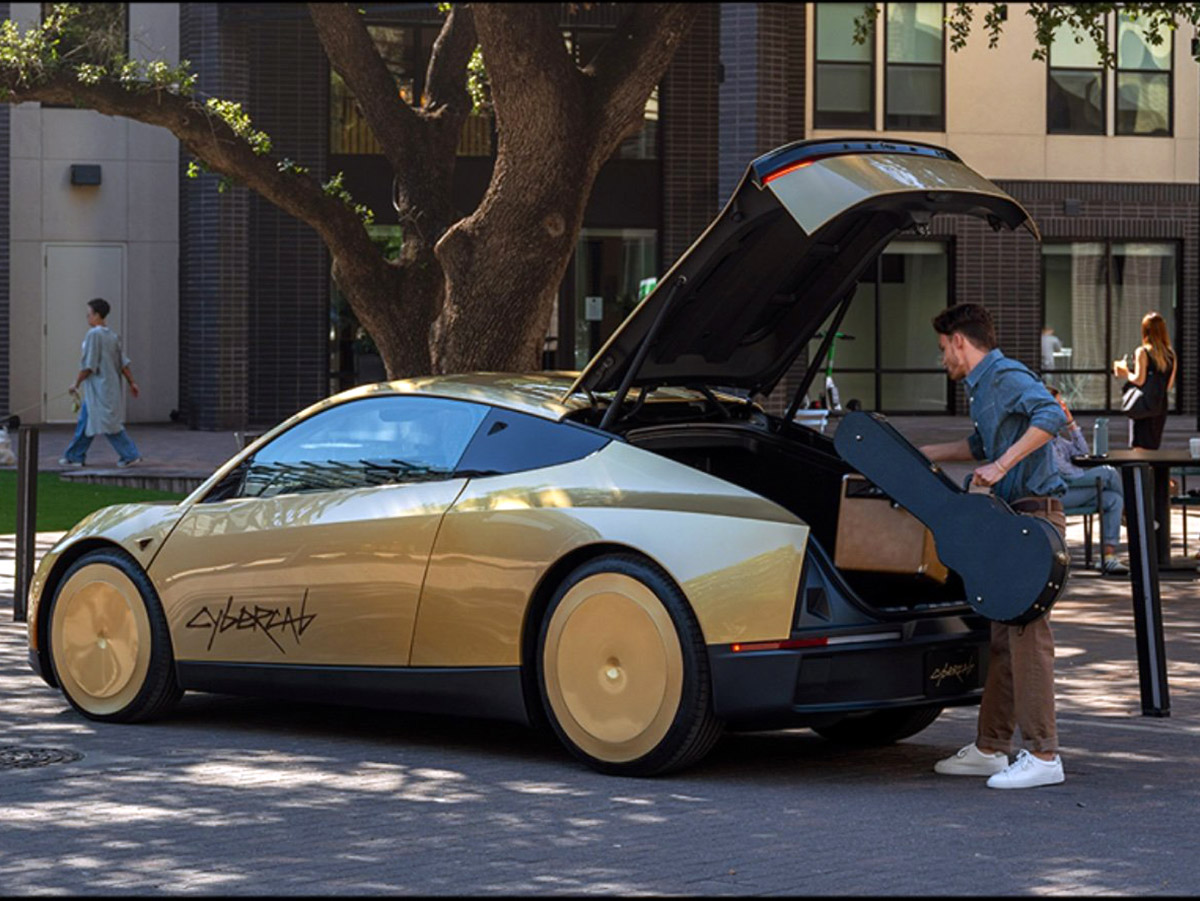
Tesla Cybercab Could Be the Cheapest Tesla Yet, But There’s a Major Subscription Catch
Tesla’s futuristic Cybercab is shaping up to be the most affordable vehicle the company has ever offered, with a private-use price reportedly set just under $30,000. On paper, that puts it below the entry-level Model 3 and gives Tesla a new low-cost option for buyers interested in autonomous mobility.
But the attractive purchase price comes with an important condition: owners will need to pay a monthly fee to use Tesla’s unsupervised Full Self-Driving system. Without that autonomy software, the Cybercab’s main purpose disappears.
The required subscription is expected to cost $299 per month at launch, adding a significant ongoing expense to ownership. That means the Cybercab may not be as inexpensive as its sticker price suggests, especially for buyers comparing it with a more traditional Tesla vehicle.
Cybercab can be driven manually, but only in a limited way
One of the most interesting details is that the Cybercab can technically be controlled manually, even though it does not have a steering wheel or pedals.
Instead, manual operation is handled through virtual controls on the large 24-inch touchscreen positioned in the center of the dashboard. Anyone with a valid driver’s license could use this mode, but it is not designed for normal driving.
The feature is meant for very specific situations where autonomous driving may not be practical. Examples include moving the vehicle inside a building, repositioning it in a driveway, or maneuvering it at display events. In other words, it is more of a utility function than a true backup driving mode.
There is also a strict limitation: manual mode is capped at just 2 mph. That makes it unsuitable for public roads and confirms that Tesla intends the Cybercab to operate almost entirely through its self-driving system.
The Cybercab depends on Tesla’s autonomy subscription
The Cybercab’s low price is closely tied to Tesla’s plan to charge owners a monthly autonomy fee. At $299 per month, the subscription would be a major part of the vehicle’s total cost of ownership.
Tesla may eventually reduce the monthly fee as Cybercab production increases and the service becomes more widely available. The company is reportedly aiming for a future subscription cost closer to $115 per month, which would be more in line with what many Tesla owners currently pay for software and connectivity features.
At launch, however, the higher $299 monthly fee could make some buyers hesitate. Over several years, that subscription would add thousands of dollars to the real cost of owning a Cybercab.
Availability may be limited at first
Another key limitation is that the Cybercab is expected to operate only in approved geofenced areas, at least initially. That means early private owners may only be able to use the vehicle’s autonomous functions in select cities where Tesla’s robotaxi program is active.
For buyers outside those areas, the Cybercab may not make much practical sense right away. Since the vehicle is built around self-driving capability and manual control is extremely limited, its usefulness depends heavily on where Tesla allows it to operate.
Why some buyers may still want one
Despite the restrictions, the Cybercab will likely attract plenty of early adopters. A Tesla with no steering wheel or pedals is a bold and futuristic concept, and some buyers may be drawn to the idea of owning one of the first privately available robotaxi-style vehicles.
The convenience factor could also be appealing. A Cybercab that can drop its owner at the airport and then return home by itself would offer a very different ownership experience from a normal car. For some customers, that kind of autonomy may justify the monthly fee.
Still, many buyers may prefer to wait. For a bit more money, they could choose a larger Tesla with five seats, longer range, traditional controls, and stronger everyday practicality. Those vehicles may also have better resale value, especially while fully autonomous driving remains limited by location and regulation.
The big question for Tesla
Tesla’s Cybercab could become a major milestone in the shift toward autonomous transportation. Its sub-$30,000 price makes it attention-grabbing, and its private-use availability could open the door for consumers who want a personal robotaxi.
However, the required $299 monthly autonomy subscription, limited manual driving mode, and geofenced operation may narrow its appeal at first.
The Cybercab is not simply a cheaper Tesla. It is a very different kind of vehicle built around a very different ownership model. Whether buyers embrace that model will depend on how quickly Tesla expands autonomous driving availability, how reliable the system proves to be, and whether the subscription cost eventually becomes easier to justify.