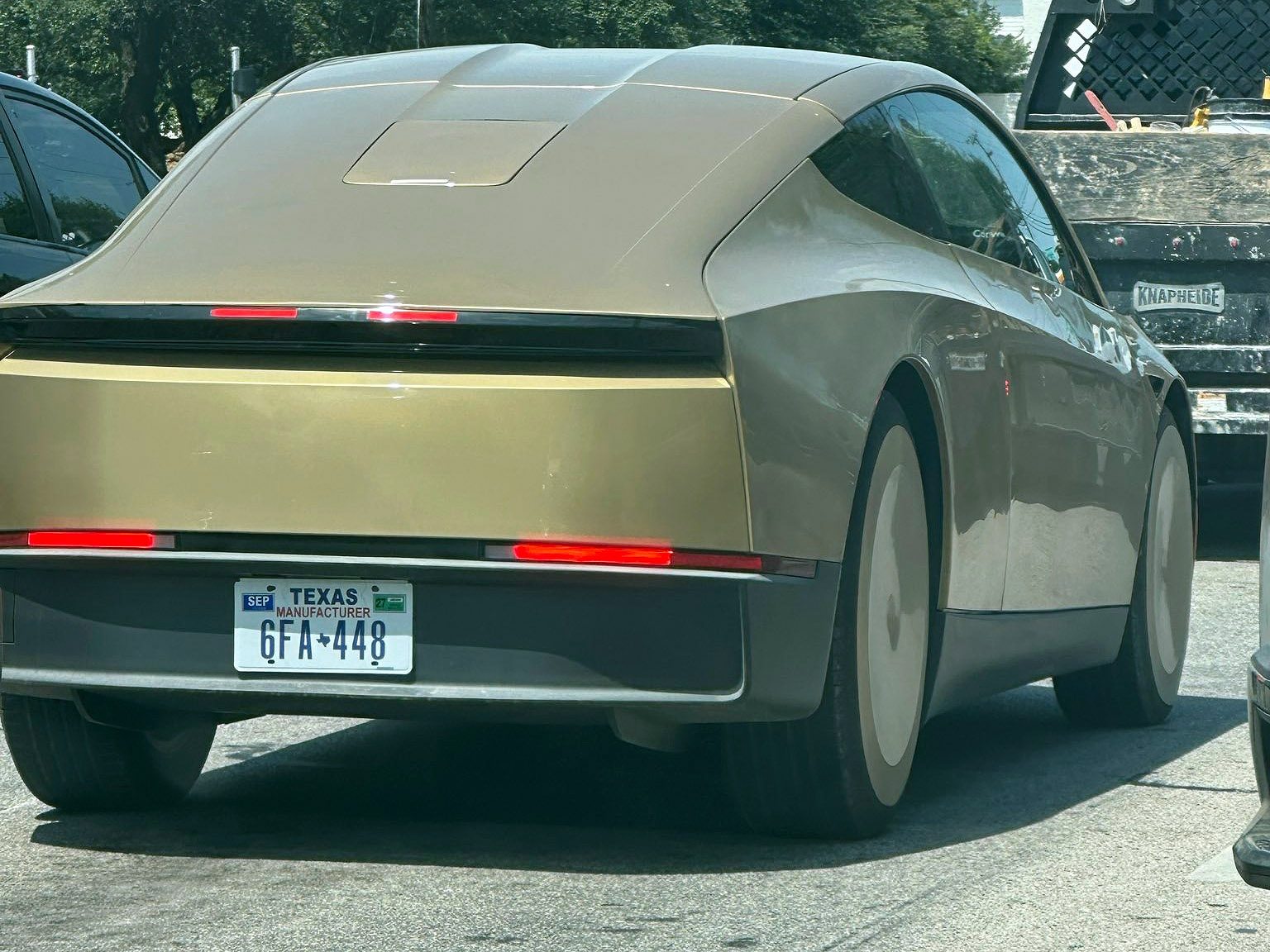
Tesla Cybercab Gets Factory-Integrated Starlink as Satellite Internet Moves Into Cars
Tesla has taken a major step toward bringing satellite internet directly into its vehicles, starting with the Cybercab. The company has revealed a production-ready Cybercab equipped with a Starlink antenna built neatly into the roof, marking one of the clearest signs yet that Tesla sees satellite connectivity as part of the future of transportation.
Unlike earlier test vehicles that appeared to use external hardware mounted on top, this new setup is integrated into the bodywork. The Starlink unit sits low and flush within the roofline, painted to match the vehicle for a cleaner, factory-finished look. It appears as a square cutout rather than a bulky dish, making the installation feel far more suited to a production vehicle.
The hardware is said to be similar in concept to the Starlink Mini kit, a compact satellite internet system designed for portable broadband access. Tesla’s integration, however, is meant specifically for vehicle use, allowing the Cybercab to stay connected even in places where traditional mobile networks may be weak or unavailable.
Elon Musk has repeatedly suggested that satellite internet will eventually become important for cars, especially as autonomous driving and robotaxi services expand beyond major cities. His argument is simple: cellular networks do not cover every road, parking area, suburb, or remote location. For a robotaxi fleet, losing connectivity in a dead zone could create operational headaches, even if the car itself does not depend on the internet to drive.
The Cybercab will still rely on Tesla’s onboard AI hardware for autonomous driving, rather than Starlink. The satellite connection is not what controls the vehicle. Instead, Starlink is expected to support services around the driving experience, such as fleet monitoring, navigation support, customer service, software communication, and passenger entertainment.
For riders, this could mean high-speed internet access during trips, including video streaming, cloud-based services, and other connected features. Tesla has even highlighted the potential for 4K video streaming inside the vehicle, turning the Cybercab into more than just a driverless car. It could become a connected entertainment space on wheels.
For Tesla’s robotaxi plans, the benefits may go beyond passenger comfort. A reliable satellite connection could help fleet operators monitor vehicles more consistently, especially when robotaxis travel through areas with poor cellular coverage. This may be important as Tesla attempts to scale autonomous ride-hailing services from controlled urban environments to larger regions.
The first Starlink-equipped Cybercabs are being produced at Gigafactory Texas. For now, this appears to be an early deployment rather than a feature rolling out across Tesla’s entire lineup. The Cybercab is being positioned as the proof of concept for built-in satellite internet, while the Model Y remains central to Tesla’s current robotaxi testing and deployment strategy.
Whether Starlink eventually appears on mass-market Tesla vehicles such as the Model 3 or Model Y remains uncertain. Tesla already equips its cars with LTE connectivity, and millions of vehicles on the road use cellular networks for navigation, streaming, remote access, and software updates. Adding a satellite antenna to every vehicle would require careful design, cost management, and data-plan decisions.
Still, Tesla’s move suggests the company is thinking far ahead. As cars become more software-driven and autonomous services grow, constant connectivity may become more valuable. A future Tesla with built-in satellite broadband could stay connected on highways, rural roads, construction zones, campsites, and other areas where mobile service is unreliable.
There is also a possibility that today’s roof-mounted hardware is only an early stage of in-car satellite internet. SpaceX is reportedly working on more compact Starlink modem technology that could eventually work with mobile chipsets from major semiconductor companies. If that happens, future vehicles may not need a visible dish-style installation at all. Satellite connectivity could become smaller, more efficient, and easier to integrate into standard vehicle electronics.
For now, the Cybercab is Tesla’s first real showcase of built-in Starlink for cars. It gives a glimpse of how the company imagines the robotaxi experience: autonomous, connected, software-powered, and able to operate beyond the limits of cellular coverage.
If Tesla can make the technology reliable and cost-effective, Starlink integration could become a major advantage for its future mobility services. The Cybercab may be the first step toward a new generation of vehicles where high-speed satellite internet is not an accessory, but a built-in part of the driving and riding experience.