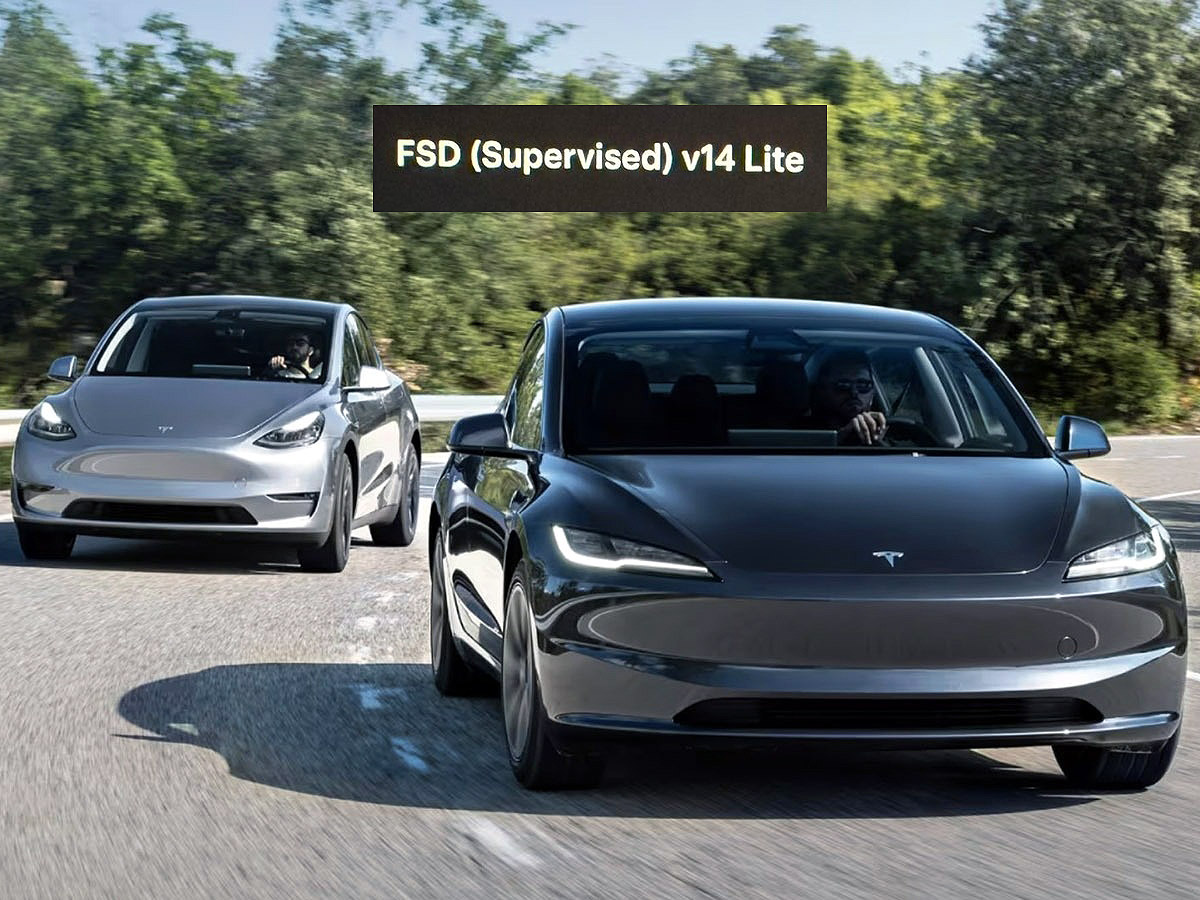
Tesla FSD 14 Lite Finally Arrives for HW3 Vehicles, But It Comes With Limits
Tesla has begun rolling out FSD 14 Lite to vehicles equipped with its older HW3 computer, giving many long-time owners access to a newer version of the company’s Full Self-Driving software after more than a year of anticipation.
The release is an important milestone for Tesla drivers with HW3-based Model Y, Model 3, Model S, and Model X vehicles. However, it is also becoming clear that FSD 14 Lite is not the same experience offered on newer Tesla vehicles with HW4, also known as AI4 hardware.
Why Tesla is releasing FSD 14 Lite for HW3 cars
Tesla’s HW3 computer has far less memory and processing headroom than the newer HW4 platform. Because of that hardware gap, the full FSD 14 software suite cannot run on older vehicles in the same way it does on the latest models.
Instead, Tesla is introducing a lighter version of the software called FSD 14 Lite. Tesla’s AI leadership has described it as a “distilled” version of the HW4 experience, meaning some newer capabilities have been adapted to work within the limits of HW3 vehicles.
This gives older Tesla owners access to more modern FSD behavior, but it does not bring complete feature parity with newer cars. Most importantly, HW3 vehicles running FSD 14 Lite are not being positioned for unsupervised operation.
What FSD 14 Lite adds to HW3 Teslas
Even though FSD 14 Lite is limited compared with the full FSD 14 build on HW4 vehicles, the update still brings several meaningful improvements.
Tesla says FSD 14 Lite introduces parking, unparking, and reversing capabilities. These additions should make the system more useful in low-speed driving situations where owners often expect more automation.
The update also includes Arrival Options, allowing drivers to choose where the vehicle should park when reaching a destination. Options include parking in a lot, on the street, in a driveway, or at the curbside.
Speed Profiles are now available at all times, giving drivers more control over the vehicle’s driving style. This should help owners better tailor FSD behavior to their personal comfort level, whether they prefer a more cautious or more assertive approach.
Tesla also highlights improvements to everyday driving comfort. The company says the update reduces unnecessary slowdowns, improves steering smoothness, and provides more consistent lane centering.
Responsiveness has also been improved across several common driving scenarios, including navigation decisions, merges, forks, pedestrian interactions, traffic lights, and vehicle cut-ins.
How FSD 14 Lite differs from full FSD 14
The biggest question for HW3 owners is how close FSD 14 Lite comes to the full FSD 14 experience available on newer Tesla vehicles.
Based on Tesla’s own release notes and comments from company leadership, FSD 14 Lite is clearly a scaled-down version. It brings selected improvements from the newer system, but it does not offer the full capability set found on HW4 vehicles.
That distinction matters because many Tesla owners purchased the Full Self-Driving package years ago with the expectation that their vehicles would eventually support advanced autonomous features. The arrival of FSD 14 Lite shows Tesla is still supporting HW3, but it also underlines the limitations of older hardware.
What this means for Tesla’s robotaxi plans
One of the most controversial parts of the FSD discussion is Tesla’s long-running promise that customer-owned vehicles could eventually participate in a robotaxi network.
For owners of HW3 vehicles, FSD 14 Lite does not appear to bring that future any closer. Since this version is not designed for unsupervised driving, it is unlikely that these older vehicles will be eligible for robotaxi service in their current hardware configuration.
Elon Musk previously suggested that Tesla could retrofit HW3 vehicles with HW4 computers and cameras if needed. He also mentioned the possibility of setting up dedicated retrofit operations in major cities. However, with FSD 14 Lite now rolling out instead, it appears Tesla is currently choosing a software-based compromise rather than a large-scale hardware upgrade.
That does not completely rule out future retrofits. Tesla may still decide to upgrade certain HW3 vehicles if there is a strong financial reason, especially if owners want to make their cars available for a future robotaxi fleet. For now, though, HW3 owners are receiving a lighter software path rather than a full HW4 conversion.
Will FSD 14 Lite cost less?
Tesla has not yet confirmed whether FSD 14 Lite will have a different subscription price from the full FSD package available on newer vehicles.
The current rollout is limited to early-access customers, so pricing details may become clearer once Tesla expands availability. There have been rumors that Tesla could introduce a tiered FSD subscription model, with FSD 14 Lite offered at a lower monthly price for HW3 vehicles.
That approach would make sense. If HW3 cars cannot access the same level of capability as HW4 cars, many owners will expect a lower cost. A cheaper FSD 14 Lite subscription could help Tesla keep older customers engaged while acknowledging the technical limits of their vehicles.
Meanwhile, a higher-priced FSD tier could be reserved for newer models, such as recent Model Y vehicles equipped with HW4, especially if Tesla eventually allows eligible cars to join a robotaxi service.
A useful update, but not the full promise
The arrival of Tesla FSD 14 Lite for HW3 vehicles is both good news and a reminder of the challenges facing older Tesla hardware.
On one hand, owners are getting meaningful improvements, including better comfort, smoother driving, enhanced parking behavior, Arrival Options, and broader access to Speed Profiles. These changes should make daily use of FSD more refined and convenient.
On the other hand, FSD 14 Lite is not the same as the full FSD 14 experience on HW4 vehicles. It remains a limited version built around hardware constraints, and it does not appear to unlock the autonomous future many HW3 owners were originally expecting.
For Tesla, FSD 14 Lite may be a practical way to extend support for older vehicles. For HW3 owners, it is a welcome update, but one that may also raise fresh questions about pricing, hardware retrofits, and whether the original Full Self-Driving promise can still be fulfilled.


