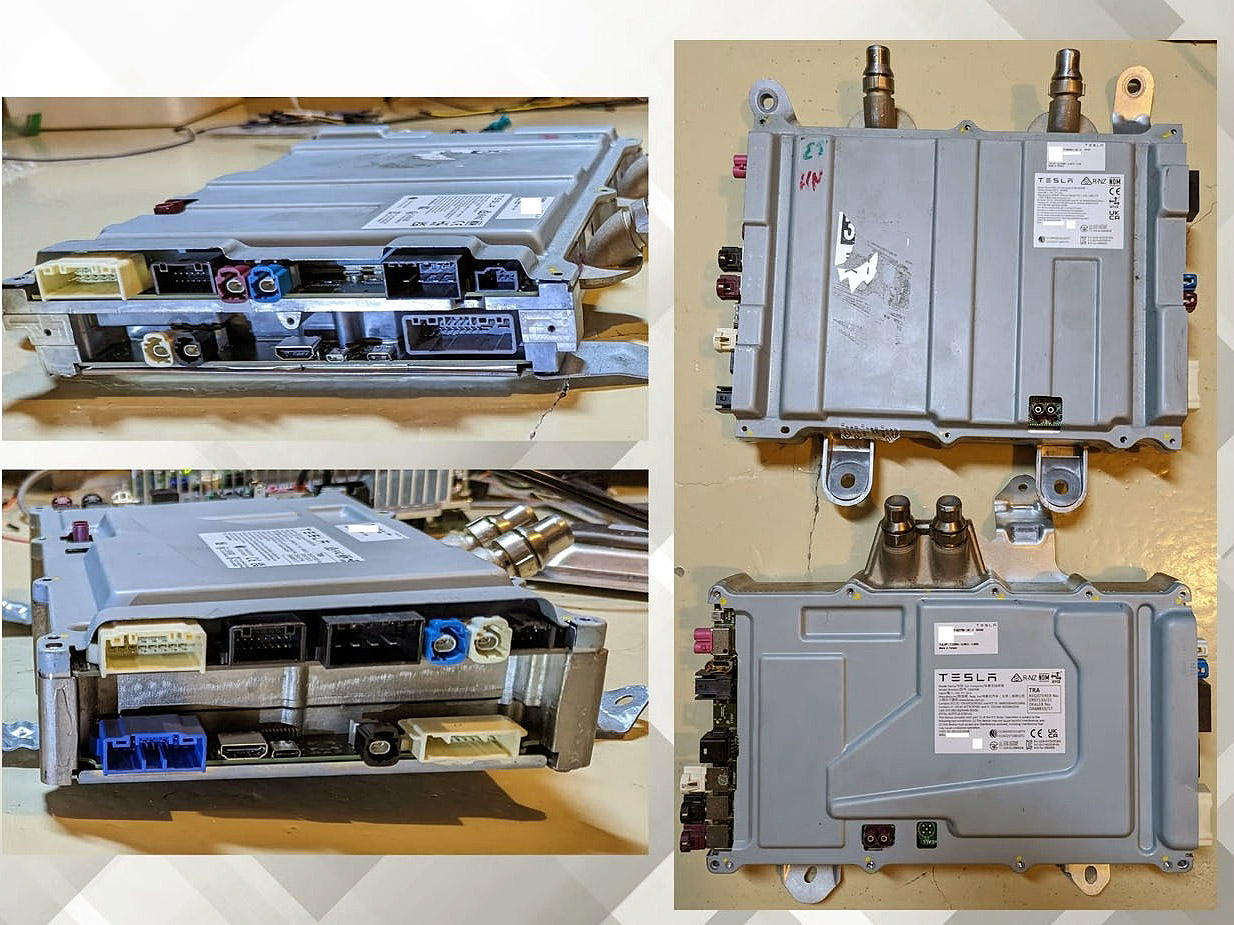
Tesla has finally put a hard limit on what many owners of older vehicles can expect from Full Self-Driving. During the company’s Q1 2026 earnings call, Elon Musk acknowledged that Tesla’s Hardware 3 (HW3) will never be able to run Full Self-Driving in an unsupervised mode. The reason isn’t raw computing power, but a less flashy and far more stubborn obstacle: memory bandwidth. In other words, it’s a hardware pipeline problem that no software update can magically overcome.
That admission lands with extra weight because, for years, Tesla’s messaging left the door open for HW3 vehicles to eventually reach higher levels of autonomy through software alone. Even as recently as late 2025, there were still suggestions that trimmed-down versions of newer Full Self-Driving releases might keep HW3 cars in the game. Now, Tesla is effectively saying the ceiling has been hit, and the only way past it involves new hardware.
What Tesla plans to do for HW3 owners who bought FSD
For owners who paid for the Full Self-Driving package but now face the reality that their cars won’t ever achieve unsupervised FSD on HW3, Tesla is proposing two main paths.
The first option is a discounted trade-in toward a newer vehicle equipped with the newer AI4 hardware. The details of the discount weren’t spelled out, but the message is clear: upgrading to a newer Tesla may be the simplest route for customers who want access to the latest Full Self-Driving capabilities.
The second option is more direct, and potentially more disruptive: Tesla says customers who purchased FSD will be offered the ability to retrofit their existing HW3 vehicle. Importantly, Musk confirmed the retrofit won’t be limited to swapping the computer. It will also require replacing the camera kit, which implies a more involved service procedure and at least some level of vehicle disassembly.
A complicated retrofit could reshape Tesla service operations
A large-scale HW3-to-AI4 retrofit campaign could quickly overwhelm Tesla’s existing service centers, especially if many eligible owners choose the upgrade. To handle the workload without bogging down routine maintenance and repairs for other drivers, Musk said Tesla is exploring the idea of setting up “micro-factories” in major cities to perform these retrofits.
From Tesla’s perspective, the retrofit effort isn’t only about customer satisfaction or resolving a promise gap. Musk also framed it as a future business opportunity: once upgraded with AI4 hardware and new cameras, older Teslas could potentially become candidates for Tesla’s planned Robotaxi fleet. That turns a difficult narrative—older hardware being left behind—into a potential long-term asset.
Will the HW3 to AI4 retrofit be free?
The biggest unanswered question is cost. Musk mentioned Tesla will offer owners the ability to upgrade by replacing the computer, but he didn’t clarify whether the retrofit will be free for customers who previously purchased Full Self-Driving, partially subsidized, or fully paid by the owner. At the same time, Tesla’s alternative recommendation is to trade in for a newer vehicle with some kind of discount, which suggests the company is still weighing how to balance fairness, logistics, and expense.
HW3 isn’t getting unsupervised FSD, but a software update is coming
While the unsupervised dream is officially off the table for HW3, Tesla says those owners won’t be completely stuck on older software. Tesla’s head of Autopilot, Ashok Elluswamy, confirmed that a Full Self-Driving v14 branch is expected to arrive for HW3 vehicles in late June, bringing over the main features currently running on AI4-equipped cars.
That matters because HW3 vehicles have been sitting on FSD v12.6 while AI4 vehicles moved ahead to v14. The upcoming update could narrow the feature gap for day-to-day use, even if it can’t break through the hard hardware limits required for unsupervised autonomy.
AI4 is also evolving, with a memory-focused upgrade on the way
In a twist that underscores how serious the memory bandwidth issue is, Tesla is already planning a next revision of AI4 called AI4 Plus. This version is expected to double RAM from 16GB to 32GB per chip, bringing total system memory to 64GB. Tesla also expects roughly a 10% boost in compute performance.
It’s a notable detail because the limitation that ended HW3’s unsupervised ambitions was tied to memory bandwidth. Tesla appears determined not to repeat that mistake by leaving AI4 with too little memory headroom as software demands grow.
It’s still unclear whether AI4 Plus will be an easy chip-level retrofit for current AI4 owners or whether it will require a more involved upgrade process. Either way, it signals Tesla’s belief that future autonomy improvements will be driven as much by memory and data handling as by headline compute numbers.
What this means for Tesla owners and the future of Full Self-Driving
For HW3 owners, the takeaway is mixed. Tesla is promising a path forward—either via a trade-in or a retrofit that includes both the AI4 computer and new cameras—and an FSD v14 software branch that should bring meaningful improvements. But Tesla has also drawn a firm line: HW3 will not deliver Full Self-Driving unsupervised.
For Tesla as a company, this moment is pivotal. It’s a reset of expectations, a test of customer trust, and potentially a massive operational project if retrofits scale. And for the broader EV and autonomy conversation, it’s a reminder that “software-defined vehicles” still depend on physical hardware realities—especially the kind you can’t fix with an over-the-air update.