Tesla is gearing up to launch more affordable versions of the Model Y and Model 3 in China, its most competitive market, but don’t expect a simple copy of the U.S. “Standard” trims. The company is reportedly tailoring hardware and comfort features to better fit Chinese buyer preferences, a necessary move in a landscape dominated by aggressively priced rivals from BYD and other local EV makers.
In the U.S., the Model Y Standard hit a sub-$40,000 price by stripping out more than 20 features and options, from cosmetic touches like light bars to reductions in battery capacity. For China, insiders suggest the approach will be more nuanced to avoid feeling overly “stripped,” while still hitting a lower price band that can compete head-on with domestic offerings.
These base Model Y and Model 3 trims are tipped to arrive next year, aligning with Tesla’s broader plan to begin rolling out its next-gen AI5 Full Self-Driving hardware—often referred to as HW5—across new vehicles. That timing could help set Tesla’s entry models apart with advanced driver-assistance capabilities at a price point that resonates with the market.
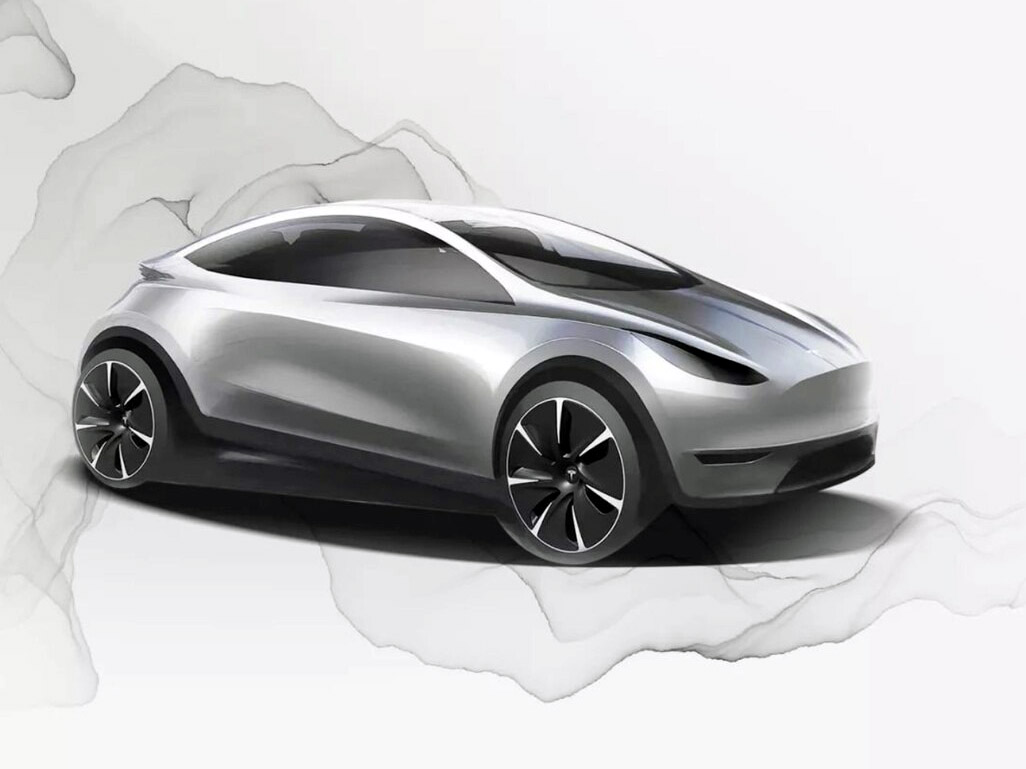
There’s more brewing behind the scenes. Tesla is said to be reviving two internal projects—NV91 and NV93—linked to the long-anticipated $25,000 Tesla, widely nicknamed Model 2 and developed under the Project Redwood program. The NV91 variant, in particular, reportedly reached an advanced development stage as a compact, budget-friendly vehicle inspired by the Model Y’s crossover styling but scaled down with a smaller battery and tighter dimensions. Tesla previously shifted focus to its Cybercab and Robotaxi platform and to cost-optimizing the Model 3 and Model Y, which is why the affordable compact took a back seat.
Despite that pause, Tesla’s design chief previously hinted that rumors of the Model 2’s demise were exaggerated, urging fans to “stay tuned.” Elon Musk has also noted the entry-level Tesla would be smaller and has been associated with a 54 kWh battery, an estimated 250 miles of range, and the forthcoming AI5/HW5 hardware.
On timing, the most realistic window for a Model 2 debut appears to be late 2026. That’s when Tesla is expected to install HW5 computers and cameras at scale, a milestone that aligns with earlier chatter pointing to 2026 for the budget model’s launch. Before then, look for refreshed facelifts across Tesla’s existing lineup in 2025 and the introduction of standard base trims designed to protect margins ahead of the company’s bold push into a truly mass-market EV—one that was originally envisioned for up to four million units of annual production.
Key takeaways for shoppers and investors:
– China-focused base trims for Model Y and Model 3 are planned for next year with features tuned to local tastes.
– U.S.-style cost cutting won’t necessarily be copied one-to-one; the Chinese variants may retain or swap features strategically.
– AI5/HW5 FSD hardware is expected to be a cornerstone differentiator for these entry models.
– Tesla’s $25,000 Model 2, tied to internal NV91/NV93 projects under Project Redwood, is reportedly back in motion.
– The Model 2 is expected to be smaller, target around 250 miles of range from a 54 kWh pack, and carry next-gen autonomy hardware.
– A plausible release window for the Model 2 is Q4 2026, following 2025 facelifts of the current lineup.
What this means for buyers in China
– More affordable Model Y and Model 3 options could arrive as early as next year, but with a feature mix that feels tailored rather than stripped.
– Advanced driver-assistance will likely play a bigger role in differentiating Tesla from local competitors at similar price points.
– If you’re waiting for the compact, lowest-cost Tesla, late 2026 is the timeframe to watch.
What this means for the global EV market
– A $25,000 Tesla with credible range and next-gen hardware could reset expectations for what an entry-level EV delivers.
– If Tesla keeps to this roadmap—2025 facelifts, expanded base trims, and a 2026 Model 2—the company will have a multi-tiered lineup spanning premium to truly mass-market segments.
Bottom line: Tesla is recalibrating for China with locally smart, lower-cost Model Y and Model 3 trims, while quietly putting the $25,000 Model 2 back on the runway. With AI5/HW5 hardware serving as the technological spine, the brand is positioning its next wave of vehicles to compete on both price and capability—right as the global EV market enters its next phase.