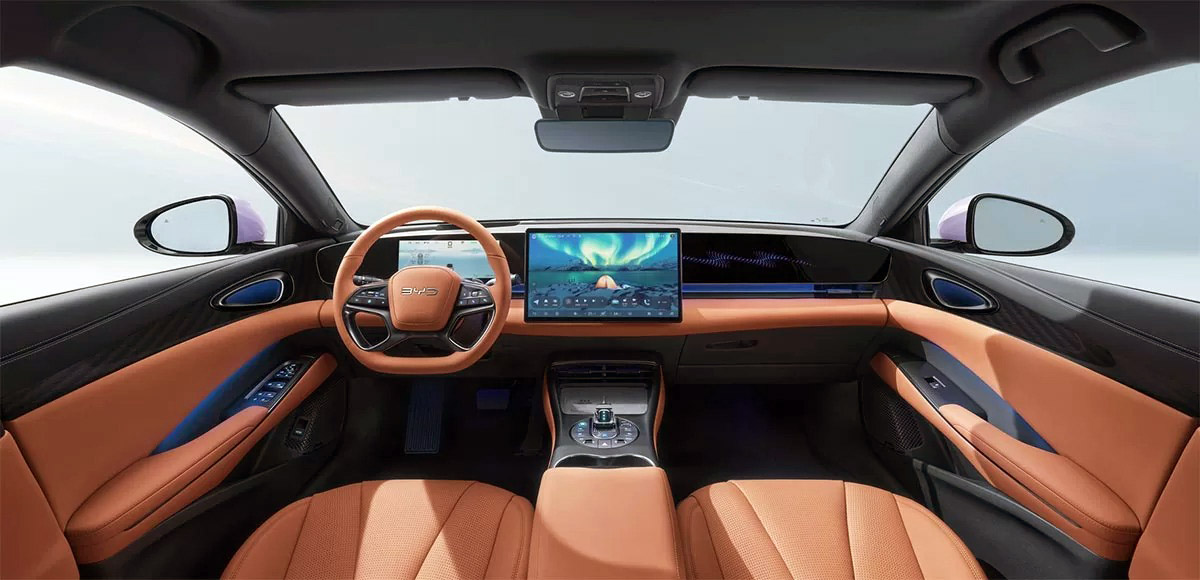
The electric vehicle market is witnessing a notable evolution as the new BYD Seal sedan makes its debut, showcasing a competitive edge against industry giant Tesla. The announcement that ridesharing heavyweight Uber is set to incorporate 100,000 BYD electric vehicles into its global fleet comes at a time when rental companies are considering alternatives to Tesla EVs. This strategic move signals the growing confidence in BYD as a formidable player in the EV arena.
Attractively priced, the 2025 BYD Seal AWD commands a price point of around $33,460, which is just slightly above the most basic RWD Tesla Model 3 available in China. Considering BYD’s vertical integration, including in-house battery manufacturing, it’s not surprising that the company offers an appealing price. But the Seal isn’t just about affordability; it boasts impressive specifications that warrant attention.
Built on the innovative e-Platform 3.0 Evo and equipped with a state-of-the-art 800V powertrain, the Seal optimizes efficiency and enables faster charging capabilities, setting a new standard when compared to the older 400V powertrain utilized by even the top Tesla Model 3 Performance.
For the first time in BYD’s lineup, select Seal models will incorporate LiDAR technology, enhancing the vehicle’s self-driving capabilities with the new DiPilot 300 system. This advancement allows for point-to-point navigation in both urban and highway settings, an offering similar to Tesla’s Full Self-Driving (FSD) option that solely relies on camera input, marking a significant technological milestone for BYD.
The top-tier 2025 BYD AWD Seal boasts an impressive CLTC range of up to 650 km (404 miles) with a maximum 80.64 kWh battery capacity and can accelerate from 0-62 mph in just 3.8 seconds. While slightly slower than the Model 3 Performance, the Seal’s acceleration is noteworthy, especially given its significantly lower price point.
The Seal’s entry-level RWD variant challenges the base Model 3 RWD, not only in terms of a 30% lower price but also with superior acceleration. For customers seeking greater range, a moderately more expensive Seal option still offers a cost-saving of 20% compared to the lowest priced Tesla Model 3, signaling an unbeatable value proposition.
It’s important to note, however, that the cited 650 km (404 miles) range is based on the Chinese CLTC cycle, known to be more generous compared to the EPA ratings. This discrepancy helps to explain the stark range differences from what is typically listed for Tesla in the U.S. market.
The BYD Seal’s introduction is setting up an intriguing competition in China’s EV market. With its combination of better pricing and impressive features, the Seal could potentially extend the gap between BYD and Tesla sales in the region, offering a fresh take on electric vehicles that could influence global market dynamics.
EV enthusiasts and potential car buyers must consider the merits of the new BYD Seal as it presents a compelling alternative to Tesla’s offerings, with its keen pricing and technologically advanced features reminiscent of the sector’s continual evolution and consumer-centric focus.