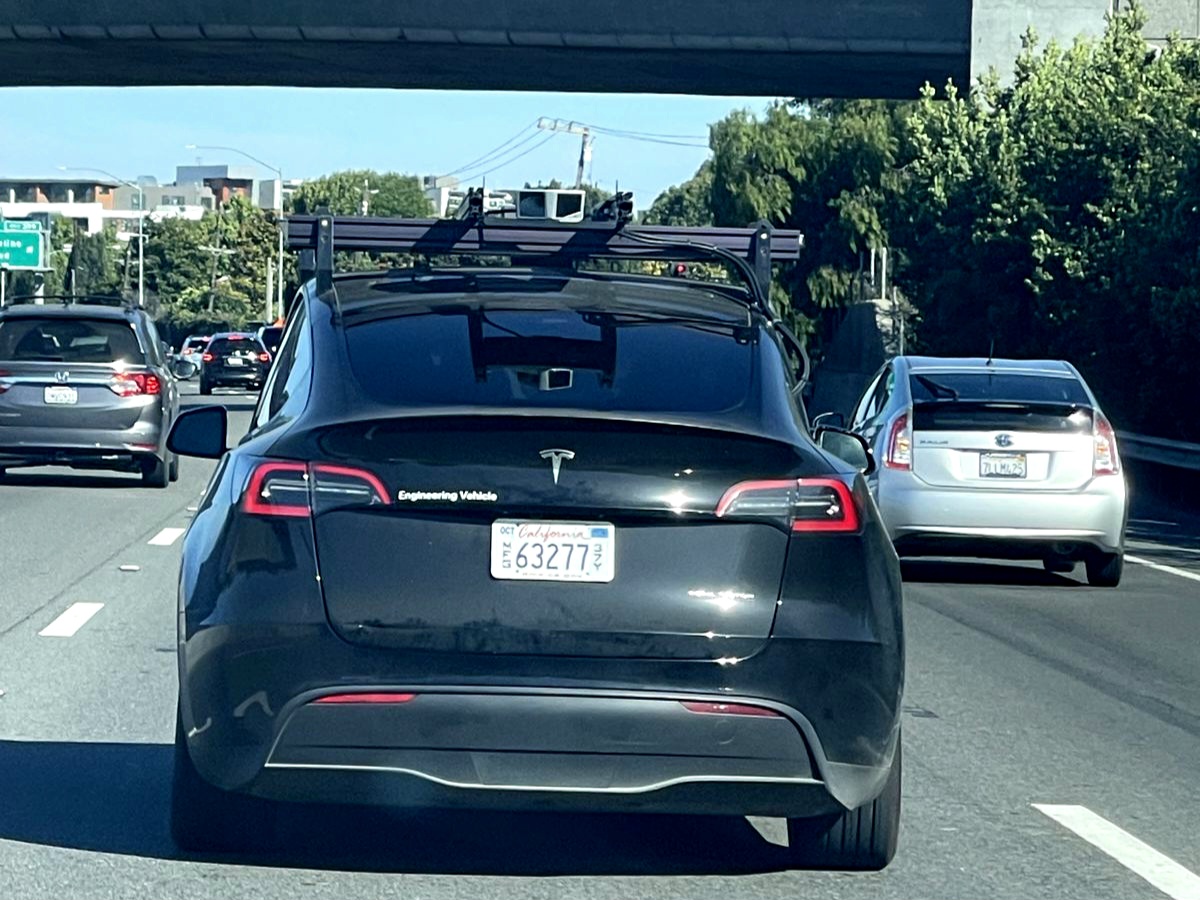
In a surprising move that has sparked widespread speculation, a Tesla Model Y was recently spotted outfitted with a large LiDAR sensor, signaling a potential shift in Tesla’s approach to autonomous vehicle technology development. This sighting comes amidst swirling rumors and contradictory statements regarding Tesla’s project lineup, including debates over the future of a ‘Model 2’ affordable electric vehicle and Tesla’s commitment to its vision of a self-driving ‘robotaxi’ fleet.
While Tesla has been consistently pushing the envelope with its Full Self-Driving (FSD) capabilities, primarily relying on a sophisticated suite of cameras, the inclusion of a LiDAR sensor on a Model Y raises questions about whether Tesla is now incorporating LiDAR technology for enhanced autonomous driving tests. This development is intriguing given that Tesla, particularly CEO Elon Musk, has been previously vocal about the sufficiency of camera-based systems over LiDAR for autonomous navigation.
The image of the sensor-equipped Tesla Model Y that surfaced, showing the vehicle with the LiDAR unit firmly attached to its roof, indicates that Tesla might be evaluating the combination of LiDAR with its camera-based system or assessing the performance of its FSD technology against LiDAR-enriched data.
The appearance of the LiDAR sensor comes after reports of Tesla’s acquisition of over $2 million in LiDAR units from a supplier. If the company is embracing LiDAR, it would signify a major pivot in strategy and acknowledge the technology that other players in the EV space, such as NIO and Xiaomi, are already implementing.
Furthermore, the Tesla Model Y, known for its mass-market appeal and recent accomplishment as the best-selling single model, outpacing the Toyota RAV4, seems to be at the center of Tesla’s robotaxi ambitions. This aligns with previous speculation that a mass-market platform would serve as the cornerstone for the proposed autonomous ride-sharing service.
The eagerly anticipated revelation of Tesla’s self-driving car, which is expected to be announced at a dedicated event, has left industry watchers and consumers alike curious about the features and advancements that will define the vehicle. As anticipation builds towards the unveiling, the industry is keeping a close watch for any additional clues about the directions that Tesla’s autonomous driving and robotaxi efforts might take.
In summary, the sighting of a LiDAR-equipped Tesla Model Y represents a potentially pivotal moment in the company’s autonomous driving development. With Tesla’s robotaxi reveal on the horizon, the integration of LiDAR could suggest a new phase of innovation and refinement in the pursuit of fully autonomous vehicles. Whether this signifies a broader adoption of LiDAR in future Tesla vehicles or simply a test to benchmark their current systems remains to be seen. The broader automotive community will undoubtedly be looking forward to uncovering the implications of this technological exploration and Tesla’s next steps in the self-driving vehicle landscape.


