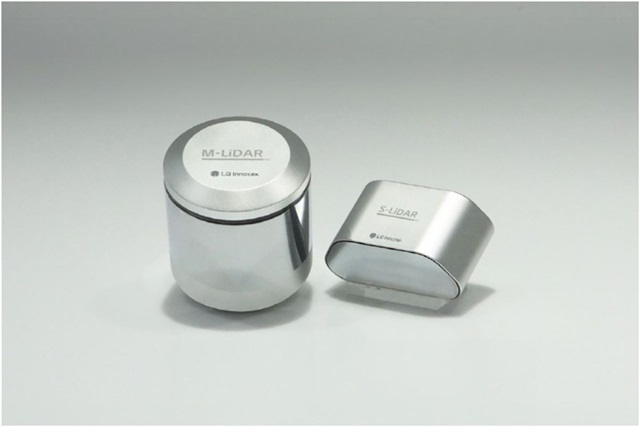
### LG Innotek Set to Begin Mass Production of Solid-State LiDAR for Autonomous Vehicles in Late 2024
The advancements in autonomous driving technology are accelerating, and a crucial component in this evolution is the Light Detection and Ranging technology, known as LiDAR. LG Innotek, a leading component manufacturer, has positioned itself at the forefront of this critical technology. The company has announced plans to kick off mass production of solid-state LiDAR systems in the second half of 2024, a development that promises to significantly influence the landscape of self-driving cars.
LiDAR systems are pivotal for the autonomy of vehicles as they provide high-resolution, three-dimensional information about the vehicle’s surroundings. Unlike traditional radar systems that rely on radio waves, LiDAR uses laser beams to accurately measure distances and detect objects, pedestrians, and other vehicles with precision.
### Collaboration with Hyundai Mobis: Patent Applications Signal a Strong Partnership
The development of these sophisticated LiDAR systems has not been a solo journey for LG Innotek. In a strategic partnership, LG Innotek and Hyundai Mobis, known for their expertise in manufacturing components for the automotive industry, have jointly applied for patents related to LiDAR technologies. This collaborative move signifies a deeper relationship between the LG Group and Hyundai Motor Group, who are increasingly converging their efforts in the automotive electronics space.
### The Edge of Solid-State LiDAR
Solid-state LiDAR systems stand out from their mechanical counterparts by having no moving parts. This design ensures higher reliability and durability as it reduces the risk of mechanical failures—a critical advantage in automotive applications where safety and longevity are paramount.
Moreover, the compactness of solid-state LiDAR makes it easier to integrate into vehicles without impacting the exterior design. This is attractive not only for aesthetic reasons but also for aerodynamic efficiency. Additionally, the solid-state technology is expected to be more cost-effective at scale, reducing the overall cost barrier for incorporating LiDAR into mass-market vehicles.
### Implications for the Autonomous Vehicle Industry
As LG Innotek gears up for mass production of these advanced LiDAR systems, the implications for the autonomous vehicle industry are profound. More reliable and affordable LiDAR technology can accelerate the deployment of self-driving vehicles, pushing the envelope of what’s possible in terms of vehicle autonomy.
The increased adoption of solid-state LiDAR could also enhance the driving experience and safety for consumers. With better-performing sensors, vehicles will be able to more accurately detect and react to their environment, reducing the likelihood of accidents and enabling smoother traffic flow.
The move also demonstrates the potential for enhanced collaboration between tech companies and automotive manufacturers, combining expertise to advance vehicle technology. Such partnerships will likely become more commonplace as the demands for integrated technology in vehicles grow.
### Conclusion
As we look forward to LG Innotek’s mass production of solid-state LiDAR systems in the latter half of 2024, the trajectory for autonomous vehicles appears increasingly promising. This leap in LiDAR technology serves as a critical step forward for the automotive industry, signaling a future where self-driving cars are not just experimental but a widespread, everyday reality. This pioneering effort by LG Innotek, in collaboration with Hyundai Mobis, is set to pave the way for more accessible and safer roads for all.