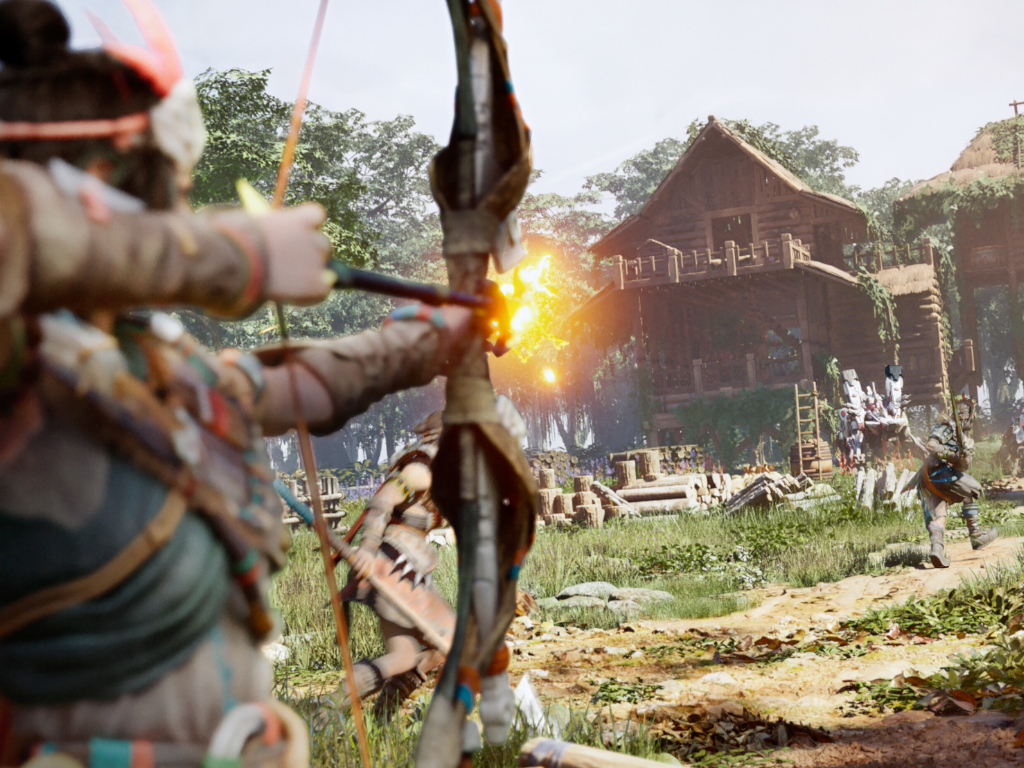
Tencent has fired back at Sony’s lawsuit over alleged similarities between Light of Mortiram and the Horizon franchise, calling the claims startling and an attempt to fence off a well-trodden corner of popular culture. In recent court filings, Tencent argues that Sony is trying to monopolize common genre elements rather than protect genuine intellectual property.
Sony Interactive Entertainment filed its complaint in July 2025 in a California federal court, targeting several Tencent-affiliated entities and ten unnamed defendants. The suit labels Light of Mortiram—a still-unreleased open-world survival game slated for Q4 2027 on PC via Steam—as a slavish clone of Horizon. Sony alleges that marketing materials could mislead players into thinking the game exists within the same post-apocalyptic world, pointing to imagery of a red-haired heroine battling machine creatures in an overgrown wilderness that evokes Aloy, the Horizon series’ lead. The company is asking for a jury trial and seeking to block the game’s release entirely.
Tencent’s response pushes back on multiple fronts. The company calls the case speculative and premature given the distant launch window, and argues that the entities named in the complaint, including Tencent Holdings Limited and two Palo Alto LLCs, have no direct role in developing or publishing Light of Mortiram. According to the filing, a trademark registration related to the game is administrative and does not reflect operational control.
At the heart of Tencent’s defense is the idea–expression divide in copyright law. The company contends that Sony is attempting to claim ownership over broad, time‑honored tropes—such as a post-apocalyptic setting, tribal aesthetics, and battles against mechanical enemies—that appear across the medium. To illustrate that point, Tencent cites other titles featuring similar themes, including Enslaved, The Legend of Zelda: Breath of the Wild, Far Cry Primal, Far Cry New Dawn, Outer Wilds, and Biomutant. In Tencent’s view, these are genre conventions, not protectable expressions unique to any one studio.
Sony also asserts that Tencent approached it in early 2024 about a potential collaboration on a new Horizon project. After Sony declined, the complaint claims, Tencent moved ahead with a game that mirrors Horizon’s most recognizable elements. Tencent counters that this narrative miscasts normal creative overlap as infringement and frames the lawsuit as a gatekeeping effort that chills innovation rather than fostering it.
The dispute spotlights a familiar flashpoint in game development: where homage ends and infringement begins. Courts typically draw a line between unprotectable ideas and protectable expression—specific characters, plotlines, artwork, and audio—while allowing developers to build within shared genres. Sony maintains that Light of Mortiram crosses that line; Tencent insists it does not.
With Light of Mortiram years from release, the case could set an influential precedent for how closely new titles can hew to established hits without inviting legal trouble. For now, all eyes are on the court’s next steps, which will determine whether the lawsuit proceeds toward trial or is narrowed—or dismissed—before the game ever reaches players.