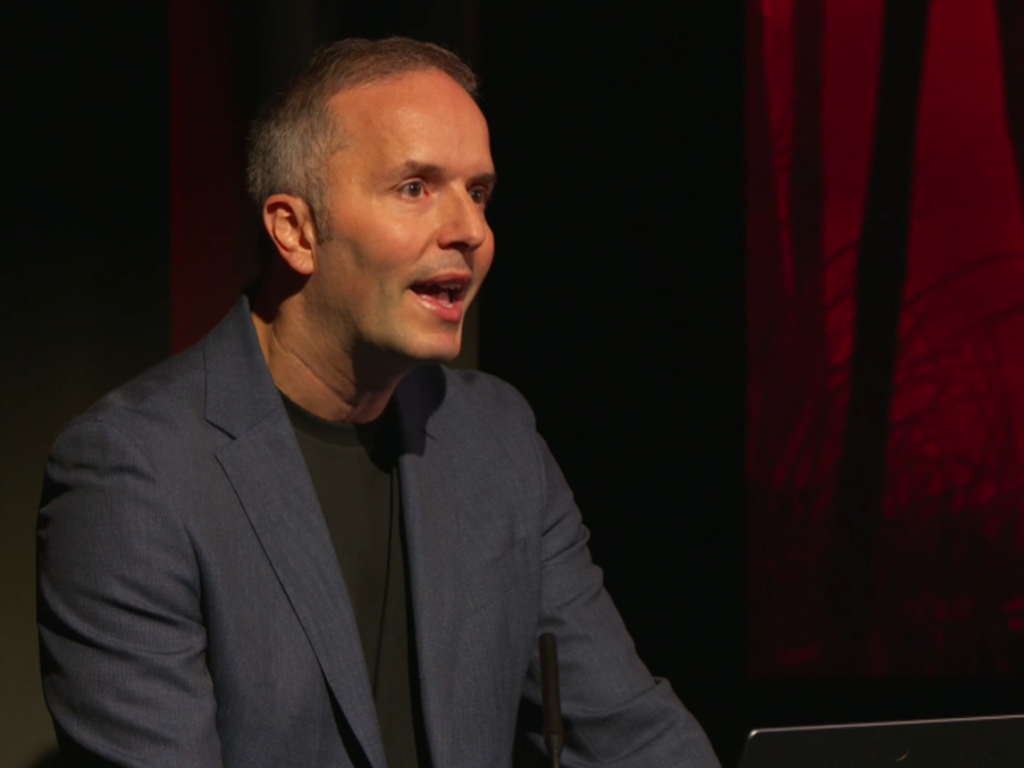
Former Assassin’s Creed franchise leader Marc-Alexis Cote has filed a lawsuit against Ubisoft, alleging the company pushed him out of his job through what he describes as a “constructive dismissal” in October 2025. Ubisoft has maintained that he left voluntarily. Cote is now seeking more than CAD $1.3 million in compensation, arguing that the way his exit was handled amounted to a disguised termination and caused damage to his reputation.
The case was filed in Quebec’s Superior Court, according to reporting by CBC Radio-Canada. In the filing, Cote details a major internal shift that he says stripped him of the responsibilities he had built over years leading one of Ubisoft’s most valuable game series.
At the center of the dispute is a 2025 management meeting where Ubisoft reportedly created a new “Head of Franchise” role designed to oversee the publisher’s major intellectual properties under the umbrella of Vantage. Cote claims this change effectively removed most of his duties and left him without the authority he previously had as the person steering Assassin’s Creed’s long-term direction.
Cote says Ubisoft then floated another role for him: “Head of Production.” But the offer came with conditions he viewed as a major downgrade. The position allegedly required him to relocate to France and report to the newly created Head of Franchise, which he argues would significantly diminish his status and decision-making power. He was also offered an option to lead a “Creative House” focused on smaller intellectual properties, an alternative he says left him feeling unsettled and anxious as his career path was abruptly redirected.
In his view, these options weren’t comparable to the leadership post he already held. The lawsuit describes the situation as an unacceptable demotion and a dismissal in disguise. Cote says he ultimately asked for severance pay, believing the internal reshuffle had effectively ended his role in all but name.
According to his account, Ubisoft told him not to return to work on October 13 while the company prepared a response. However, he alleges that the following day Ubisoft publicly framed the situation as his “voluntary resignation,” which he claims was used to avoid paying severance. Ubisoft has declined to discuss the dispute, stating only that it does not comment on legal matters.
The lawsuit seeks the equivalent of two years’ salary as severance, plus CAD $75,000 in moral damages tied to alleged abuse of power and reputational harm. Together, the claim exceeds CAD $1.3 million. Cote is also asking the court to invalidate a non-compete clause that he says was attached to the company’s characterization of his departure as voluntary.
Cote spent roughly two decades working on Assassin’s Creed in roles that included director, designer, and producer before rising to oversee the franchise’s global operations. He also helped outline the series’ long-term roadmap in 2022, a key role for a franchise that has become one of Ubisoft’s core pillars.
In internal messages to staff, Ubisoft’s co-CEOs Charlie Guillemot and Christophe Derennes reportedly said Cote had chosen to leave to pursue new opportunities. Soon after, Cote disputed that version of events publicly, writing on LinkedIn that he did not simply walk away and that he remained in place until Ubisoft told him to step aside.
The lawsuit places these events within Ubisoft’s broader 2025 restructuring, which included the formation of Tencent-backed Vantage Studios. Vantage now oversees three of Ubisoft’s biggest IPs: Assassin’s Creed, Far Cry, and Tom Clancy’s Rainbow Six. Cote argues that after this organizational shift, leadership of Assassin’s Creed was handed to someone closer to the new structure, and that he was ultimately removed from the top franchise role after refusing to relocate to France.
Ubisoft’s position, as described in the dispute, is that Cote was offered other opportunities. Cote maintains those options lacked the same scope, mandate, and continuity as the role he had been performing, and that they were presented in a way that left him little real choice.
The case now moves forward as a high-profile dispute tied to one of the gaming industry’s most recognizable franchises, raising questions about executive reshuffles, internal restructuring, and how major publishers manage leadership transitions during corporate realignments.