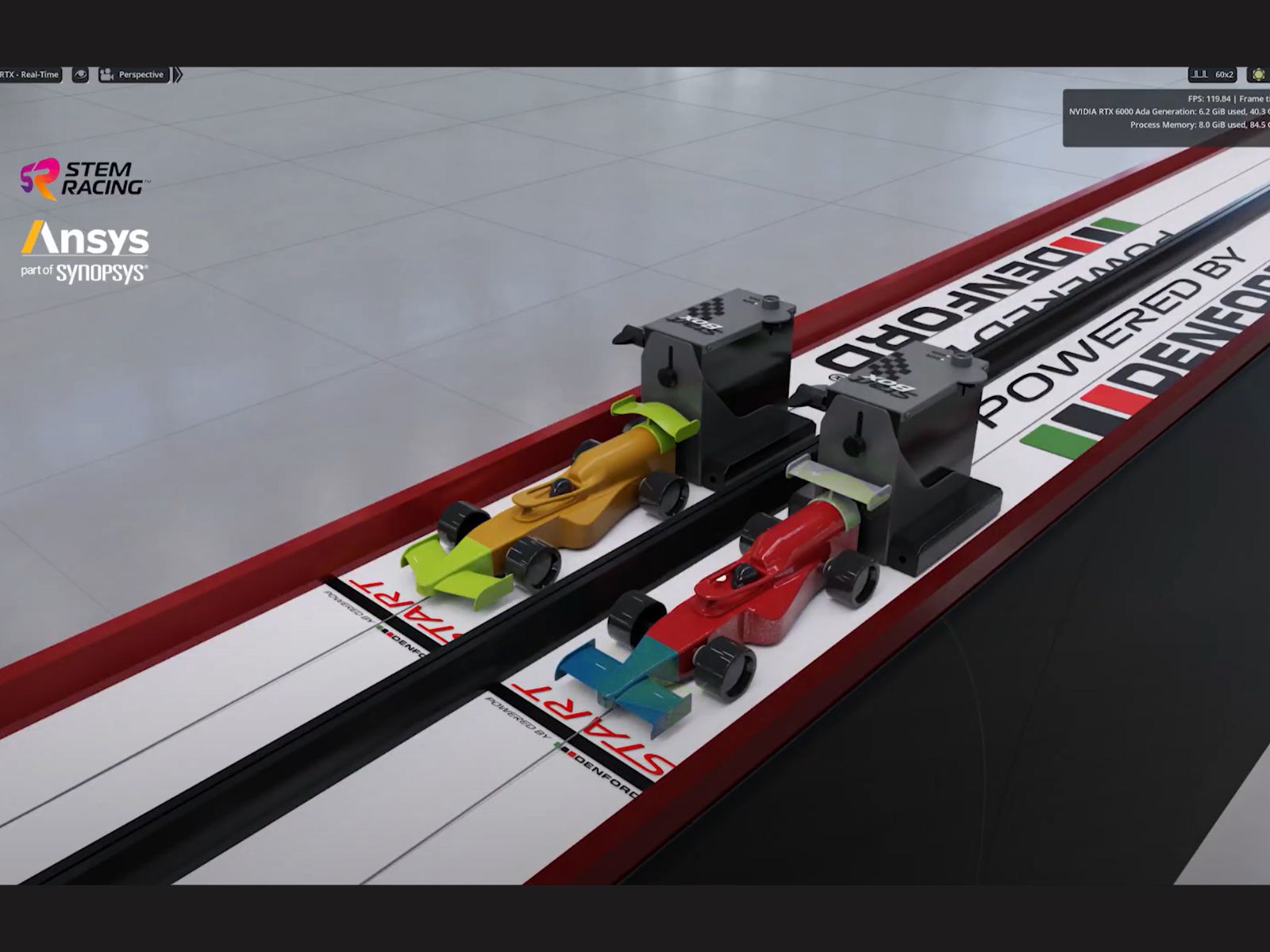
Digital twin racetrack brings F1-style engineering to the classroom
Synopsys, through its Ansys division, has teamed up with Nvidia to launch a virtual racetrack that lets students design, test, and optimize miniature F1-style cars entirely online. The platform blends Ansys Discovery with Nvidia Omniverse so teams can run limitless digital laps, refine aerodynamics, and make data-driven decisions before building anything physical. A simplified version debuted at the Aramco STEM Racing World Finals in Singapore from September 27 to October 2, with a full rollout planned for the 2025–2026 STEM Racing season.
Instead of spending weeks fabricating and tweaking prototypes, student teams can simulate airflow, drag, and downforce on a digital replica of the official track. That means quicker iteration, lower costs, and insights comparable to those used in professional motorsport and aerospace engineering. Younger participants at the World Finals explored instant feedback by swapping spoilers and car bodies, while advanced teams will be able to import detailed designs into Ansys Discovery for Computational Fluid Dynamics (CFD) analysis and visualize results inside Omniverse.
As the exclusive global CFD partner for STEM Racing, Synopsys already supports more than 400,000 students in 65 countries with complimentary software, training, and technical help. This initiative scales that support even further by reducing barriers to advanced simulation and high-performance computing, making cutting-edge engineering tools accessible to classrooms and clubs worldwide.
Industry leaders say this shift supercharges creativity and performance. STEM Racing founder and chairman Andrew Denford underscored how digital twins unlock faster innovation, while Nvidia’s Tim Costa highlighted how Omniverse helps teams optimize for unique track conditions. Synopsys noted that AI-driven capabilities are woven into the platform, preparing students for next-generation engineering roles.
What students and educators gain:
– Unlimited virtual testing on an official track replica
– Rapid iteration with CFD-driven aerodynamic insights
– Visual, real-time feedback for beginners and advanced users
– Access to high-performance, industry-grade tools in the classroom
– Lower costs and fewer physical prototypes
– Skills that translate directly to modern engineering careers
This collaboration signals a new era for STEM competitions. By moving design validation into a digital twin environment, teams can work faster, learn deeper, and compete smarter. As the 2025–2026 season approaches, expect student-built racers that are not just faster on paper, but engineered with the same tools shaping the future of mobility and manufacturing.