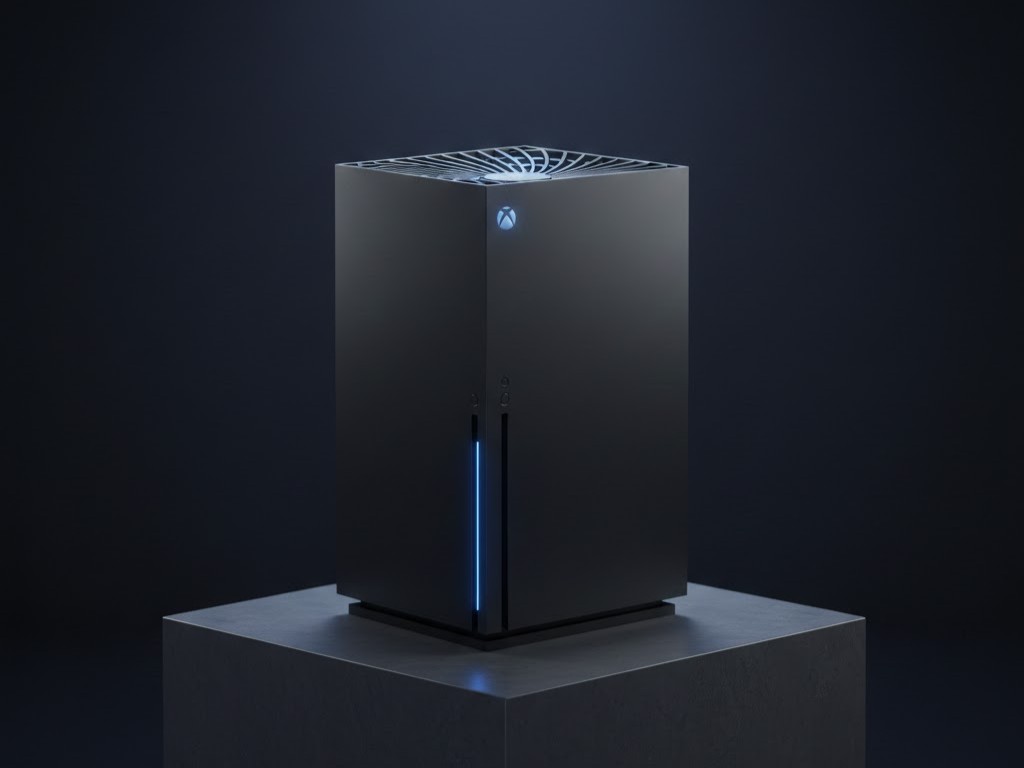
Fresh details about Microsoft’s next-generation Xbox console are starting to paint a clearer picture of what the company could be planning for 2027—and it sounds less like a traditional console upgrade and more like a living-room-friendly Windows gaming PC.
According to new reporting from a well-known Xbox insider, the next Xbox will feature a TV-optimized console interface on the surface, while running a version of Windows underneath. The big twist is that players apparently won’t be locked into the console environment. Instead, they may be able to exit the Xbox-style interface and use the system more like a standard Windows machine, including running regular Windows applications.
If this holds true, the implications for gaming are huge. A Windows-based Xbox could potentially support third-party PC game stores and launchers, meaning services like Steam and the Epic Games Store might be usable directly on the console. For players, that could translate into far more flexibility, larger game libraries, and more control over where games are purchased. At the same time, it raises obvious questions about what this means for the long-term structure of the Xbox ecosystem, which traditionally benefits from keeping purchases and subscriptions inside Microsoft’s own storefront.
Pricing is another major talking point. Earlier rumors suggested the next Xbox could reach around $1,000, and that figure is starting to sound more believable given ongoing concerns about memory and storage costs. The report notes that RAM and storage supply could remain tight until 2028, which is after the expected 2027 launch window. In other words, the cost of building high-performance gaming hardware may stay elevated right as Microsoft is preparing to release its next system.
To address that, Microsoft is reportedly partnering with third-party OEMs to produce alternative devices that deliver a similar “Xbox meets Windows” experience across multiple price points. That could mean a range of Xbox-like systems—some more affordable than Microsoft’s own console—and, interestingly, some could even be more powerful than the flagship Xbox itself. If Microsoft leans into a broader hardware ecosystem, Xbox could start looking less like a single box under the TV and more like an entire family of devices sharing a unified gaming platform.
As for the hardware, the next Xbox is widely rumored to use a system-on-chip codenamed Magnus. The expected specs are ambitious: an 11-core CPU built on Zen 6 (with a mix of 3 Zen 6 cores plus 8 Zen 6c efficiency cores), an RDNA 6-based GPU with 68 compute units, up to 48GB of GDDR7 memory on a 192-bit bus, and a dedicated NPU aimed at Copilot and other AI-powered features. If accurate, that combination suggests Microsoft is targeting a major leap in performance, not just for games but also for AI-assisted functionality and potentially broader Windows workloads.
The mention of third-party systems being able to “one-up” Microsoft’s own configuration is especially intriguing. There are several ways OEMs could push performance further, including the possibility of incorporating 3D V-Cache in some form—an approach that has been rumored for competing future hardware as well. If that happens, the next era of console gaming could start to resemble the PC market more than ever: multiple manufacturers, multiple performance tiers, and a shared platform designed to run games from a variety of storefronts.
For now, none of this is officially confirmed, but the overall direction is becoming easier to imagine: a next-gen Xbox that blends console simplicity with Windows flexibility, backed by a wider range of partner-made devices that could expand the “Xbox” experience beyond a single piece of hardware.