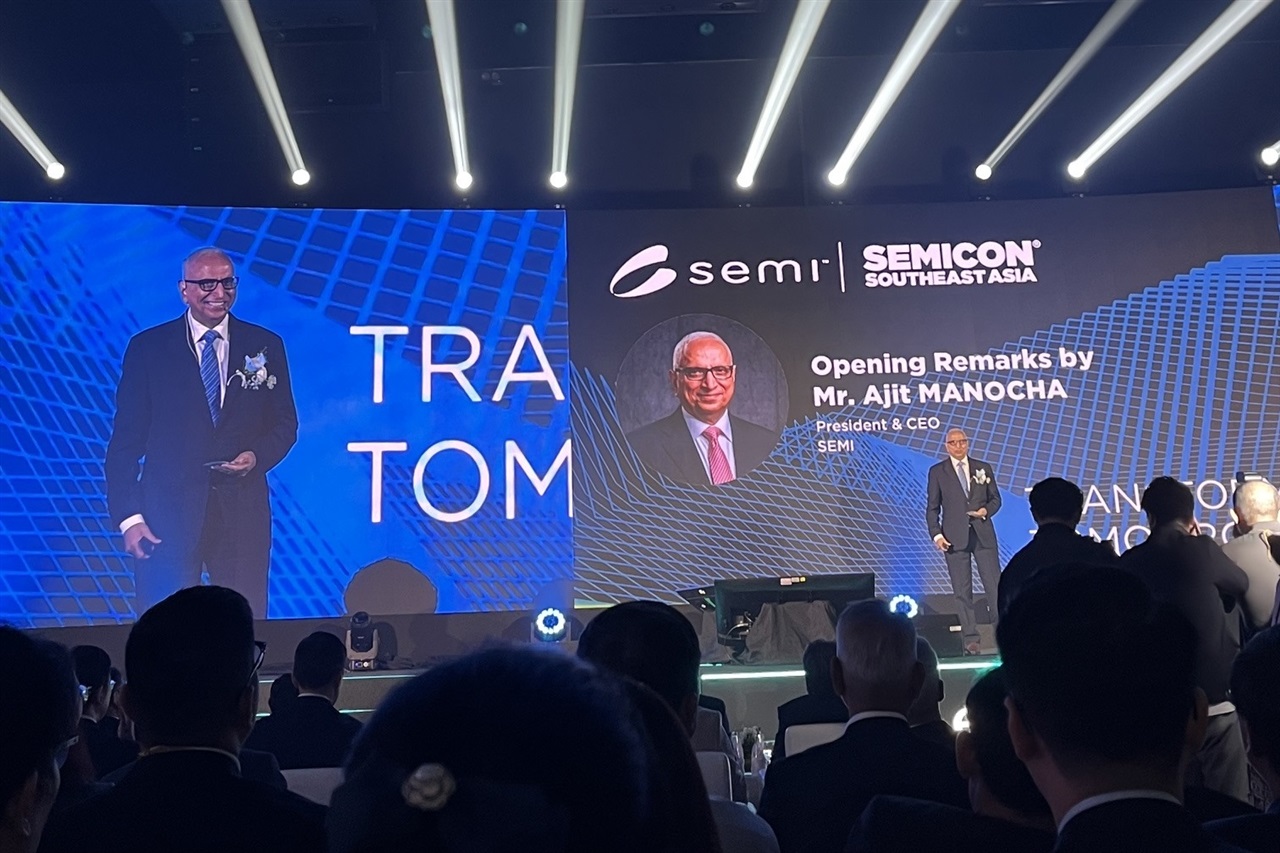
At SEMICON Southeast Asia 2026, SEMI President and CEO Ajit Manocha offered a blunt reality check for the region’s booming semiconductor ambitions: the industry is heading into a multi-trillion-dollar growth era, but Southeast Asia won’t secure a bigger share of that future by building chip factories alone. To compete long-term, the region needs complete semiconductor ecosystems, not just new fabs.
Manocha’s core point was simple but significant. A fabrication plant can be announced, funded, and built, but without the right surrounding support, it won’t deliver the scale, resilience, and economic impact governments and investors expect. In today’s semiconductor supply chain, success depends on an interconnected network of talent, suppliers, equipment support, materials, packaging capabilities, logistics, and reliable infrastructure. Without those pieces in place, even impressive fab investments can struggle to reach their potential.
Why does this matter now? Global demand for chips continues to rise across nearly every growth sector, including artificial intelligence, data centers, automotive technology, industrial automation, consumer electronics, and next-generation connectivity. With semiconductors powering everything from cloud computing to smart factories, the race is no longer just about who can manufacture chips, but who can sustain end-to-end capabilities at speed and at scale.
For Southeast Asia, that creates both an opportunity and a challenge. The region is already an important part of the global electronics and semiconductor value chain, especially in areas like assembly, testing, and manufacturing support. But Manocha’s message suggests that the next phase of expansion will reward countries and companies that can offer a complete package: skilled engineers, deep supplier networks, advanced packaging and testing capacity, strong partnerships with global players, and policies that encourage long-term investment rather than one-off projects.
A major theme from the talk is coordination. Building a true semiconductor ecosystem requires alignment across government agencies, universities, research institutions, and private industry. Workforce development has to match the needs of advanced manufacturing. Incentives must support not only large-scale fabs but also the smaller specialized suppliers that keep fabs running—everything from chemicals and wafers to equipment maintenance and precision components. In other words, the region needs to think beyond ribbon-cuttings and toward durable, interconnected capability.
This “ecosystem-first” approach is also a hedge against volatility. Semiconductor supply chains have faced years of disruption, from geopolitical tensions to shifting demand cycles. Regions that can provide stable, well-integrated semiconductor operations—from design-adjacent support through manufacturing and packaging—are better positioned to weather uncertainty and attract repeat investment.
Manocha’s remarks at SEMICON Southeast Asia 2026 reflect a broader shift in how the world measures semiconductor readiness. The question is no longer, “How many fabs are being built?” It’s “How strong is the entire chain that supports them?” For Southeast Asia, the path to capturing a larger slice of the multi-trillion-dollar semiconductor future will likely depend on whether it can build the full ecosystem that global chipmakers need to thrive.