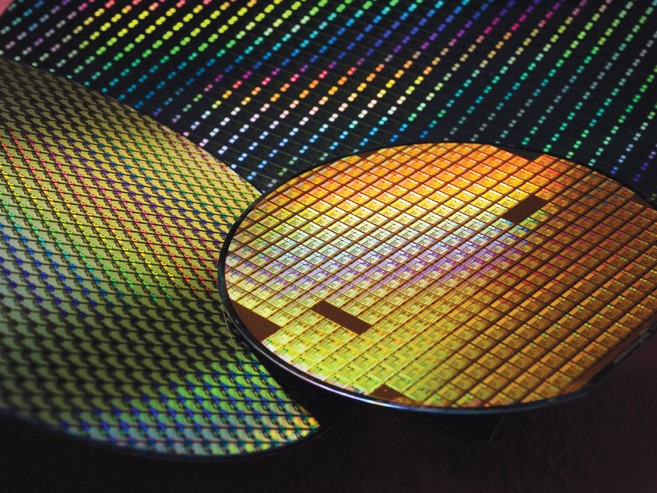
In a surprising development, Wong Kok Hoi, the insightful founder and co-CIO of Singapore-based APS Asset Management, has put forth a bold prediction that the Chinese semiconductor powerhouse, SMIC, could potentially rival the staggering market valuation of TSMC, despite the latter being an established giant in the industry. TSMC has cemented its place with a jaw-dropping market cap exceeding $1 trillion, whereas SMIC is currently valued at a comparatively modest $50 billion.
In a January 8 appearance on Bloomberg TV, Wong shared his optimism for SMIC’s upward trajectory. He highlighted the immense advantage China holds with its vast reservoir of engineering talent, producing an impressive five million graduates each year. Coupled with robust capital reserves and government support, Wong believes SMIC is well-equipped to shoulder the hefty financial burden of building chip fabrication plants, which often exceed $10 billion in costs.
Moreover, SMIC stands to benefit from China’s burgeoning domestic market, allowing them to ramp up production without relying heavily on Western markets. Nonetheless, Wong acknowledged the formidable technological challenges that SMIC faces, particularly the absence of access to ASML’s critically important EUV lithography machines, a key component for cutting-edge chip production.
Advancements in China’s semiconductor sector are slowly but surely taking shape. Notable is the Harbin Institute of Technology’s Advanced Technology Research Institute, which has reportedly developed a “Discharge Plasma Extreme Ultraviolet (EUV) Lithography Light Source.” This innovation promises enhanced energy efficiency and cost-effectiveness, though experts caution that it’s not yet ready for commercial application.
TSMC, never one to rest on its laurels, continues to innovate. Reports from Taiwan suggest a partnership with NVIDIA to create a groundbreaking photonics chip prototype. This technology, utilizing infrared light for data transmission, offers the promise of increased speed and reduced power consumption.
China is also dabbling in photonics technology. The Hubei Jiufengshan Laboratory (JFS) has recently achieved the integration of a laser light source within a silicon chip. Despite these advancements, SMIC is currently hindered by export restrictions from the U.S., Japan, and the Netherlands on advanced chipmaking equipment—a barrier unlikely to lift until 2026 at the earliest.
Wong’s foresight stems from his long-term investment strategies. Since early 2020, APS Asset Management has adopted an “All in China” strategy, betting on the potential of the Chinese market while maintaining a cautious approach to valuations. Wong’s vision underscores a belief in China’s growing influence in the global semiconductor industry, suggesting an intriguing future where SMIC could eventually stand toe-to-toe with TSMC.


