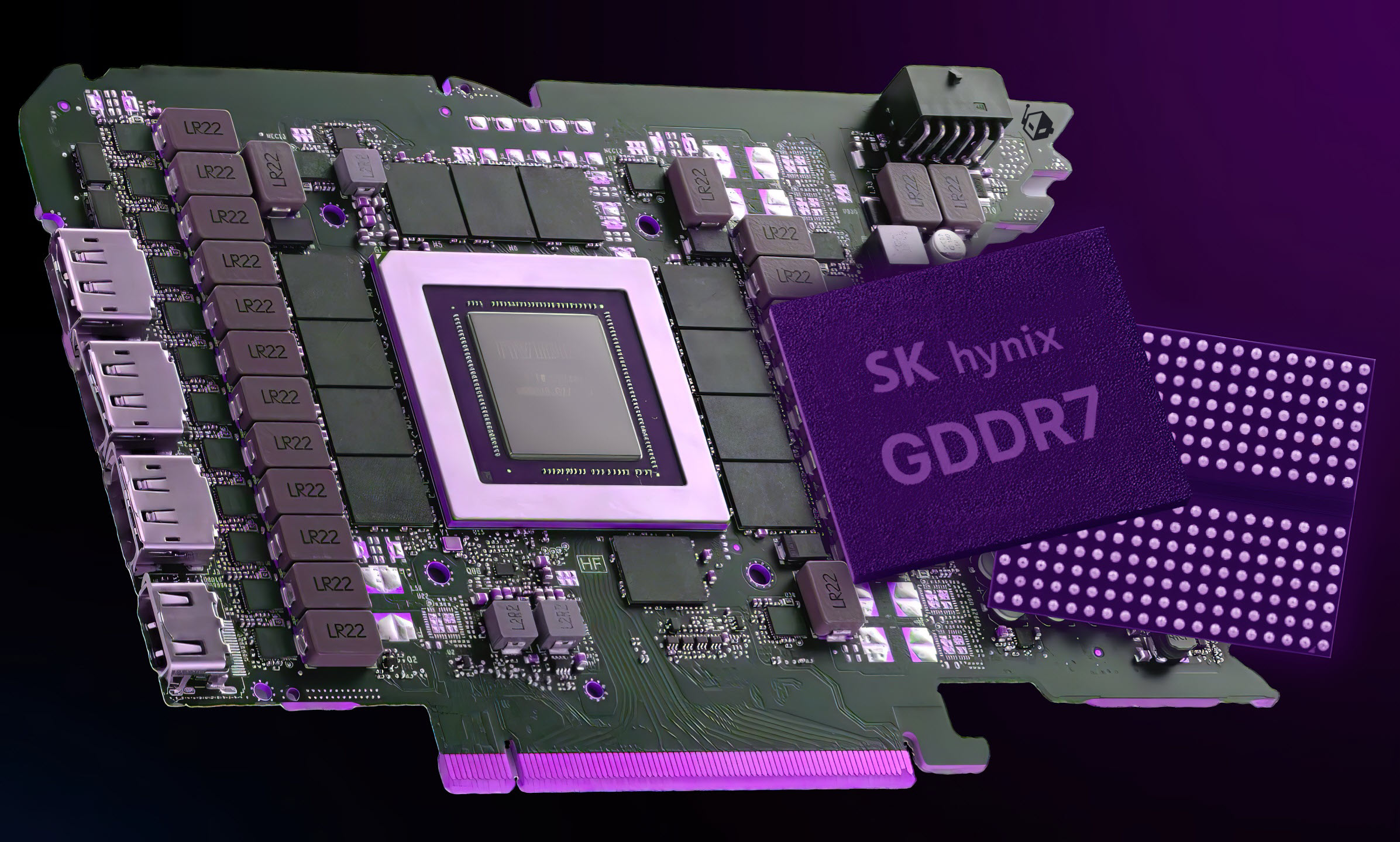
SK Hynix is making waves in the tech world with its ambitious plans to introduce 24 Gb GDDR7 memory, aimed at boosting VRAM capacities in GPUs. Alongside this, the company is setting the stage for HBM4 development.
In recent earnings discussions, SK Hynix shared its strides in the DRAM and memory sectors, proudly noting the expansion of sales for its 12-Hi HBM3e DRAM. Success in the market has translated into better-than-expected quarterly results for DRAM and NAND flash shipments.
The spotlight, however, shines on the company’s development of 24 Gb GDDR7 memory modules. These are intended to power the next wave of graphics cards and provide AI developers with expanded VRAM capacities. This represents a significant leap, offering a 50% increase in capacity compared to current 16 Gb dies.
GDDR7 memory not only promises more capacity but also expects speed enhancements, with 30+ Gbps becoming the norm. While 40+ Gbps solutions are on the horizon, the immediate focus remains on expanding VRAM. GPU giants like NVIDIA are poised to integrate GDDR7 memory from suppliers such as SK Hynix, Samsung, and Micron.
Samsung has already begun production, and NVIDIA’s anticipated “RTX 50 SUPER” series is likely to incorporate these advanced modules, expected to hit the market later this year or early next year.
The evolution of graphics memory showcases significant advancements across various platforms and technologies. SK Hynix anticipates that its robust product performance and production capabilities will help double HBM output compared to the previous year, ensuring stable earnings.
The company’s forward momentum also includes the release of an LPDDR-based module for servers within the year and preparations for GDDR7 products targeted at AI GPUs. This move seeks to cement SK Hynix’s leadership in the AI memory domain through strategic product diversification.
Beyond GDDR7, the company is actively readying HBM4 memory solutions, which are set to revolutionize the HPC/AI landscape. With early supplies already in the evaluation phase, industry leaders like NVIDIA and AMD are expected to leverage these cutting-edge memory solutions in future products. As the tech landscape evolves, these advancements promise to redefine performance benchmarks and architectural standards.