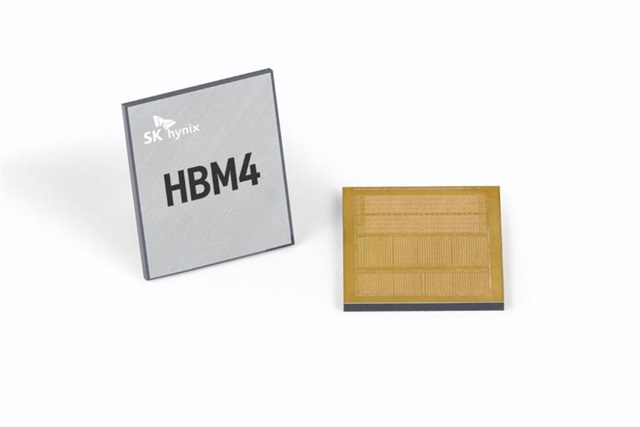
SK Hynix is on track to secure the lion’s share of Nvidia’s sixth‑generation high‑bandwidth memory orders, with market forecasts pointing to roughly 80% of HBM4 demand in 2026. If this outlook holds, it positions the company for a notable earnings upswing as AI accelerators, data center GPUs, and large‑scale training clusters continue to drive a global race for memory bandwidth.
The backdrop is straightforward: cutting‑edge AI systems are starved for fast, power‑efficient memory, and HBM has become the cornerstone of that performance. HBM4 is expected to raise the bar again, building on the momentum of HBM3 and HBM3E with higher throughput and tighter integration alongside advanced packaging. Securing the primary supply role for Nvidia’s next generation would cement SK Hynix’s leadership at a pivotal moment for the AI hardware ecosystem.
Why SK Hynix stands out
– Proven track record in HBM3 and HBM3E. Over the past cycles, SK Hynix has consistently demonstrated strong yields, reliability, and delivery for top AI platforms, giving it a credibility edge heading into HBM4.
– Early investment and capacity readiness. The company has been expanding HBM production capacity and refining its stacking and through‑silicon via processes, critical for pushing performance while keeping power and thermals in check.
– Tight alignment with advanced packaging. As AI chips converge on ever‑denser memory stacks, close collaboration across packaging and substrates becomes essential. Suppliers with proven integration tend to win larger allocations.
What an 80% share could mean for earnings
HBM carries higher average selling prices and better margins than commodity DRAM. Winning the bulk of Nvidia’s orders in 2026 would likely lift SK Hynix’s revenue mix, supporting stronger profitability and cash flow. It also increases visibility into multi‑quarter demand, which can help optimize production planning and capital expenditures. In a market where supply tightness and qualification barriers can persist, those advantages compound.
Implications for the AI supply chain
– Faster time to scale for AI accelerators. Reliable HBM4 supply is a prerequisite for ramping next‑gen GPUs and AI systems. A dominant supplier simplifies planning for hyperscalers and system builders racing to expand compute capacity.
– Continued competition among memory makers. While SK Hynix is projected to lead, rivals are aggressively investing to qualify their own HBM4 offerings. Expect ongoing efforts from other DRAM players to close gaps in performance, yields, and volume.
– Packaging and substrate bottlenecks remain a factor. Even with ample HBM4 output, overall system availability depends on advanced packaging capacity and substrate supply. Coordination across the ecosystem will be critical to avoid bottlenecks.
Key uncertainties to watch
– Qualification timelines. The handoff from HBM3E to HBM4 will hinge on successful customer qualification and stable mass‑production yields.
– Yield and thermal challenges. Higher‑stack configurations and tighter power budgets can introduce manufacturing and reliability hurdles that need to be solved at scale.
– Demand volatility. AI build‑outs remain strong, but spending can shift with macro trends, cloud capex cycles, or new architectural breakthroughs that alter memory requirements.
– Pricing dynamics. As more suppliers qualify, pricing and contract structures could evolve, influencing margins across the cycle.
Why this matters beyond one supplier
HBM has become the linchpin of modern AI performance. A robust HBM4 rollout can accelerate training throughput, reduce time‑to‑deployment for new models, and enable denser, more energy‑efficient data center designs. For Nvidia, dependable HBM4 sourcing is vital to sustaining the pace of next‑gen GPU launches. For hyperscalers and AI startups, it can translate into faster access to capacity and better total cost of ownership.
What to watch next
– Formal HBM4 product disclosures and performance targets
– Major qualification milestones and customer announcements
– Capacity expansion updates and capital investment plans
– Shifts in customer mix across AI chipmakers and cloud providers
Bottom line
Forecasts that SK Hynix will cover around 80% of Nvidia’s HBM4 needs in 2026 underscore the company’s strong execution in high‑bandwidth memory and set the stage for a meaningful earnings boost. With AI demand still surging, leadership in HBM4 is likely to be one of the most important competitive advantages in the semiconductor industry over the next few years.