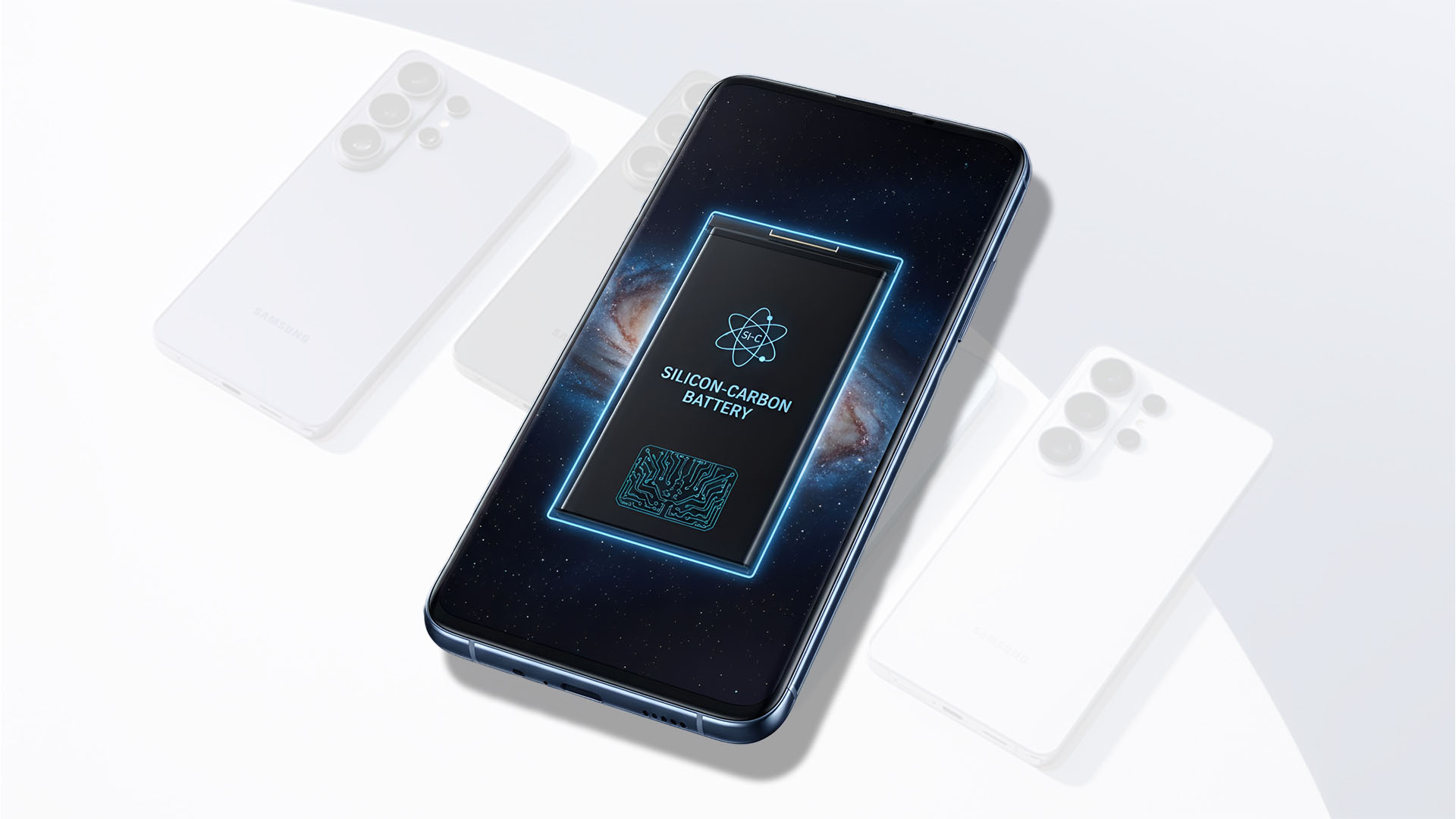
Samsung fans have been waiting years for a real battery breakthrough, and the frustration is understandable. For roughly six generations, the Galaxy S series has largely stuck to a familiar 5,000mAh ceiling, meaning battery life improvements have mostly come from efficiency gains rather than meaningful capacity jumps. Now, a fresh rumor suggests Samsung may finally be preparing to move on from that long-running limit by adopting silicon-carbon battery technology, the same next-generation approach that has already gained traction among several Chinese smartphone brands.
Silicon-carbon batteries have become a hot topic in the mobile industry because they can potentially deliver higher energy density than traditional lithium-ion designs. In plain terms: more battery capacity in the same physical space, or similar capacity in a thinner, lighter device. That’s exactly the kind of upgrade Galaxy users have been hoping to see—especially as screens get brighter, cameras more power-hungry, and on-device AI features demand more from the battery.
So why hasn’t Samsung made the switch already, and why wouldn’t it arrive in time for the Galaxy S26 lineup? According to comments shared by Samsung’s Executive Vice President and head of its smartphone R&D team, Sung-Hoon Moon, the company’s hesitation comes down to one thing: validation. He indicated that these new battery cells must pass “very rigorous validation standards,” and suggested Samsung has been “a bit un-innovative” in this specific area. The implication is that Samsung isn’t ignoring the technology—it’s wary of rolling it out before it’s fully confident in long-term reliability, safety, and consistent manufacturing quality at massive scale.
That cautious approach has become a defining part of Samsung’s flagship strategy, and it’s not without trade-offs. While Samsung often delivers polished hardware and software, being slower to adopt cutting-edge battery tech can make the Galaxy S line feel less competitive in a market where rivals are aggressively chasing bigger capacities and faster charging. Still, Moon emphasized that customer experience remains the company’s top priority, and Samsung will consider silicon-carbon once it’s convinced the technology clearly improves that experience without introducing new risks.
Battery rumors around future Galaxy models have also been swirling for a while. One particularly attention-grabbing claim suggested Samsung was exploring a huge jump—up to 7,000mAh for a top-end model. That story didn’t hold for long, and talk of an imminent giant-capacity Galaxy battery quickly faded. There have also been lingering mentions of extreme internal tests, including experimentation with a 20,000mAh cell, followed by reports that the idea was abandoned. Whether those specific numbers were ever realistic or simply early research, they underline a consistent theme: Samsung is investigating options, but it isn’t rushing anything to market.
A major reason for this measured pace is likely reputational. The industry still remembers the Galaxy Note 7 crisis, and Samsung has every incentive to ensure it never faces a battery-related safety scandal again. Adopting a newer battery chemistry at the scale Samsung operates introduces a different level of risk. Because Samsung ships far more flagship units than most competitors, even a small defect rate could affect a large number of devices. If a handful of batches developed problems—such as overheating, fires, or swelling—the story could quickly become a global public relations disaster.
For consumers, the takeaway is simple: a meaningful Galaxy battery upgrade could be on the horizon, but Samsung appears determined to prioritize safety testing and long-term reliability over being first. If silicon-carbon batteries do arrive in a future Galaxy S model, they could finally deliver the kind of noticeable battery life leap that incremental upgrades haven’t been able to provide for years.