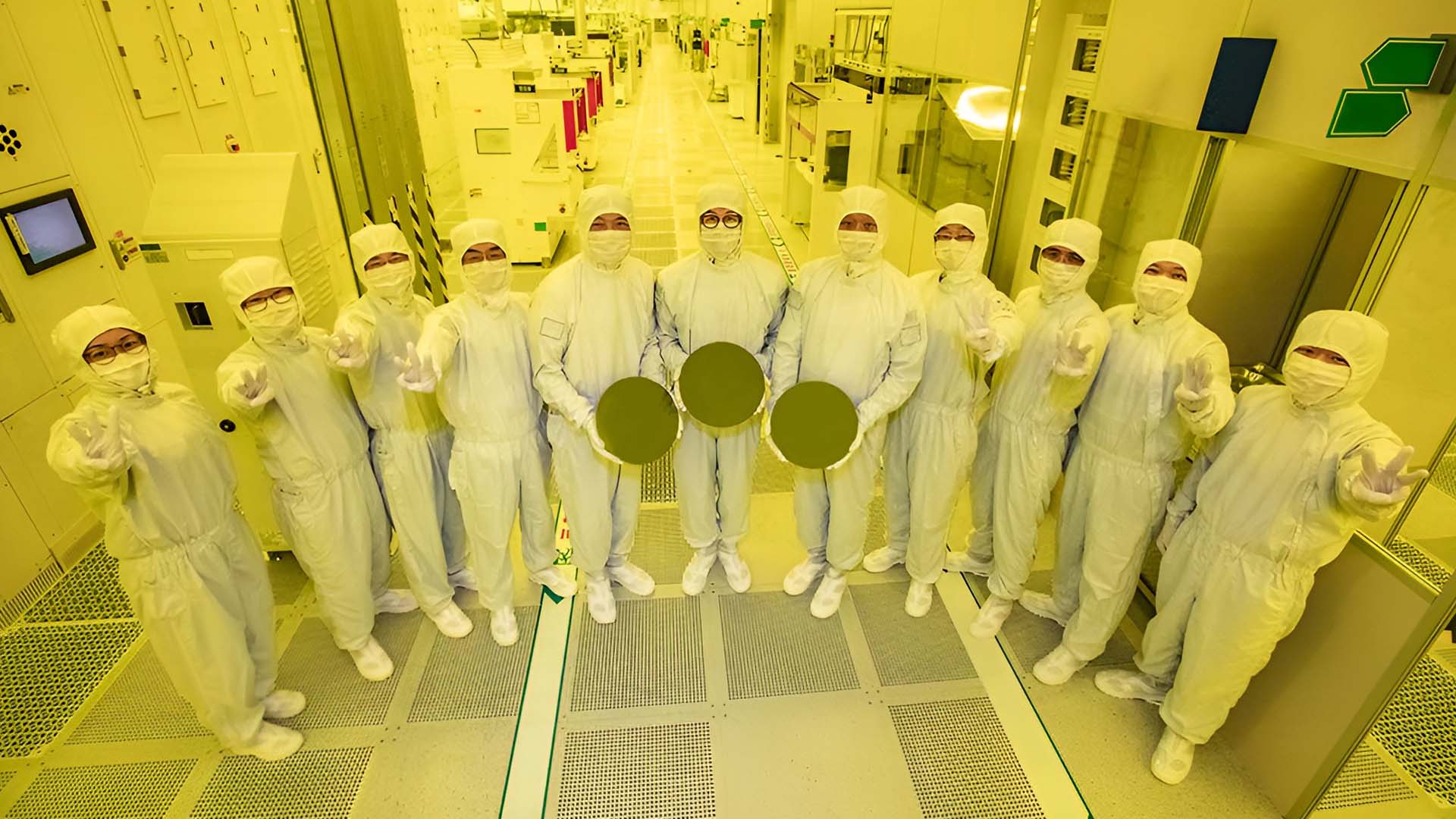
Samsung’s push into 2nm gate-all-around (GAA) manufacturing is starting to show tangible momentum. A fresh wave of 2nm orders from multiple customers, including Samsung’s own LSI division, has helped the company lift its reported yield rate to around 60%. That’s an improvement over the 50% figure that surfaced earlier this year, and it also reinforces a broader narrative: Samsung’s 2nm GAA production is moving in the right direction as more real-world demand gives the foundry stronger incentives to refine the process.
At the same time, not every 2nm product appears to be benefiting equally from that progress. Reports indicate that Exynos 2600 yields are still under 50%, despite being Samsung’s first major 2nm GAA chipset and a key benchmark for the technology. The contrast suggests that the headline yield gains may be driven heavily by other 2nm workloads rather than Exynos alone—an important detail for anyone watching whether Samsung can turn 2nm into a consistently high-performing, high-volume node across different chip designs.
One of the biggest factors behind Samsung’s recent yield improvements appears to be increased business from Bitcoin mining equipment manufacturers. Companies such as China-based Canaan and MicroBT have reportedly placed orders that strengthen Samsung’s 2nm pipeline. For a foundry operation, steady orders matter almost as much as engineering breakthroughs: higher volume provides more opportunities to tune the manufacturing process, iron out defect patterns, and accelerate learning cycles that can lift yields over time.
Because Samsung doesn’t publicly share official yield data for older or current process nodes, the industry largely relies on estimates and reporting from supply-chain sources. That makes every new datapoint notable, even if it comes with some uncertainty. For example, earlier reports claimed that when Exynos 2600 entered mass production, yields were roughly 50%. If that baseline was accurate, then today’s broader 2nm yield rate being around 60% could imply Samsung is trending toward a more production-ready band—potentially 60% to 70%—which is often considered a healthier range when trying to win more demanding customers and larger commitments.
This matters because the competitive pressure in advanced chip manufacturing is intense, and Samsung is widely viewed as working to narrow a significant gap with the industry leader in next-generation nodes. Winning more manufacturing deals is one of the clearest ways to close that distance. A growing order book not only supports investment, it also helps Samsung mature its 2nm GAA process faster through continuous production feedback.
Samsung is also chasing major growth in 2nm demand heading into 2026. One high-profile boost comes from a reported $16.5 billion agreement with Tesla to manufacture AI6 self-driving chips—an eye-catching deal that could expand the company’s advanced-node footprint and credibility with large customers. Alongside that, Samsung is said to be targeting a 130% increase in 2nm GAA orders in 2026, signaling aggressive ambitions to scale both volume and competitiveness.
Taken together, the story of Samsung’s 2nm GAA right now is a mix of progress and pressure: stronger overall yields fueled by incoming orders, lingering challenges for flagship designs like Exynos 2600, and a broader strategy centered on scaling customer demand to accelerate manufacturing maturity. If Samsung can keep improving yields into the upper range and convert that into more long-term client commitments, 2026 could become a pivotal year for its 2nm foundry business.


