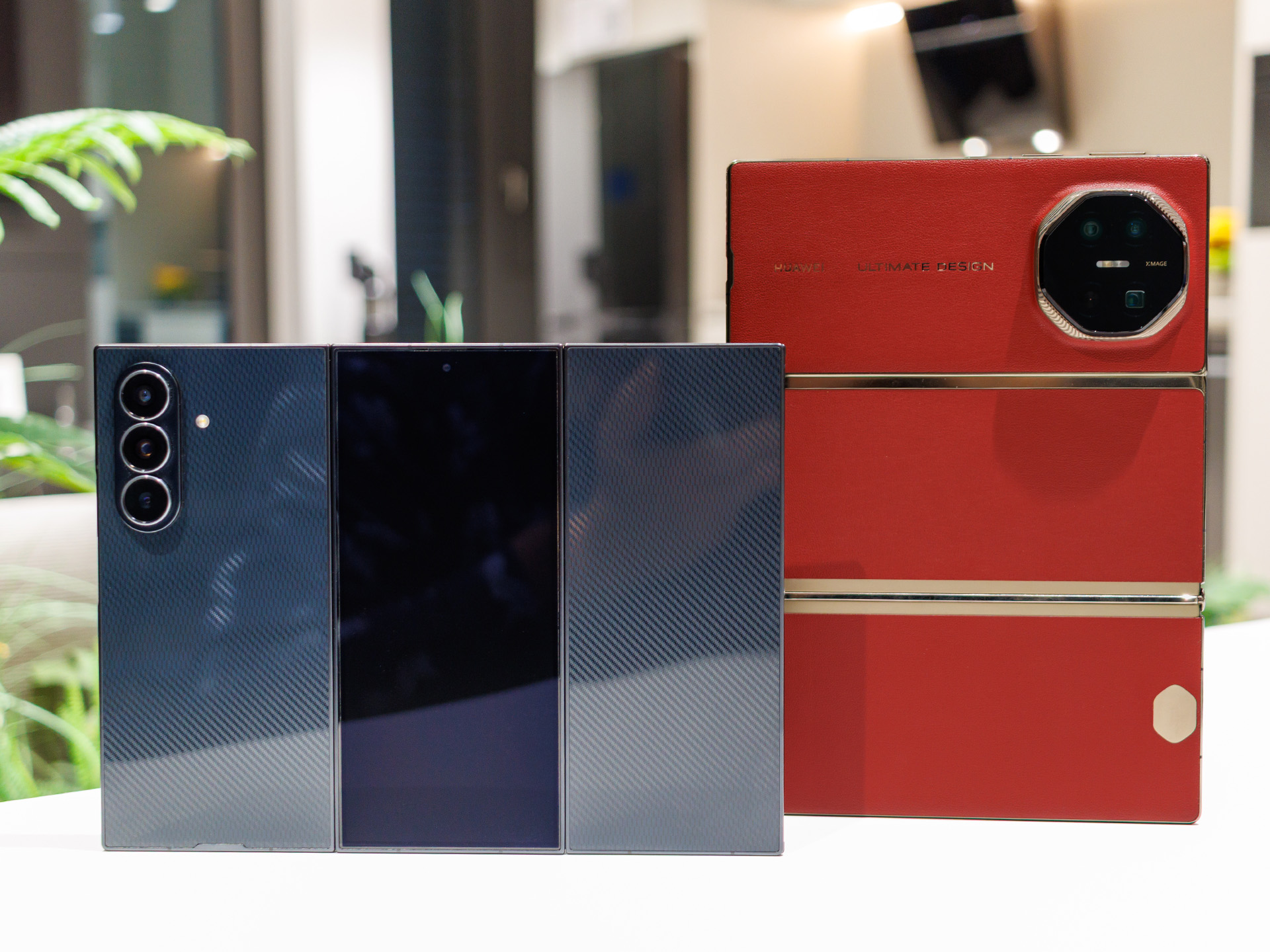
Samsung’s Galaxy Z TriFold and Huawei’s Mate XT are shaping up as two of the most talked-about next-generation foldables, and for good reason: they take very different paths toward the same goal—turning a pocketable device into a true big-screen experience. If you’re weighing which one makes more sense, the real story is in performance, cameras, charging, connectivity, and long-term software confidence.
On raw speed and efficiency, Samsung holds a clear advantage. The Galaxy Z TriFold is powered by the Snapdragon 8 Elite for Galaxy built on a modern 3nm process, which translates into noticeably higher performance and better power efficiency. Huawei’s Mate XT runs the Kirin 9010 on 7nm, which still delivers solid day-to-day performance but looks dated next to Samsung’s newer hardware. Software is also part of the equation: Samsung’s Android-based ecosystem feels like the safer bet for many buyers, while HarmonyOS comes with more uncertainty around update support depending on region and availability.
Camera priorities will likely decide this matchup for a lot of people. Samsung leans into high-resolution capture with a 200MP main camera and adds a 3x telephoto lens, making it a strong option for detail-rich shots and versatile everyday zoom. Huawei, on the other hand, plays to its strengths with a 50MP system that stands out thanks to a 5.5x periscope telephoto lens and a variable aperture—features that can be especially appealing for photographers who value longer-range zoom and more control across different lighting scenarios. In short: Samsung aims for maximum resolution and balanced versatility, while Huawei emphasizes optical reach and camera hardware flexibility.
Battery capacity is evenly matched on paper, with both devices offering 5,600 mAh. Charging speeds aren’t as even. Huawei takes the lead with 66W wired charging and 50W wireless charging, while Samsung is listed at 45W wired and 15W wireless—slower in comparison, particularly for wireless top-ups.
Design philosophy is where Huawei makes its most compelling case. The Mate XT is positioned as the more innovative and flexible device, offering more usage scenarios that may appeal to users who want something that feels truly different. Samsung’s Galaxy Z TriFold, however, comes across as the more mature all-rounder, with strengths in display quality, flagship-level performance, and a software experience that’s likely to feel more familiar and productivity-friendly—especially for users deeply invested in Android apps and services.
Connectivity and “future-proofing” features are another major separator. The Galaxy Z TriFold appears to win on modern wireless standards and interfaces: the Mate XT reportedly lacks 6 GHz Wi‑Fi and UWB, and it doesn’t include 5G. Those omissions could matter a lot over time, particularly for buyers who keep their phones for several years or rely on the fastest wireless networks.
Display behavior also differs in ways that go beyond size. The Mate XT is limited to a 90Hz refresh rate, while Samsung’s foldable experience is typically associated with smoother high-refresh usage. However, Huawei counters with 1,440Hz PWM dimming, which can be easier on the eyes for users sensitive to display flicker—an area where some foldables can be polarizing.
Choosing between them comes down to what you value most. The Galaxy Z TriFold looks better suited for productivity-focused users who want top-tier performance, stronger connectivity features, and a more established Android software experience. The Mate XT feels tailored to design-first buyers and photo enthusiasts who want a more flexible concept and advanced telephoto hardware, as long as they’re comfortable with the price and HarmonyOS trade-offs.
It’s also worth noting that an updated model called the Mate XTs is said to bring meaningful camera improvements and a faster Kirin 9020, which could shift the balance depending on pricing and real-world availability.
And that’s the final wildcard: availability. No matter how strong the hardware looks on paper, where and how these devices are sold—and what support comes with them—may ultimately be the deciding factor.