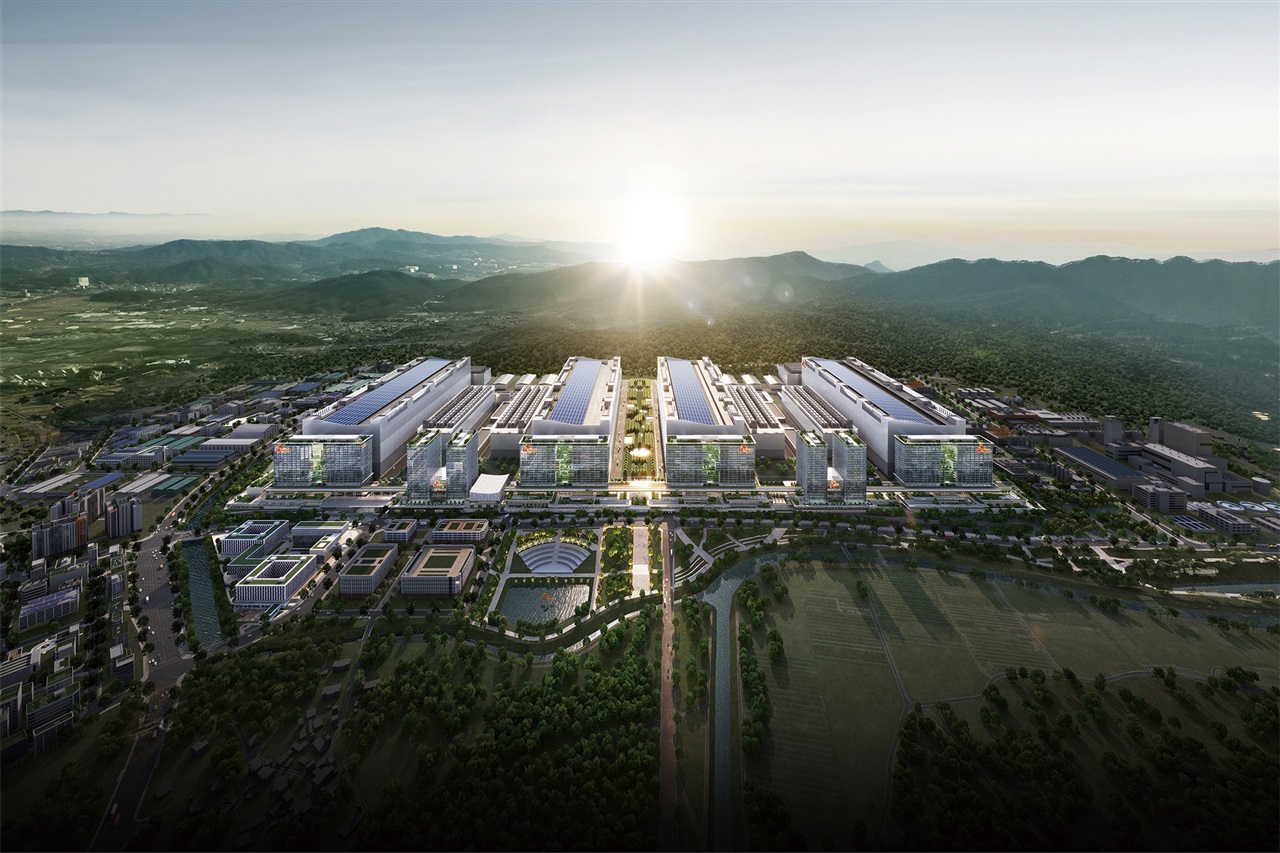
South Korea Eyes a Bigger Semiconductor “Chip Belt” as Samsung and SK Hynix Review Major Investment Plans
South Korea is moving to strengthen its position at the center of the global semiconductor industry, with government officials reportedly holding discussions with Samsung Electronics and SK Hynix about a new wave of large-scale chip investments.
The talks are focused on expanding the country’s semiconductor manufacturing network, often described as a Korean “chip belt.” The possible next phase could include new front-end fabrication plants, advanced packaging facilities, and other key infrastructure designed to support the rising demand for high-performance chips.
The potential expansion comes at a crucial moment for the global chip market. Artificial intelligence, data centers, smartphones, electric vehicles, and next-generation computing systems are all driving demand for more powerful and efficient semiconductors. As competition grows among major technology economies, South Korea is looking to secure its role as one of the world’s most important chip manufacturing hubs.
Samsung and SK Hynix are already two of the biggest names in memory chips, with strong positions in DRAM, NAND flash, and high-bandwidth memory used in AI servers. By exploring additional domestic investments, both companies could increase production capacity while also improving the country’s ability to handle more of the semiconductor supply chain at home.
Front-end fabrication plants are especially important because they handle the early and most complex stages of chip production. These facilities require massive capital investment, advanced equipment, skilled engineers, and stable infrastructure. If new fabs are added, they could help South Korea respond faster to global demand while reducing supply bottlenecks.
Advanced packaging is another major area of focus. As chips become more complex, packaging is no longer just the final step of production. It has become a critical technology that can improve performance, energy efficiency, and connectivity between different chip components. This is especially important for AI processors, high-bandwidth memory, and other advanced semiconductor products.
For South Korea, expanding chip packaging capabilities could be a strategic move. It would allow the country to compete more aggressively in the next stage of semiconductor innovation, where performance gains increasingly depend on how chips are integrated rather than only on how small their components are.
The government’s involvement highlights how important semiconductors have become to national economic strategy. Countries around the world are offering incentives, infrastructure support, and policy backing to attract chip investment. South Korea, already home to some of the most advanced memory chip production in the world, appears determined to keep its lead as the industry enters a new growth cycle.
A larger chip belt could also create broader economic benefits. New semiconductor facilities would likely require more suppliers, construction projects, logistics services, research operations, and highly skilled workers. This could support job creation and encourage more companies in the chip supply chain to expand their presence in South Korea.
However, such projects would not be simple. Semiconductor plants are among the most expensive industrial facilities in the world. They require reliable power, water supply, transportation access, and long-term planning. Companies must also consider market cycles, global demand forecasts, and geopolitical risks before committing to major expansion.
Samsung and SK Hynix are expected to carefully evaluate investment timing, facility locations, and the types of production that would deliver the strongest long-term value. With AI-related chip demand rising quickly, both companies may prioritize areas connected to high-performance memory, advanced manufacturing, and next-generation packaging.
If the discussions move forward, the new phase of investment could become one of South Korea’s most important semiconductor initiatives in years. It would reinforce the country’s ambition to remain a global leader in chip production while preparing for the next era of AI-driven computing.
For now, the talks signal a clear direction: South Korea wants to build a stronger, more resilient, and more advanced semiconductor ecosystem. With Samsung and SK Hynix at the center of that strategy, the country’s chip belt could soon become even more important to the future of global technology.