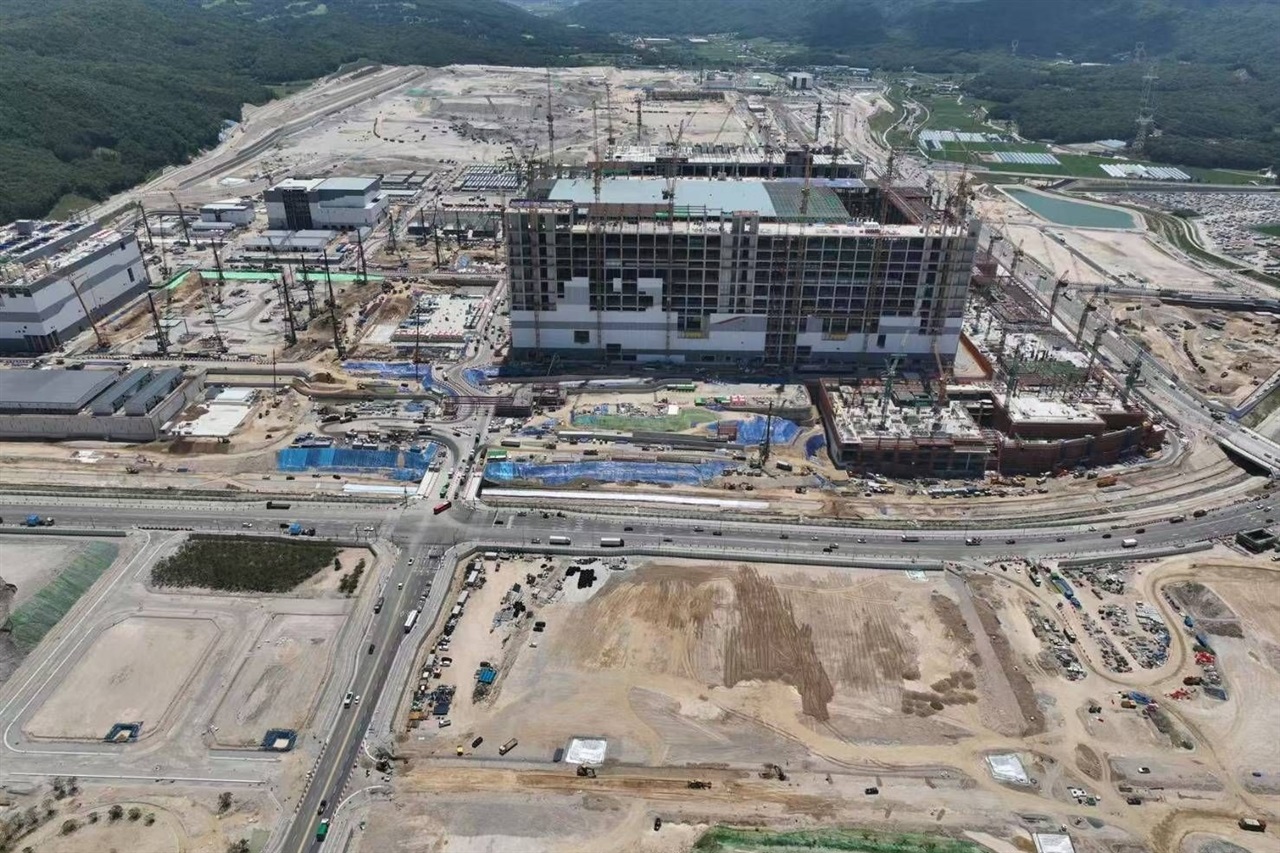
SK Hynix May Speed Up Gwangju Semiconductor Cluster Investment as Yongin Fab Expansion Moves Ahead
SK Hynix is reportedly reviewing whether to accelerate its investment in South Korea’s planned Gwangju semiconductor cluster, a move that could allow the project to develop in parallel with the company’s massive Yongin semiconductor buildout.
The memory chip giant is already constructing four fabrication plants in Yongin, a major project designed to strengthen South Korea’s position in the global semiconductor supply chain. However, the company is now said to be weighing an earlier push into Gwangju instead of waiting for the Yongin development to reach a more advanced stage.
If SK Hynix moves forward more quickly in Gwangju, it could signal a broader strategy to secure long-term production capacity amid rising demand for advanced memory chips, artificial intelligence hardware, high-bandwidth memory, and next-generation semiconductor technologies.
South Korea has been working to expand its domestic chip manufacturing ecosystem as global competition intensifies. The Yongin cluster is expected to become one of the country’s most important semiconductor hubs, supporting large-scale chip production, research, materials, equipment suppliers, and related infrastructure. Adding faster progress in Gwangju could help create another key base for semiconductor investment and regional economic growth.
For SK Hynix, timing is critical. Demand for AI servers and advanced computing systems has pushed memory makers to expand capacity and improve technology roadmaps. The company has benefited from strong interest in high-performance memory products, particularly as data centers and AI developers require faster and more efficient chips.
A quicker Gwangju investment could also help SK Hynix diversify its manufacturing footprint within South Korea. By developing multiple semiconductor clusters, the company may be better positioned to manage future demand cycles, support advanced production processes, and respond to global supply chain pressures.
While no final decision has been confirmed, the review highlights SK Hynix’s growing focus on long-term chip infrastructure. The company’s Yongin project remains a centerpiece of its expansion plans, but the possibility of simultaneous development in Gwangju suggests that South Korea’s semiconductor industry could see even more aggressive investment in the years ahead.
If approved, the accelerated Gwangju plan would likely attract attention from suppliers, construction partners, local governments, and technology firms looking to participate in South Korea’s next phase of semiconductor growth. For the broader chip industry, it would be another sign that leading memory manufacturers are preparing for sustained demand driven by AI, cloud computing, and advanced electronics.