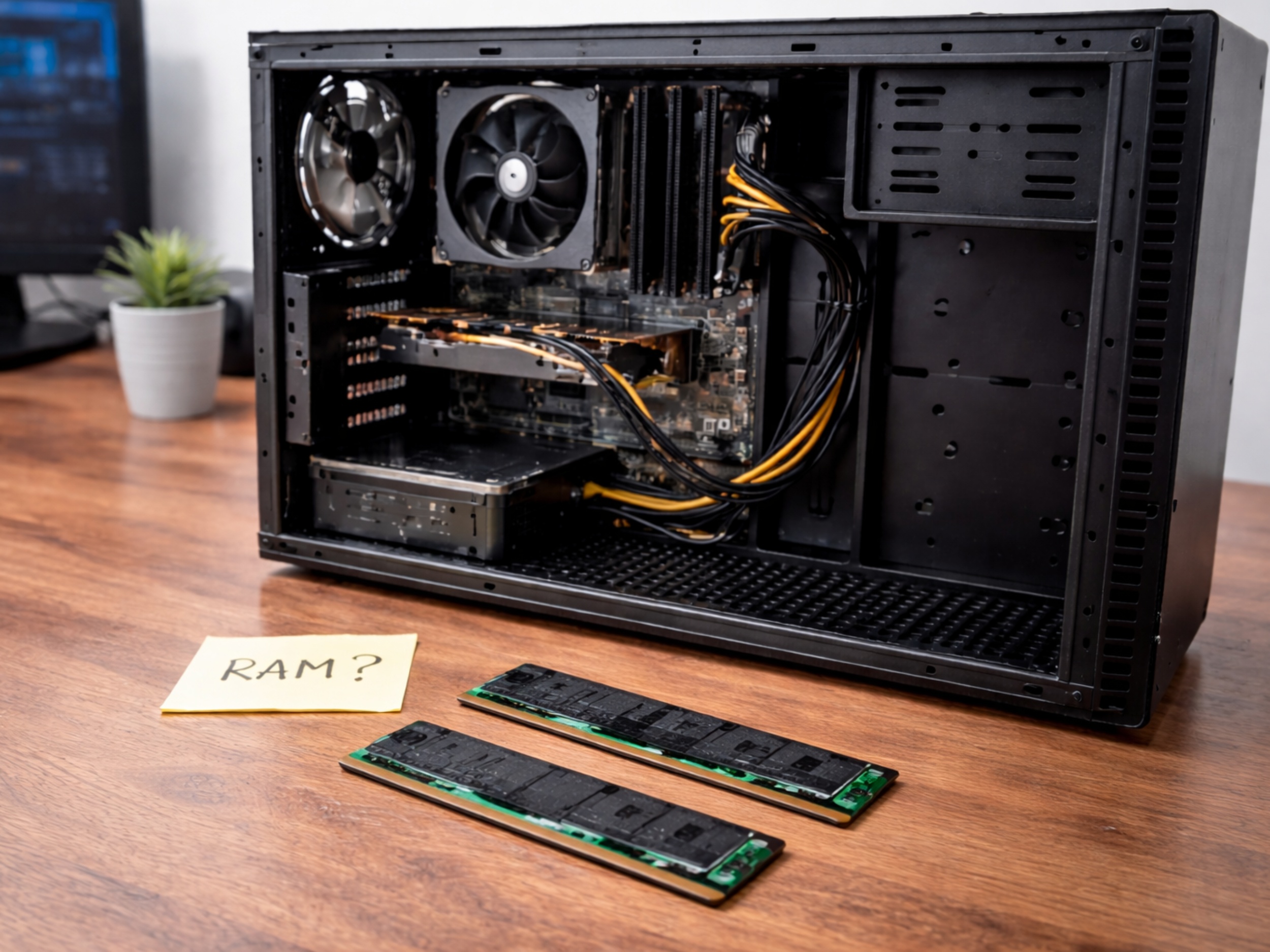
If you’ve tried building or upgrading a PC lately, you’ve probably noticed the same thing many buyers have: RAM prices have been rough. That sticker shock pushed YouTuber PortalRunner to ask a question that sounds almost impossible in 2026: how essential is RAM, really? Could a computer run without it—or replace it with something else?
The surprising answer is that it’s technically possible to boot and do something without traditional system memory, but it’s nowhere close to being a practical replacement for real RAM. PortalRunner’s experiment shows exactly why.
To test the limits, the build used an older ASRock motherboard paired with an Intel Core 2 Duo processor. From there, the experiment moved through the most common “no-RAM” ideas people bring up during a memory shortage.
First up were the usual storage-based fallbacks: Linux swap space and the Windows page file. These features are designed to help when your system runs low on memory by pushing data onto a hard drive or SSD. The problem is that swap and page files aren’t true RAM substitutes. The system still requires physical memory to operate normally, and trying to lean on storage for what RAM is meant to do causes extreme slowdowns. In PortalRunner’s testing, performance dropped so badly that even simple games wouldn’t run.
Next came an idea that sounds clever on paper: using graphics card memory (VRAM) instead of system RAM. The test used a GeForce GTX 1660 Super, and the expectation would be that VRAM—being fast memory—could help keep things usable. In reality, it barely worked. Video memory isn’t accessed the same way system memory is, and getting the CPU to use VRAM for general workloads means routing data through multiple software layers. That adds heavy overhead, spikes CPU load, and destroys the very speed advantage VRAM is supposed to offer. The end result was overheating and performance so poor that the configuration wasn’t usable.
The only approach that showed real progress relied on something every CPU already has: cache. CPU cache is incredibly fast, but it’s also tiny compared to even a modest amount of RAM. PortalRunner used a modified version of coreboot to bypass normal RAM detection and keep the machine operating in an early “cache-as-RAM” mode. With that workaround, the system could actually run a basic game—Snake—on a PC with no conventional RAM installed.
That’s a win for curiosity and engineering creativity, but it also underlines the bigger takeaway for anyone researching PCs during a RAM shortage: system memory is still the foundation of usable performance. Swap files help in a pinch, VRAM isn’t a realistic stand-in, and CPU cache is far too limited for anything beyond ultra-simple tasks. Still, as an experiment, it’s a fascinating look at how computers work under the hood—and just how far you can push a PC when memory prices make people consider the unthinkable.