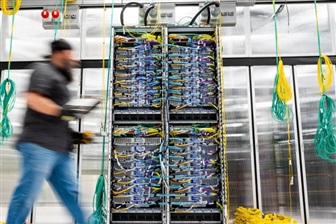
The widening conflict involving Iran is starting to send shockwaves through the global AI race, putting a spotlight on a part of the tech world many people rarely think about: the physical safety of the data centers powering today’s cloud computing and artificial intelligence. As tensions rise and attacks mount across the region, the Gulf’s ambitious push to become a major hub for AI infrastructure is facing fresh scrutiny from investors, operators, and customers who rely on uninterrupted connectivity.
For the past few years, Gulf countries have been positioning themselves as prime locations for next-generation data center expansion. The logic is compelling: strong government backing, aggressive national AI strategies, access to capital, and a geographic position that can connect Europe, Asia, and Africa. These projects aren’t small. Many are designed to support large-scale AI training and inference, which demand enormous computing power, high-density server deployments, stable electricity, and consistent low-latency network links to global internet backbones.
But regional instability changes the conversation quickly. When conflict escalates, it doesn’t just affect borders and shipping lanes—it introduces uncertainty into the very infrastructure AI depends on. Data centers may be hardened facilities, yet they remain tied to vulnerable systems: power grids, fuel supplies for backup generation, fiber routes, subsea cables, and logistics pipelines that keep hardware flowing and technicians moving.
What’s worrying industry watchers is the potential “risk premium” now attached to Gulf-based infrastructure. Even when a facility is far from immediate hotspots, perception matters. Large cloud customers and AI firms tend to plan capacity years ahead and prioritize reliability above nearly everything else. If decision-makers begin to view the region as a higher-risk environment, some workloads may be delayed, diversified to other geographies, or shifted into multi-region designs that reduce dependence on any single area.
There’s also the question of continuity during disruptions. AI services—especially those used by businesses—are measured by uptime, latency, and data durability. A serious outage can mean lost revenue, broken customer trust, and contractual penalties. That’s why companies increasingly spread workloads across multiple availability zones and even multiple countries. A tense security environment can accelerate those strategies, pushing operators to prove not only that they can build fast, but that they can withstand worst-case scenarios.
At the same time, Gulf states are unlikely to slow down easily. Many of these data center and AI initiatives are part of broader economic diversification plans aimed at long-term national competitiveness. Governments and operators may respond by boosting physical security, strengthening redundancy, investing in alternative fiber routes, expanding on-site power resilience, and emphasizing cross-border failover capabilities. In practice, that could mean more robust disaster recovery planning, additional peering arrangements, and greater emphasis on “region-to-region” architecture that can keep services stable even if one location becomes constrained.
For the global AI industry, the situation is a reminder that digital transformation still relies on real-world assets. Cutting-edge models and cloud platforms ultimately run on servers housed in buildings, connected by cables, sustained by energy, and protected by stable operating environments. As the Iran-linked conflict widens, the key question isn’t only how many new data centers the Gulf can build—it’s whether the region can reassure the world that these facilities will remain secure, resilient, and consistently available in an increasingly unpredictable landscape.
If you can share the rest of the post content (the full text after “Gulf states are expected to…”), I can rewrite the complete article with more accurate detail, stronger search-friendly phrasing, and a smoother narrative flow while keeping the original intent intact.