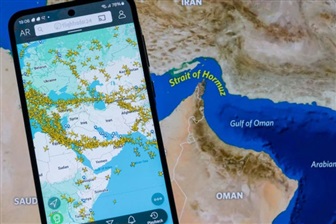
The war in the Middle East is causing the biggest shake-up for Gulf aviation hubs since the Covid-19 pandemic, as missile and drone attacks ripple across the region and force airlines to halt flights, reroute aircraft, and rethink some of the world’s busiest long-haul connections.
The latest disruption followed large-scale strikes by the US and Israel on Iran. Iranian state media reported that Supreme Leader Ali Khamenei was killed, a development that was quickly followed by retaliatory missile and drone attacks across the Gulf. Almost immediately, aviation hubs that normally keep global travel moving smoothly between Europe, Asia, and Africa were pushed into crisis mode.
Gulf airports hit hard as flights are suspended and passengers stranded
Key airports such as Dubai International Airport, Doha’s Hamad International Airport, and Abu Dhabi International Airport have faced intense operational pressure. With parts of regional airspace closing at different moments, airlines were left with limited options: cancel flights outright, divert to alternative airports, or operate only essential services such as evacuation and repatriation flights.
That sudden stop-start environment has disrupted airline schedules far beyond the Middle East. International carriers including Air France, Lufthansa, and British Airways suspended or reduced flights to several Gulf destinations, leaving thousands of travelers stuck mid-journey and creating knock-on effects across global networks.
The stakes are especially high because major Gulf airlines such as Emirates, Qatar Airways, and Etihad Airways aren’t just local players. They are central to global passenger and cargo connectivity, funneling millions of travelers through their hubs every year. When flight banks in Dubai, Doha, or Abu Dhabi are interrupted, the disruption can be felt across Europe-Asia routes, Africa connections, and freight logistics tied to just-in-time supply chains.
As security conditions show signs of improving, airlines are cautiously restarting operations. Emirates, for example, has indicated it expects to return to full flight capacity in the coming days as airspace reopens, according to reports.
Detours reshape Europe-Asia flight paths and drive up costs
Even when flights do operate, many are flying longer and more expensive routes to avoid risk areas. Airlines have been forced to steer clear of large sections of Middle Eastern airspace, fundamentally changing how aircraft travel between Europe and Asia.
One striking example highlighted by aviation analysts: a Dubai-to-Central Asia flight that typically takes around two hours recently stretched to roughly five and a half hours due to detours around conflict zones. Reroutings are generally pushing aircraft either north via the Caucasus or south through Egypt and Saudi Arabia, depending on conditions and airspace availability.
These extended routes come with a hefty price tag. Longer flight times mean higher fuel burn, more crew and maintenance complexity, disrupted aircraft rotations, and harder-to-manage timetables. At the same time, geopolitical tension has added upward pressure on oil prices, squeezing airline profitability even further. Low-cost carriers are particularly exposed because their business models depend on fuel efficiency and narrow margins.
Could the Gulf lose long-term traffic if instability drags on?
A key question now facing the industry is whether prolonged instability could weaken the Gulf’s status as the world’s premier connecting corridor. If passengers begin avoiding transfers through the region—or if airlines reduce schedules for an extended period—some long-haul demand could shift toward other hubs.
Industry watchers suggest that airlines outside the Middle East may benefit if traffic patterns change. Turkish Airlines, supported by Istanbul’s growing hub capacity and a substantial aircraft order backlog, could capture more long-haul passenger flows between Europe and Asia. There’s also a possibility that Southeast Asian airlines regain some connecting traffic on routes between Europe and Australia—lanes that Gulf carriers have dominated for the past two decades.
Drone threats complicate aviation safety and slow a full recovery
Even if airspace closures ease, the continued use of drones remains a major concern. Aviation experts warn that unmanned aerial vehicles are difficult to detect and intercept, creating an unpredictable risk for civil aviation—especially near busy flight corridors and airport approach paths.
European aviation safety authorities have advised carriers to avoid large portions of Middle Eastern airspace due to the threat of missile and drone strikes. Until those risks are brought under control, airlines may be reluctant to fully restore normal schedules, and passengers may face ongoing cancellations, longer flight times, and fewer nonstop options.
What happens next for Middle East aviation?
Despite the scale of the disruption, it’s still too early to say whether the conflict will permanently reshape the global aviation map or if travel patterns will snap back once tensions ease.
Analysts note one longer-term wildcard: Iran’s commercial aircraft fleet is aging, with an average age of more than 30 years. If geopolitical conditions ever stabilize and sanctions are lifted, there could be significant demand for aircraft replacement and modernization. However, such a shift would require major political change and policy reversals, making any near-term rebound uncertain.
For now, the Gulf aviation system remains under pressure, with airlines balancing safety, cost, and reliability while global travelers watch closely for signs that the world’s most important transit corridor is returning to normal.