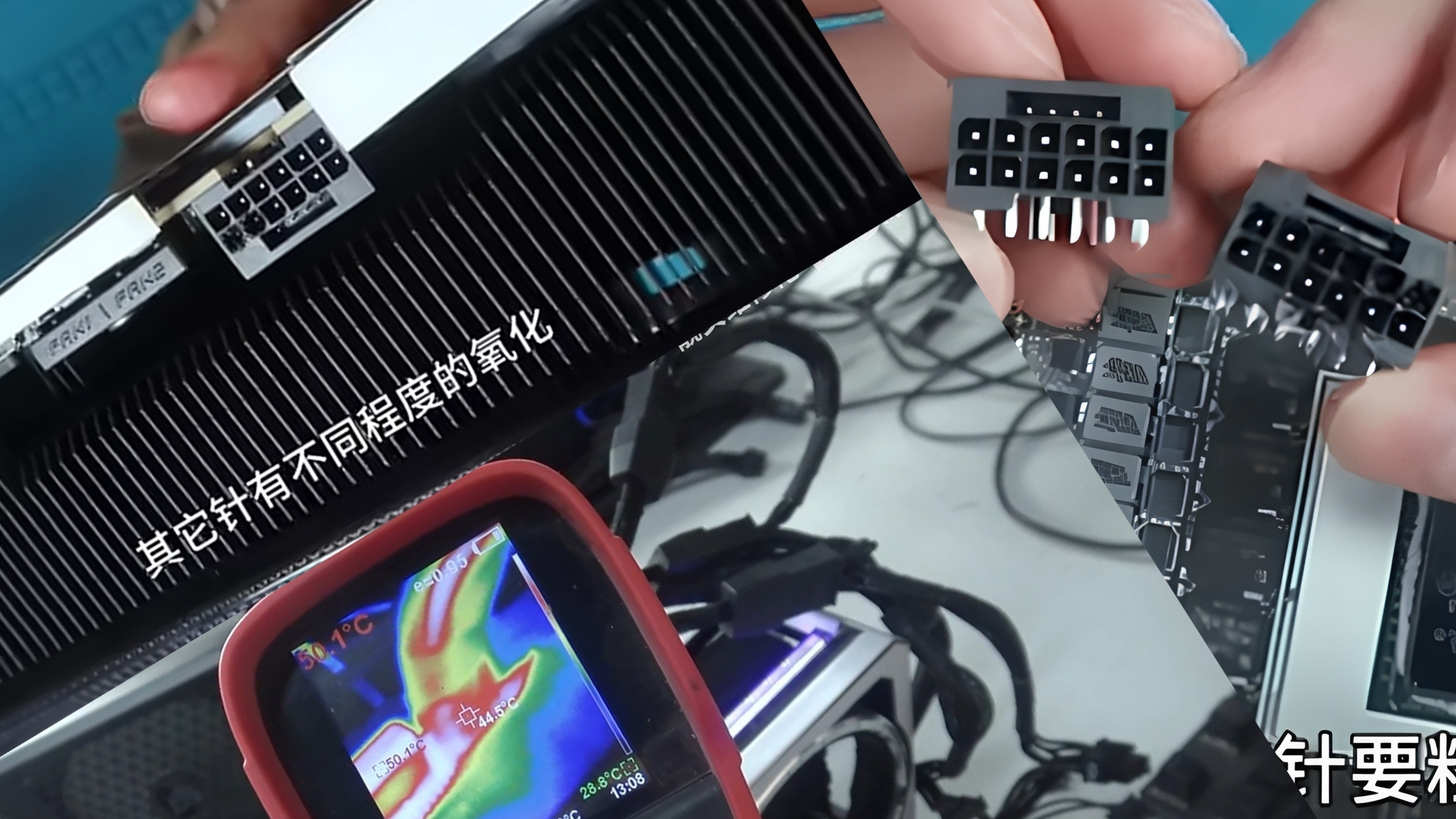
A simple hardware tweak might finally curb the 16-pin power connector melting drama on high-end RTX 50 series graphics cards: thicker pins.
A repair specialist in China reports she has successfully fixed multiple melted 16-pin connectors by replacing them with versions that use thicker, more robust pins. One recent case involved an ROG Astral RTX 5090 that arrived with a burned connector. After the swap, she stress-tested the card at a hefty 600W load and measured the connector at around 45°C—far below the dangerous temperatures many have seen before, which can soar past 100°C and even approach 150°C in worst-case scenarios.
Why this matters comes down to physics and contact quality. The 16-pin connector carries a high total current—roughly 55A, or about 9.2A per pin. If even a few pins don’t make solid contact, the remaining pins are forced to carry more current, creating hot spots that lead to melting. Thicker pins help in several ways:
– Lower electrical resistance thanks to greater cross-sectional area
– Stronger, more consistent mechanical contact
– Reduced sensitivity to slight misalignment or micro-movement
– Better current distribution across all pins
Manufacturers have tried various band-aids, such as color-coded plugs and revised adapters, but real-world failures haven’t disappeared. The technician notes the thicker-pin connector remained stable even when used with an adapter—though she still advises against adapters whenever possible, as they’ve been linked to many overheating incidents.
This isn’t a guaranteed cure-all, but it’s a meaningful step. Thicker pins directly target the root cause: poor contact and excessive current density. The result should be fewer “user error” accusations and more reliable power delivery under heavy loads.
What GPU owners can do right now:
– Ensure the 16-pin connector is fully seated with an audible or tactile click
– Avoid sharp cable bends or side pressure near the plug
– Recheck connections after installing the case side panel
– Keep the area dust-free to preserve clean contact surfaces
– Minimize or avoid adapters; use native, high-quality cables rated for your GPU’s power draw
With the 16-pin connector sticking around for the RTX 50 series, the industry should accelerate a transition to thicker-pin designs. It won’t magically eliminate every overheating case, but it could significantly reduce the risk—especially on flagship cards that routinely pull extreme power under sustained workloads.