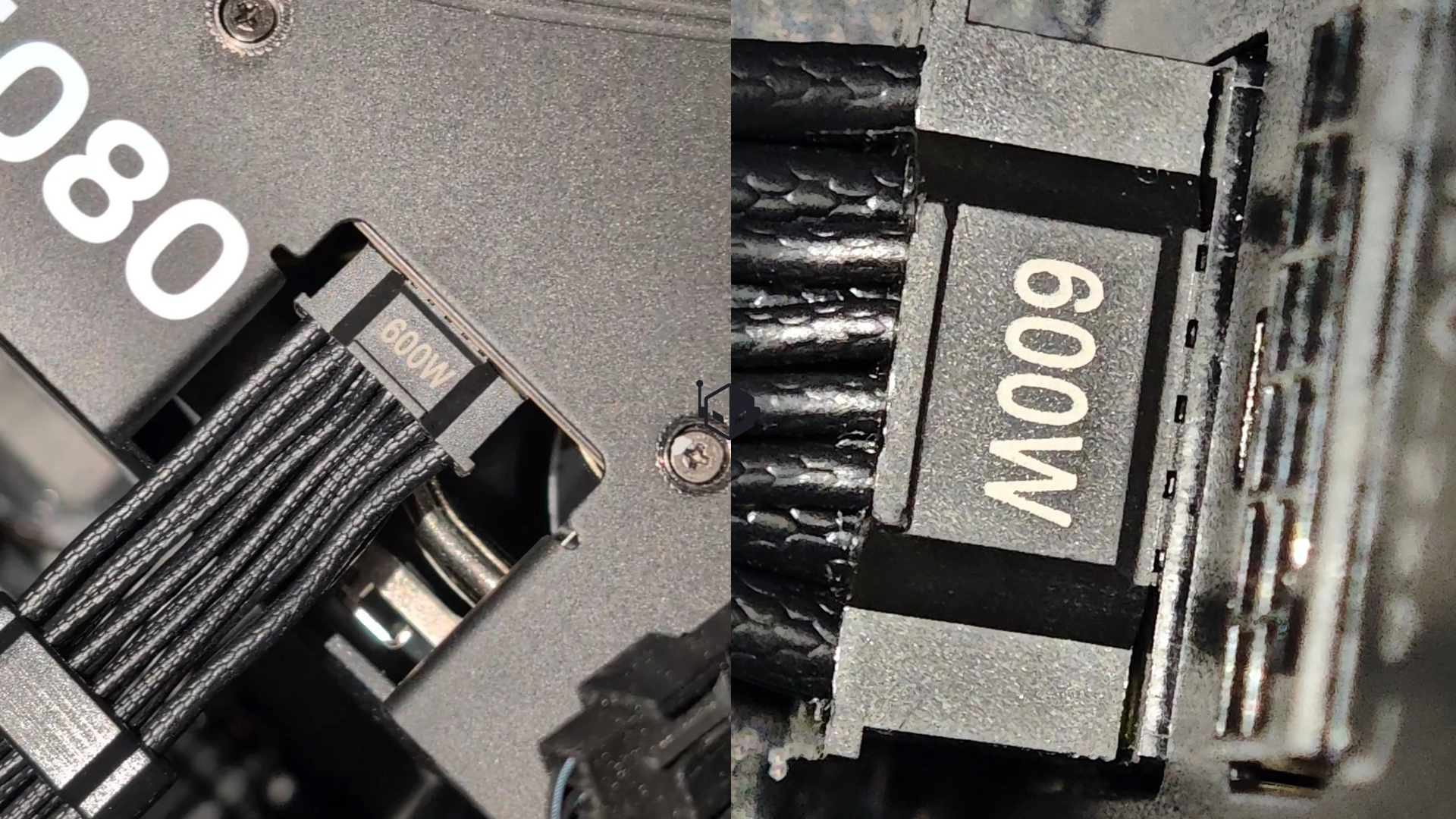
A surprising new clue may explain why some 16-pin GPU power connectors are still melting, even when users swear they plugged everything in correctly. The focus is on MSI’s yellow-tipped 16-pin connector, a design created specifically to help prevent poor insertion—yet reports of melting have continued to surface on modern high-power graphics cards.
The broader issue is well known among PC builders right now: 16-pin (12V-2×6) power connectors have been linked to melting and burning on certain RTX 50 series graphics cards, and similar incidents have also been reported on some RX 9070 XT models using the same style of connector. What’s especially consistent across many of these cases is the pattern of damage. Instead of the entire connector being destroyed, the melting often affects only a few pins or one full row (top or bottom). That detail matters, because it points to a contact problem rather than a sudden, catastrophic failure.
MSI’s answer was the yellow-tipped 16-pin connector. The idea is simple: if the connector is fully seated, you shouldn’t see any of the yellow portion. If yellow is visible, the plug likely isn’t inserted all the way—giving users a quick visual check meant to reduce the risk of incomplete contact and overheating.
But a recent user report suggests the real problem might not always be user error or failure to insert the cable properly. A Reddit user described noticing that their MSI yellow-tipped 16-pin connector gradually worked its way outward over time. After about two months of normal use, the yellow portion became visible again. Even after pushing the connector fully back in, the user claimed it would slowly creep out once more—behavior that raises concerns because the latch mechanism should keep the plug locked in place.
More importantly, the report didn’t seem to be an isolated incident. Multiple other users reportedly checked their own MSI yellow-tipped connectors after seeing the post and found similar symptoms: the plug appearing fully seated at first, then later backing out slightly and exposing the yellow tip.
If this trend holds up, it could help explain why melting issues can appear months after a system is built. Many of these failures aren’t immediate. Instead, they develop over time—consistent with a scenario where a connector starts out properly inserted but gradually becomes less secure. One possible contributor is thermal cycling: repeated heating and cooling during gaming or heavy workloads could cause slight expansion and contraction, slowly loosening the connection. Even a small change in contact quality can increase resistance at the pins, generating extra heat and potentially leading to melting.
In the same discussion, the original poster also stated that MSI reportedly confirmed their power supply unit was defective. If accurate, that would suggest there may be additional units in the wild that could behave the same way—especially if the connector or cable assembly doesn’t maintain a firm, locked connection over long-term use.
For GPU owners using 16-pin connectors, this adds an important takeaway: checking the connection once during installation may not be enough. Periodic inspection—especially if your connector includes a visual indicator like MSI’s yellow tip—could help catch a plug that has started to back out before it turns into a heat-related failure.