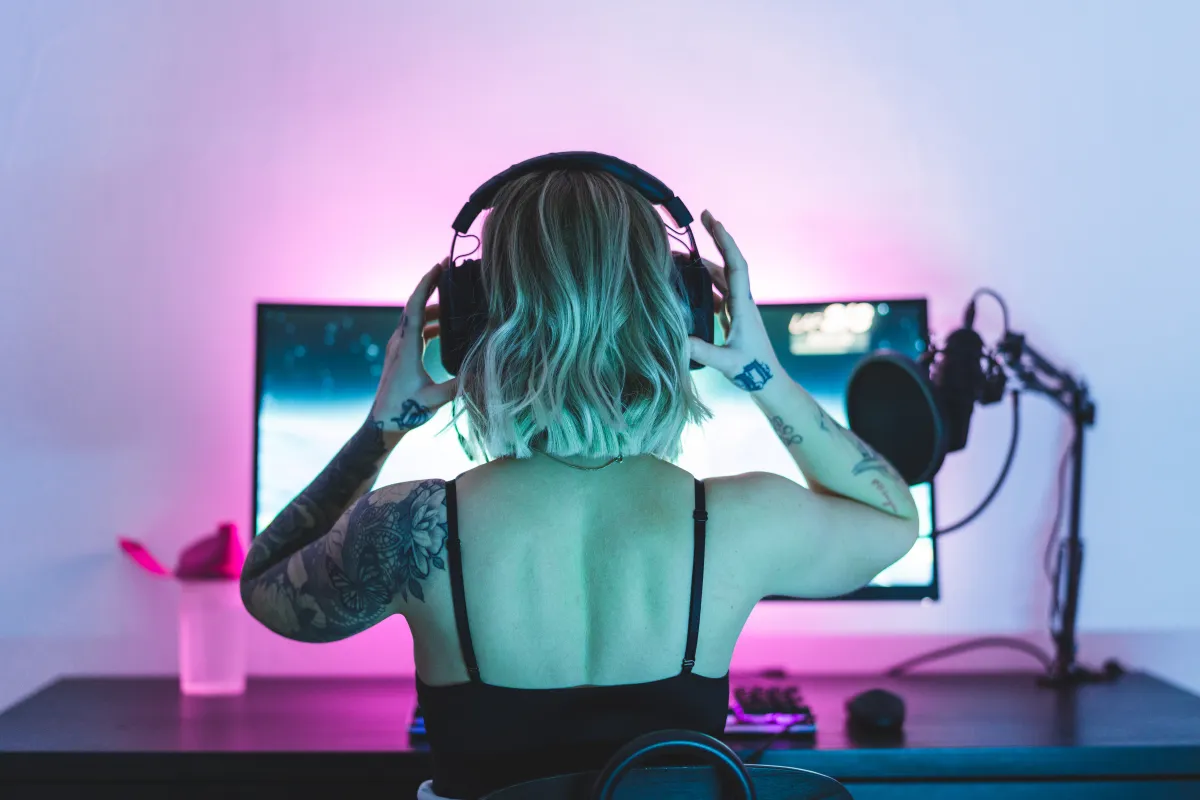
You’ve probably lived this exact scene: you’re hanging out with a friend, the conversation is clicking, and the jokes and ideas are landing. Then someone says it out loud: “We should start a podcast.”
It’s a familiar spark, and it’s usually followed by the same reality check. Making a podcast sounds fun until you remember everything that comes with it—figuring out microphones and recording setups, learning editing software, paying for multiple subscriptions, creating cover art, writing descriptions, distributing the show, cutting clips for social media, and finding any path to monetization. For a lot of would-be creators, the barrier to entry ends up being much higher than expected.
That’s the problem Rebel Audio wants to solve.
Rebel Audio is positioning itself as an all-in-one podcasting platform built specifically for first-time and early-stage creators—people who want to publish a quality show without stitching together a complicated workflow across multiple apps. The platform’s pitch is straightforward: create your podcast, record, edit, upload artwork, generate transcripts, clip content for social, and publish episodes without leaving the same ecosystem.
The company recently launched a private beta with a waitlist and announced it raised $3.8 million in an oversubscribed seed round—an early signal that investors believe there’s demand for simpler, more centralized podcast creation. Rebel Audio is set to roll out publicly on May 30.
The timing isn’t random. Podcasting continues to surge, and forecasts suggest the industry could reach $114.5 billion by 2030. Listener numbers are also climbing fast: more than 584 million people listened to podcasts in 2025, with projections rising to 619 million by 2026. As the audience grows, more creators are trying to enter the space—making tools that streamline production and publishing increasingly attractive.
Rebel Audio isn’t entering an empty market. Major platforms and creator tools already offer parts of the “all-in-one” experience, and popular podcast creation workflows often include a mix of hosting, editing, analytics, and monetization services. Rebel Audio’s argument is that most options still feel piecemeal in practice, while it aims to deliver a true end-to-end “360-degree” suite for launching and growing a show.
Monetization is also baked into the platform’s core identity, not treated as a future upgrade. Rebel Audio is built to help creators earn early through built-in options like advertising, brand partnerships, dynamic ad insertion, and listener subscriptions—features that are often scattered across different services or only accessible after a show reaches a certain size.
A major part of Rebel Audio’s workflow is driven by AI. The platform includes an AI assistant designed to speed up common launch tasks, including generating show names, writing descriptions, brainstorming episode ideas, and even producing cover art based on a creator’s concept. It also supports AI-powered transcription, dubbing, translation, and voice cloning for ad reads—tools that can reduce production time and make it easier to reach listeners in multiple languages.
Of course, building heavily around AI can invite skepticism, especially in creative industries. AI-generated imagery and voice cloning are still sensitive topics, with ongoing concerns about originality, ownership, and how training data is sourced. The rise of low-quality, mass-produced AI content has also forced streaming and distribution services to take quality control more seriously, and creators are increasingly wary of anything that could blur ethical lines or harm credibility.
Rebel Audio says it has guardrails in place. According to the company, voice cloning is opt-in and requires users to confirm they have the rights to use the voice, with additional safeguards intended to reduce the risk of deepfake misuse. The AI cover art system also includes moderation designed to block inappropriate or non-compliant images, especially anything that could violate distribution platform guidelines.
The platform was developed in partnership with AI consulting firm Lattice Partners, and it’s being led by a team with deep entertainment and production experience. Founder Jared Gutstadt previously launched the production company Audio Up in 2020, and Rebel Audio plans to migrate Audio Up’s catalog onto the new platform. That catalog includes shows tied to well-known names such as Machine Gun Kelly, Anthony Anderson, Dennis Quaid, Jason Alexander, and Luke Wilson. The broader team includes veterans from major studios, and acclaimed producer Mark Burnett has joined as an advisor.
For creators wondering what it costs to get started, Rebel Audio is launching with tiered pricing. The entry plan starts at $15 per month and includes AI-assisted production features, plus hosting and distribution to major platforms. A Plus option costs $35 per month and adds video hosting and voice cloning for ad reads. At the top end, the Pro plan is $70 per month and includes dynamic ad insertion, listener subscriptions, translation, and dubbing.
For anyone who’s ever said “we should start a podcast” and then stalled out at the logistics, Rebel Audio is betting that a simplified, all-in-one workflow—paired with built-in monetization and AI production support—can turn that casual idea into a published show faster, and with fewer moving parts.


