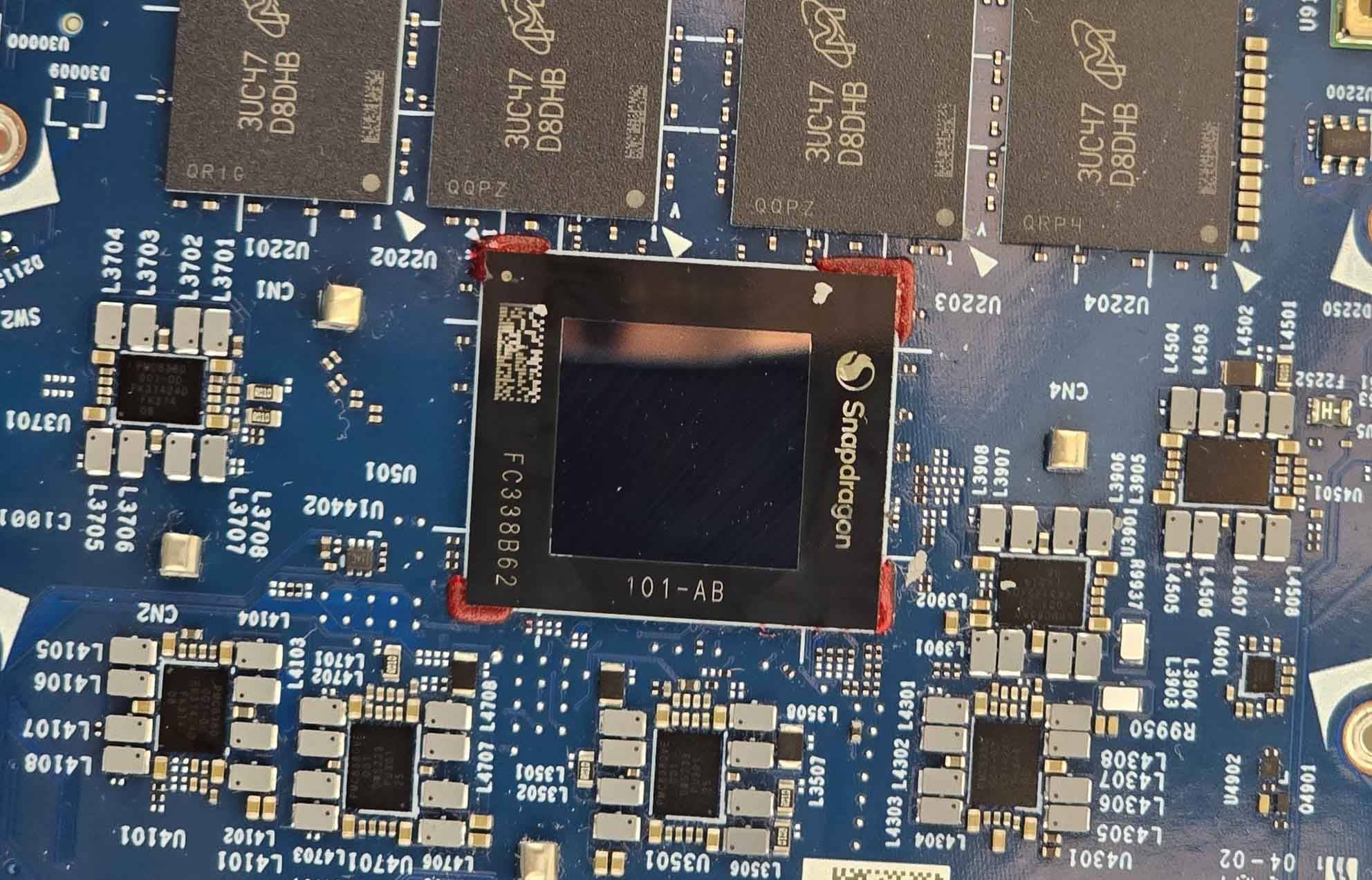
The Snapdragon X Elite is set to usher in a new era for Qualcomm’s SoC lineup in Windows notebooks. Previously, there were rumors about a project called ‘SC8480XP’ or ‘Project Glymur.’ New developments reveal that Qualcomm is working on two new chips, both designed to support DX12 features and hardware-accelerated ray tracing in a bid to keep pace with competitors like Apple’s M3 and M4. The Snapdragon X Elite already boasts 12 Oryon cores, but one of its successors might be tested with a staggering 18 cores.
The buzz around ‘Project Glymur’ suggests that this could be Qualcomm’s next high-end Snapdragon X Elite successor, featuring an 18-core configuration while retaining LPDDR5X support. A conversation on X between @negativeonehero and @curunnil reveals that Qualcomm is also working on ‘Project Mahua’ and ‘Project Glymur.’ Speculations from the shared image suggest that Mahua will succeed Hamoa, commonly known as the Snapdragon X Elite, and will feature a 12-core CPU in a ‘6 + 6’ cluster format along with 128-bit LPDDR5X RAM. However, the exact speeds remain undisclosed.
Both forthcoming chipsets are expected to support DX12 features and hardware-accelerated ray tracing, a crucial aspect to compete with Apple’s latest offerings. Glymur, Qualcomm’s probable top-tier option, might come equipped with an 18-core setup in a ‘6 + 6 + 6’ cluster. It is also rumored to feature LPDDR5X RAM with a 192-bit bus width, but like Mahua, the specific frequencies are still unknown.
According to @curunnil, who sourced the information from an anonymous individual, these SoCs could be rolled out in the first half of 2026. Though the manufacturing process Qualcomm plans to employ remains unmentioned, if 2026 is indeed the targeted launch year, they might utilize TSMC’s 3nm ‘N3P’ node. Nonetheless, given the lengthy journey of the Snapdragon X Elite to find its footing in Windows notebooks, Qualcomm might encounter similar development challenges with ‘Project Mahua’ and ‘Project Glymur.’ As with any rumor, it’s prudent to take this information with a grain of salt, but stay tuned for more updates as they unfold.