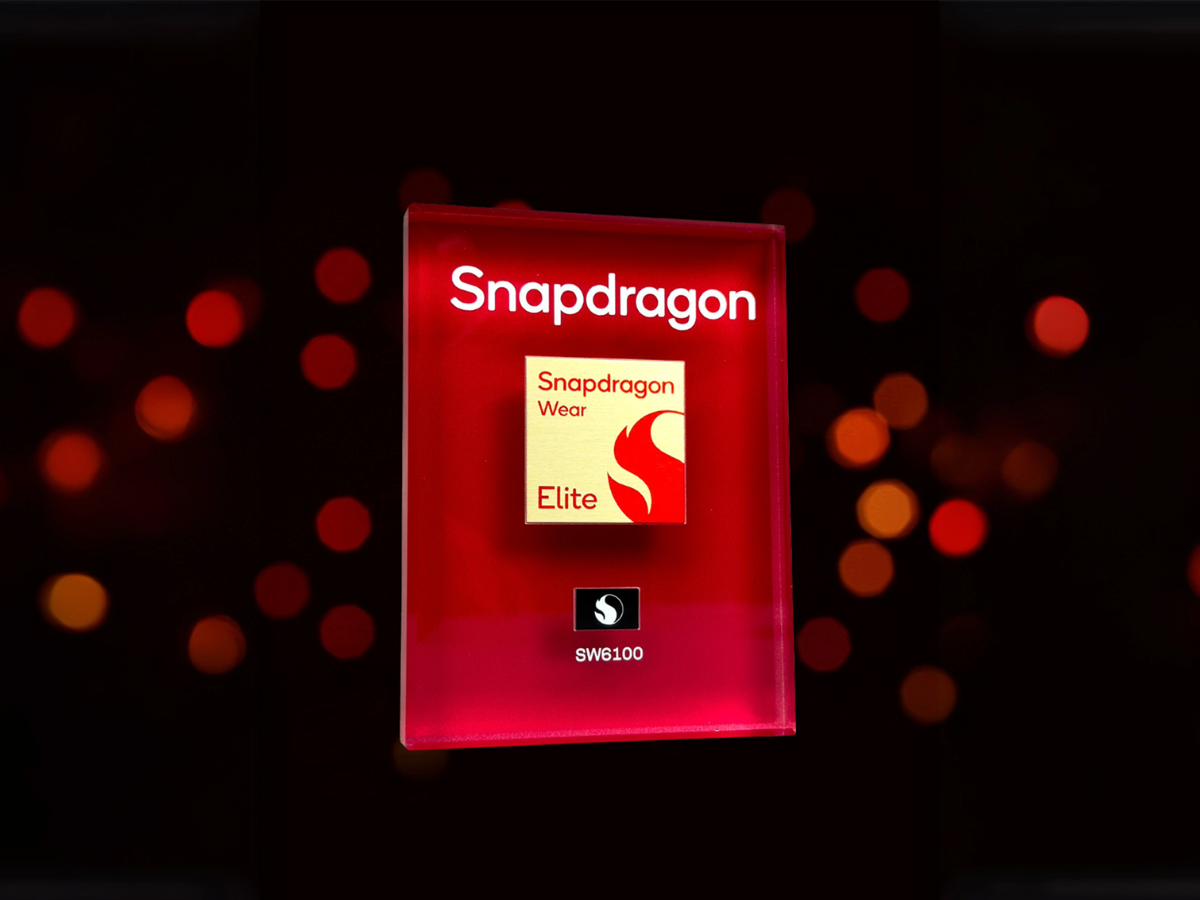
Qualcomm has officially introduced Snapdragon Wear Elite at MWC 2026, positioning it as a next-generation wearable platform built for “personal AI” experiences that run directly on the device. Designed to scale beyond traditional smartwatches, the new platform is intended for a wide range of wearable form factors, including smartwatches, pins, pendants, and hubs—highlighting Qualcomm’s push to power smaller, always-on devices that still feel fast, connected, and intelligent.
A major highlight is on-device AI. Snapdragon Wear Elite integrates Qualcomm’s Hexagon NPU, enabling high-performance AI processing without constantly relying on the cloud. Qualcomm says the platform can handle billion-parameter models at the edge, which could translate into quicker voice and gesture interactions, smarter health and activity insights, and more responsive AI features—while also helping with privacy and reducing the need for persistent internet access.
Performance gains are another big part of the announcement. Compared to the previous Snapdragon W5+ Gen 2 wearable platform, Qualcomm claims Snapdragon Wear Elite can deliver up to 5x better single-core CPU performance and up to 7x faster GPU performance. In practical terms, that points to smoother UI navigation, quicker app launches, and improved graphics performance for richer watch faces and more complex wearable apps—especially important as wearable software becomes more feature-heavy.
Battery life is also a key focus. Qualcomm says the platform is built to enable multi-day battery life, with up to 30% longer daily usage than the prior generation. Charging is positioned as faster and more convenient as well, with a claim of reaching up to 50% charge in around 10 minutes—an upgrade that could make wearables feel far less restrictive for daily use.
On the connectivity side, Snapdragon Wear Elite aims to cover nearly every scenario a wearable might encounter. Qualcomm says the platform brings together six wireless technologies: 5G RedCap, micro-power Wi‑Fi, Bluetooth 6.0, ultra-wideband (UWB), GNSS, and NB‑NTN satellite connectivity. The satellite component is particularly notable—NB‑NTN enables two-way messaging via satellite when cellular and Wi‑Fi signals aren’t available, developed in collaboration with partners including Skylo. That capability could be especially valuable for outdoor use, travel, and emergency situations where coverage is unreliable.
For software flexibility, Snapdragon Wear Elite supports Wear OS by Google, along with Android and Linux—giving device makers multiple options depending on the type of wearable they’re building and the features they want to prioritize.
Qualcomm also notes that the platform is backed by major ecosystem partners including Google, Motorola, and Samsung. The first commercial devices powered by Snapdragon Wear Elite are expected to arrive in the coming months, setting the stage for a new wave of AI-forward wearables focused on faster performance, stronger connectivity, and longer battery life.