Valve’s latest Proton 11 ARM beta is giving ARM-based handheld gaming a serious momentum boost, and early testing shows just how close these devices are to delivering a more “Steam-like” experience without relying on traditional x86 hardware.
On the Ayn Odin 2 Portal, flashing Rocknix directly to the handheld’s internal storage led to a noticeably faster, more responsive feel overall. The Steam client itself runs as a native ARM Linux application, which helps day-to-day navigation and general usability feel snappy. Game compatibility still hinges on the Proton and FEX translation layer combo, but performance in lighter and well-optimized titles is already impressive.
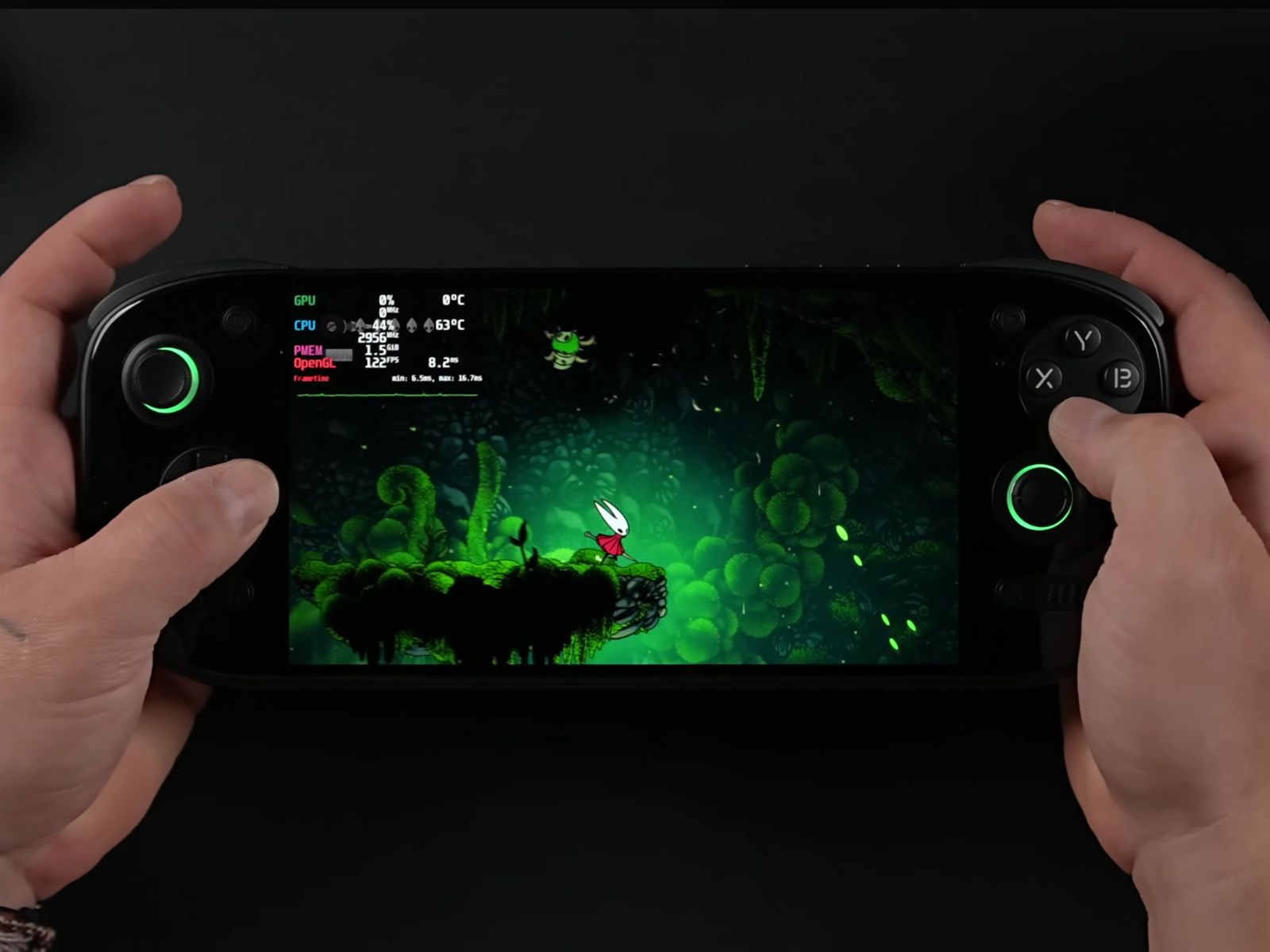
In testing, Hollow Knight: Silksong ran consistently above 100 FPS on the Odin 2 Portal’s 120 Hz display when the frame cap was disabled, showing that high-refresh handheld play on ARM is more than just a talking point. Cuphead landed in the 60–70 FPS range, while Half-Life 2 pushed comfortably beyond 120 FPS, highlighting how older and less demanding PC games can thrive on this emerging setup.
Not every handheld has the same smooth path, though. The Ayaneo Pocket S2 and Konkr Pocket Fit currently need to run Rocknix from a microSD card because internal storage installation isn’t fully supported yet. That limitation doesn’t just sound inconvenient—it directly impacts quality of life, with much slower downloads and longer installation times compared to running everything off internal storage.
There are also clear signs that this is still an enthusiast-grade solution rather than a plug-and-play Steam Deck alternative. In reported tests, The Witcher 3: Wild Hunt wouldn’t relaunch on the Ayn Odin 2 Portal after the first play session. Half-Life 2 also ran into a control hurdle, requiring a USB keyboard and mouse because the built-in controller wouldn’t bind properly in-game. Random black screens and occasional crashes showed up as well, reinforcing that the software stack still needs polish before it can be considered seamless for everyday users.
One of the biggest unanswered questions remains kernel-level anti-cheat support on ARM. Many popular multiplayer games depend on anti-cheat systems that are deeply tied to low-level access, and translation layers haven’t fully solved that challenge yet. Until that changes, certain games may remain out of reach regardless of how strong performance looks in single-player titles.
Even with those drawbacks, the bigger story is hard to ignore: the groundwork is now in place for a real wave of ARM-based Steam handhelds. Proton 11 ARM beta, Rocknix, and the Proton + FEX approach are proving that strong performance is possible, and the gap between “cool experiment” and “consumer-ready platform” is starting to narrow.


