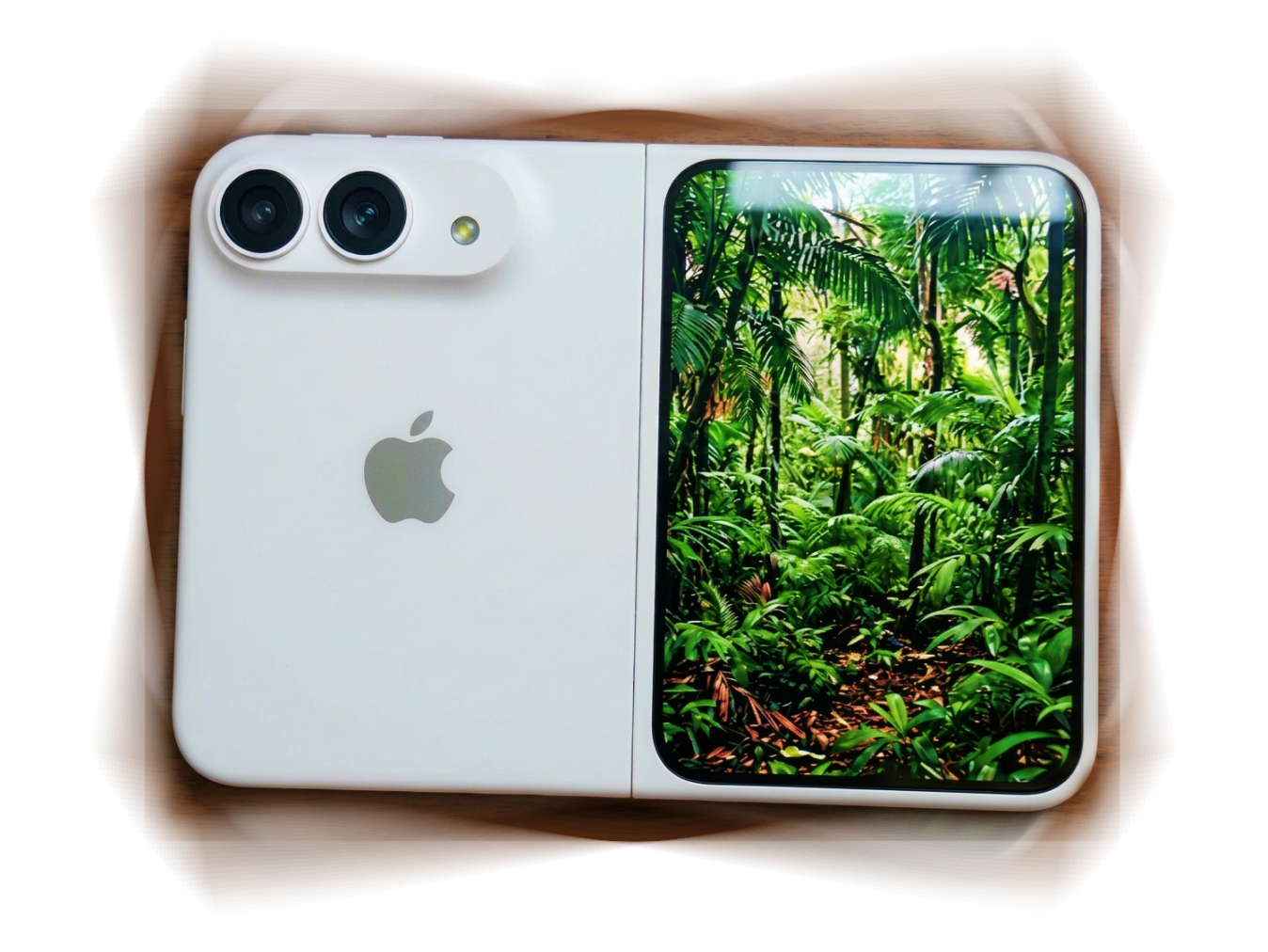
Apple’s first foldable iPhone is starting to look a lot more real. A fresh wave of leaked third-party cases—said to match the “final design” of the upcoming device—appears to confirm that Apple is going with a wider, book-style foldable form factor for its 2026 flagship. If the leak is accurate, the foldable could arrive under the name iPhone Ultra or iPhone Fold, and it’s shaping up to be one of the biggest iPhone design changes in years.
The most interesting part of the leak isn’t just the overall shape—it’s what might be missing. Recent dummy units shown alongside these cases suggest an impressively slim build, reportedly around 4.5mm when unfolded. That ultra-thin profile would make the device feel closer to a “normal” phone in hand, which is crucial for a foldable that has to compete on comfort, not just novelty.
But those same dummy units reportedly don’t show the familiar MagSafe magnet ring. That’s where the leaked cases raise eyebrows: the cases themselves do include integrated MagSafe magnets. If both details are true, it hints at a potential compromise Apple may be making to hit that thinness target—possibly removing internal MagSafe magnets and shifting magnetic attachment functionality to the case instead.
There’s also a simpler explanation: the dummy units may not reflect the finished internals and could be missing final components or markings. Still, the contrast between “no magnets on the dummy” and “magnets in the case” is exactly the kind of detail that sparks bigger questions about engineering decisions inside Apple’s first foldable.
MagSafe has become a core iPhone feature for many users, powering accessories, wallets, mounts, and charging solutions. Apple has experimented with limiting it before—one recent iPhone model famously launched without MagSafe support, only for magnets to return in the following generation. That history makes the foldable’s MagSafe situation worth watching, especially if Apple is prioritizing thinness over built-in magnetic hardware.
As for what’s expected from the foldable iPhone itself, the leak aligns with a growing list of rumored specs. The device is said to feature a smaller outer display around 5.5 inches and a larger inner OLED display around 7.8 inches, with a “near-creaseless” look that aims to reduce one of the biggest visual drawbacks of today’s foldables. Power is expected to come from Apple’s next-generation A20 Pro chip built on a 2nm process.
Other rumored highlights include Touch ID built into the power button (a practical choice for foldables where Face ID placement can be complicated) and a battery capacity in the neighborhood of 5,000 to 5,400 mAh, paired with 30W or faster charging.
If Apple sticks to its typical schedule, the foldable iPhone Ultra/Fold could debut in late 2026—most likely around September alongside the iPhone 18 Pro lineup, though some reports suggest it could slip to a later release window such as December.
For now, the leaked cases are the clearest clue yet that Apple’s foldable iPhone is moving toward a finalized shape—wide, book-style, and possibly astonishingly thin. The biggest unanswered question is whether MagSafe will be built into the phone like current iPhones, or whether Apple may push that feature into accessories to help achieve a super-slim chassis. Either way, this is one 2026 launch that’s already generating serious momentum.