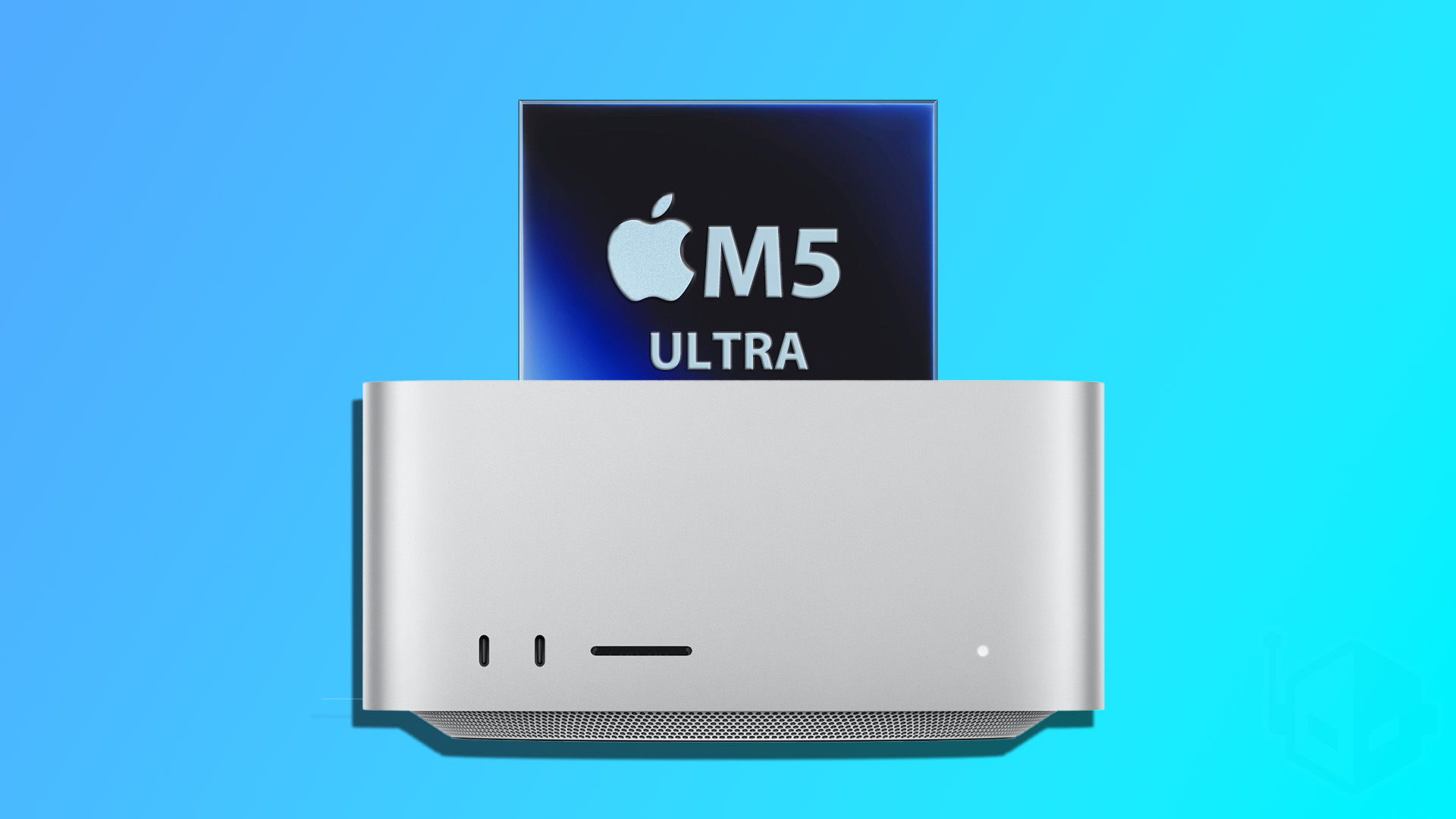
Apple’s Mac Studio has become one of the most appealing options for people running large language models locally, and it’s easy to see why. Modern AI workloads thrive on huge pools of fast memory, and Apple’s unified memory architecture has made the small, quiet Mac Studio feel like a serious workstation in a space-saving box. The problem is that the same thing driving interest in these machines—massive memory capacity—is also colliding with a growing industry-wide DRAM supply crunch.
A new report signals that Apple’s next Mac Studio refresh may not arrive as soon as many expected, largely because the high-end configurations depend on memory supply that’s getting harder to secure in volume. With demand for DRAM rising and manufacturers reportedly able to satisfy only a portion of total demand through 2027, even major buyers can’t always guarantee enough inventory for their top-tier products. That matters a lot for the Mac Studio, where the most sought-after configurations are the ones with the largest unified memory pools for AI work.
The timing is especially important for buyers who were waiting for the next jump in performance. The refreshed Mac Studio, expected to feature Apple’s next Ultra-class chip, is now said to be targeting an October launch window rather than earlier expectations. That shift could leave a longer gap for professionals and researchers who were planning upgrades around local AI development, workstation-class graphics, and heavy compute workloads.
In the meantime, Apple’s current situation isn’t doing local LLM users many favors. Higher-memory Mac Studio configurations—especially those that scale to 256GB of unified memory—have been difficult to find through Apple’s online store. Even if an order appears possible, it may not be reliable, with the possibility that Apple could cancel and steer customers toward a newer replacement when available. For people who specifically want a compact desktop that can comfortably host large models in memory, that uncertainty is a major hurdle.
That’s pushing some shoppers toward the only readily available Apple alternative for local LLM work: the MacBook Pro with the M5 Max. It can be configured with up to 128GB of unified memory, which is useful for many AI tasks, but it still has clear limits. Very large, multi-billion-parameter models may run, yet not at the kind of speeds users expect from a true workstation setup designed for sustained heavy workloads.
On the non-Apple side, the options aren’t exactly perfect either. High-end professional GPUs top out at limited VRAM capacities compared to the unified memory ceilings Mac Studio buyers are chasing, and the pricing can be steep enough to put serious AI experimentation out of reach for many individuals and smaller teams.
Even though it’s been demonstrated that extremely large models can technically run on small-memory devices at very low token-per-second speeds, that isn’t a practical solution for real work. Local AI performance isn’t just about whether a model loads—it’s about whether it runs fast enough to be useful for development, testing, and repeated iteration.
All of this adds up to a tough moment for Apple’s workstation ambitions in the AI era. Demand for local LLM hardware is rising, the most desirable Mac Studio configurations are constrained, and a pushed-back refresh could mean Apple misses out on meaningful sales from buyers who need high-memory machines right now—not months later.